
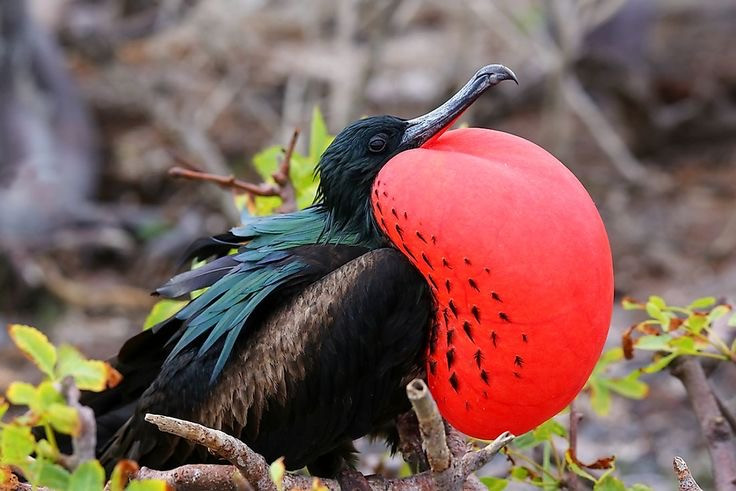
Большой фрегат или Fregata minor — крупная морская птица семейства фрегатных. Чаще всего их популяции встречаются в Тихом океане (включая Галапагосские острова), Индийском океане, а также в Южной Атлантике.
Большой фрегат — это легкая крупная морская птица длиной до 105 см с преимущественно черным оперением и огромным размахом крыльев.
Птицы демонстрирует половой диморфизм — самка крупнее взрослого самца, имеет белое горло и грудь. В отличие от нее самец имеет ярко-красный кожаный мешок, расположенный на груди. В брачный период самец может раздувать его до огромных размеров, чтобы привлечь внимание противоположного пола.
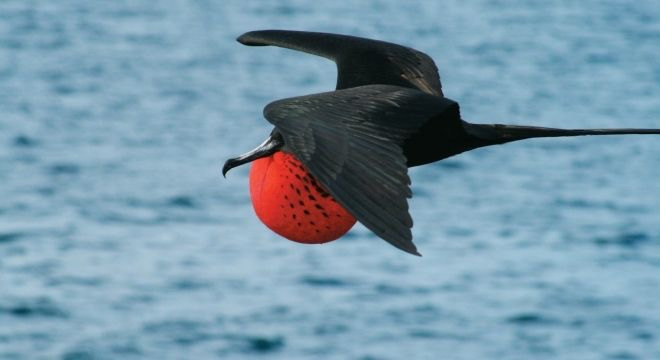
Главной особенностью большого фрегата является способность проводить в воздухе продолжительное время без какой-либо видимой активности крыльев. Благодаря особому строению крыльев, они могут использовать термодинамические течения и воспринимать силу тяжести, что позволяет им непрерывно оставаться в воздухе до двух месяцев.
Составляя графики полетов птиц, ученые обнаружили, что птицы преодолевают невероятные расстояния — иногда до 400 километров за один день. В случае необходимости птицы могут воспользоваться восходящим потоком другого типа. Они проскальзывают под кучевым облаком, что позволяет им очень быстро поднять себя вверх, не взмахивая крыльями. Такие внезапные подъемы помогают им достигать высоты до 4000 метров, где воздух чрезвычайно разрежен, а температура очень низкая. Оттуда они скользят вниз в течение нескольких часов, пока не достигнут следующего восходящего потока.
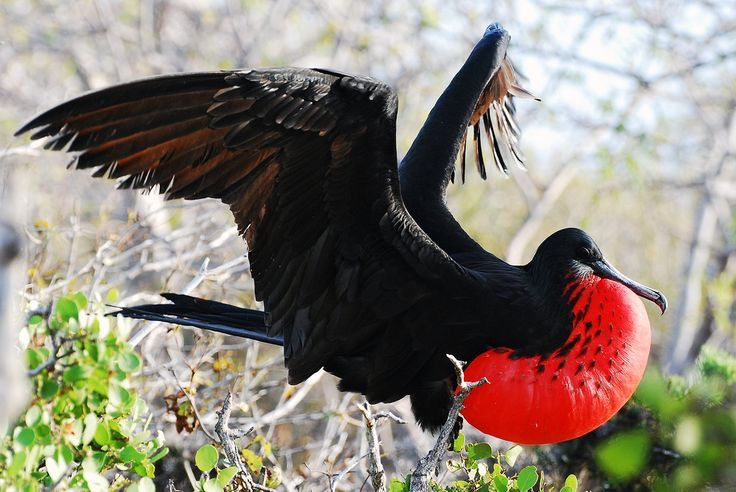
Фрегаты питаются рыбой, пойманной в полете с поверхности океана. Также этот вид известен своей стратегией получения пищи. Они мастера в краже у других птиц, выжидая подходящий момент, чтобы атаковать их и вынудить отпустить пищу из клюва. Это поведение делает их одними из самых успешных пиратов природы!
Чтобы оставить здесь комментарий, войдите или зарегистрируйтесь на сайте.
Авторизация
