

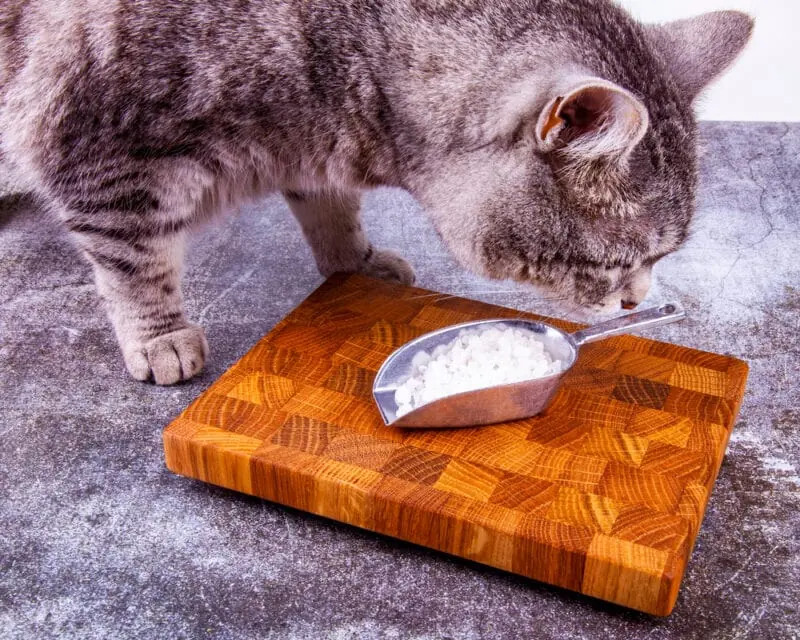
Без соли наша еда была бы безвкусной и пресной. Однако все мы знаем, что слишком много соли вредно для нас. А как же наши маленькие кошачьи друзья?
Наверняка, вы когда-нибудь давали кошке немного еды со своего стола. И при этом задавались вопросом:«Может ли моя кошка это есть?»
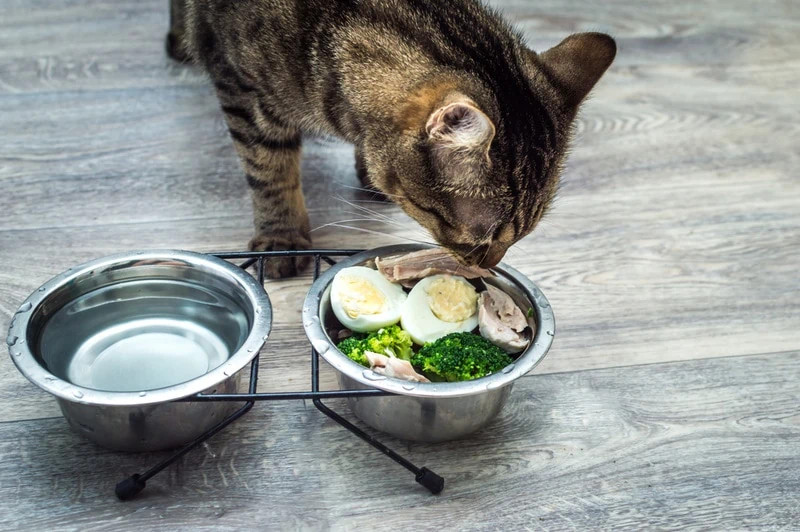
Соль чрезвычайно вредна для здоровья кошек, а слишком большое ее количество может быть токсичным для вашего питомца. Все, что превышает безопасную суточную дозу, может вызвать множество проблем со здоровьем, а в крайнем случае даже привести к смерти питомца.
Владельцы кошек должны с осторожностью относиться к количеству соли, которую потребляет их пушистый друг.

Сколько соли безопасно для кошек?
Считается, что кошки могут безопасно потреблять от 20 до 42 миллиграммов соли в сутки. Это количество можно сравнить с чайной ложкой. Все, что превышает 42 мг в день, пойдет во вред вашему питомцу.
Почему соль токсична для кошек?
Соль или хлорид натрия токсична для кошек, потому что она вызывает сильное обезвоживание и электролитный дисбаланс, вытягивая жидкость из клеток.
Чрезмерное потребление соли может вызвать состояния, называемые солевой интоксикацией, отравлением солью или гипернатриемией. Все эти термины используются для описания чрезвычайно высокого уровня натрия в крови.

Симптомы отравления солью:
Чтобы оставить здесь комментарий, войдите или зарегистрируйтесь на сайте.
Авторизация