
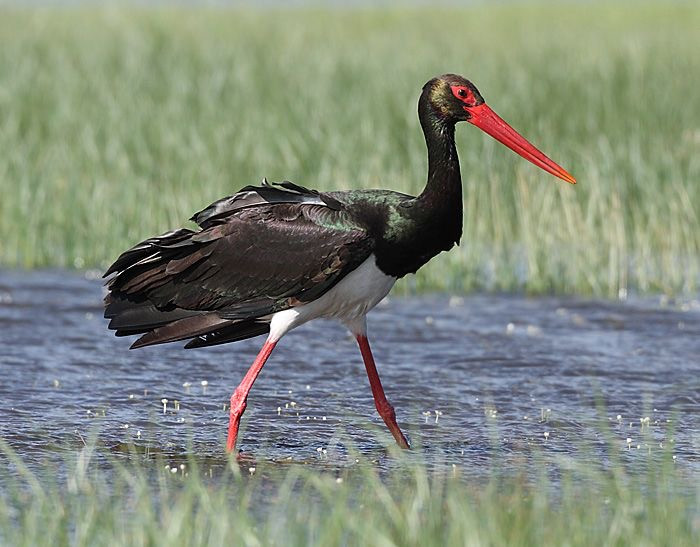
Всем хорошо известны белые аисты. Многие не раз видели этих крупных птиц, восхищались их гнездами, безукоризненно возведенными на крышах домов и высоких столбах. Но при этом далеко не все знают, что в природе эти птицы бывают не только белого цвета. Среди них существует и другой редкий вид — черные аисты, которые отличаются от своих собратьев, цветом оперения.
Несмотря на то, что ареал обитания этих пернатых достаточно широк, численность самих птиц остается неизменно низкой на протяжении многих лет. Аисты вьют свои гнезда почти по всему Евразийскому континенту, в некоторых регионах образовались отдельные поселения, а в Южной Африке имеется оседлая популяция этого вида.
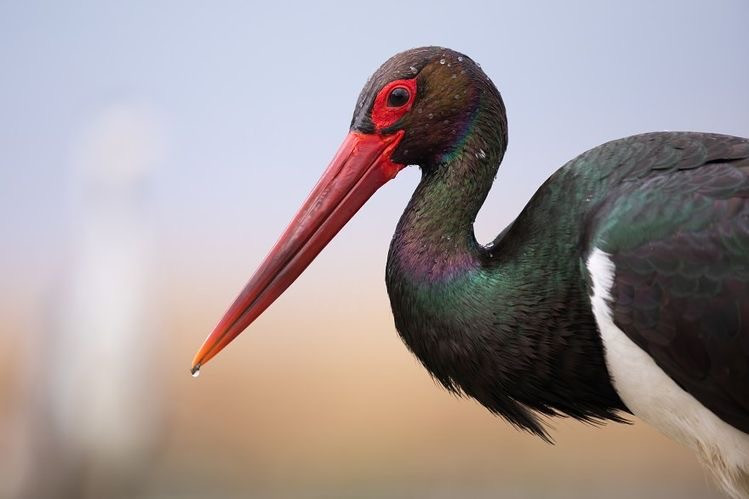
По размеру черные аисты немного меньше, чем их белые собратья, размах крыльев у них довольно большой и в среднем достигает двух метров. Весят птицы около 3 килограмм. Ноги, клюв и кожа вокруг глаз — красные, цвет перьев черный с зелеными и лиловыми переливами, только нижняя часть остается белой. Увидеть черного аиста вблизи населенных пунктов совсем не просто. Эти пернатые не только редкие, но и очень скрытные существа. Они предпочитают гнездиться вблизи водоемов, в лесных чащах и предгорьях.
По своему характеру, черные аисты — верные птицы. Обычно они создают пару один раз и на всю жизнь. Возвращаясь после зимовки из теплых стран примерно в середине весны, они тут же принимаются за обустройство домов. Аисты сооружают большие гнезда из веток и листьев, в которых они живут по несколько лет подряд. Бывали случаи, когда птенцов высиживали на одном месте в течение 14 лет. Этот вид не образует колоний, а предпочитает селиться поодиночке. Поэтому часто можно наблюдать, что одна пара занимает довольно большую территорию.
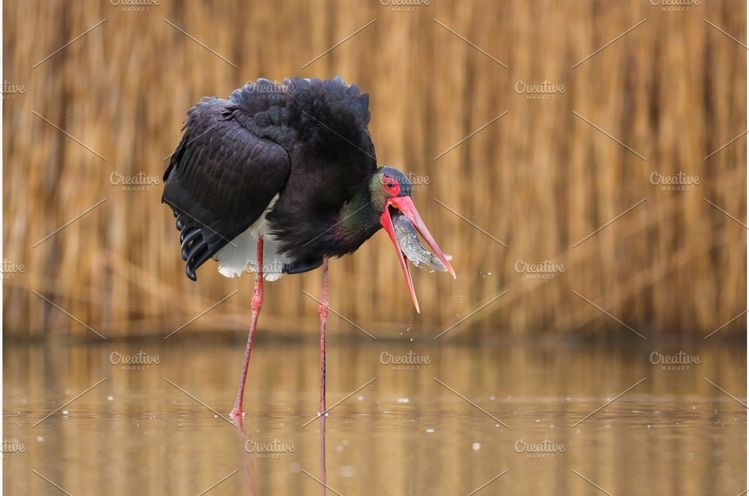
Основной пищей черных аистов являются рыба, змеи, ящерицы и большие насекомые. Они обычно охотятся в водных болотных угодьях или прибрежных зонах.
Эти птицы постоянно сталкиваются с различными угрозами, включая уничтожение их естественной среды обитания, отравление пестицидами и незаконную охоту. Международные и национальные организации ведут работы по сохранению этого редкого вида и его мест обитания.
Чтобы оставить здесь комментарий, войдите или зарегистрируйтесь на сайте.
Авторизация
