1.1 Тип континентальных легавых
Группа 1. Спортивные
Группа 1. Спортивные
Группа 1. Подружейные
Группа 3. Подружейные
Группа 3. Подружейные
Группа 3. Подружейные
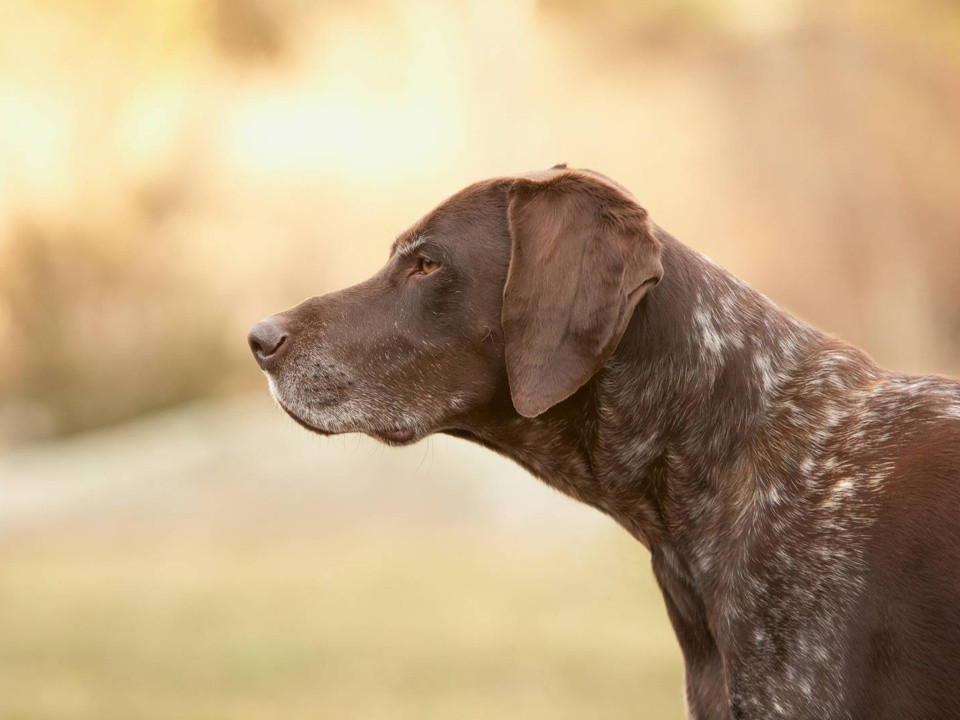
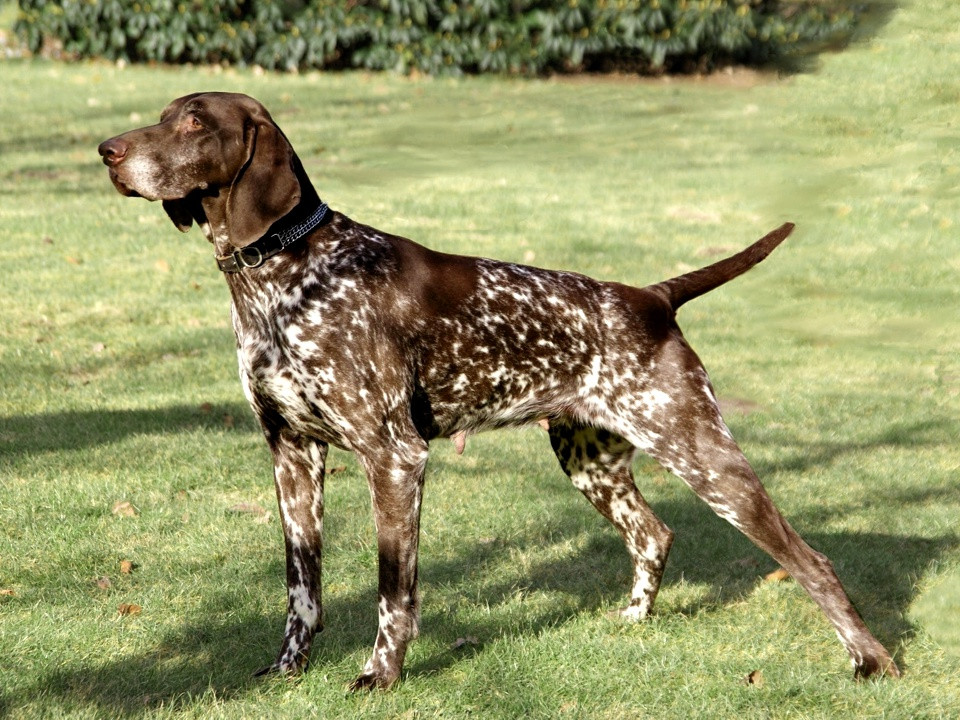
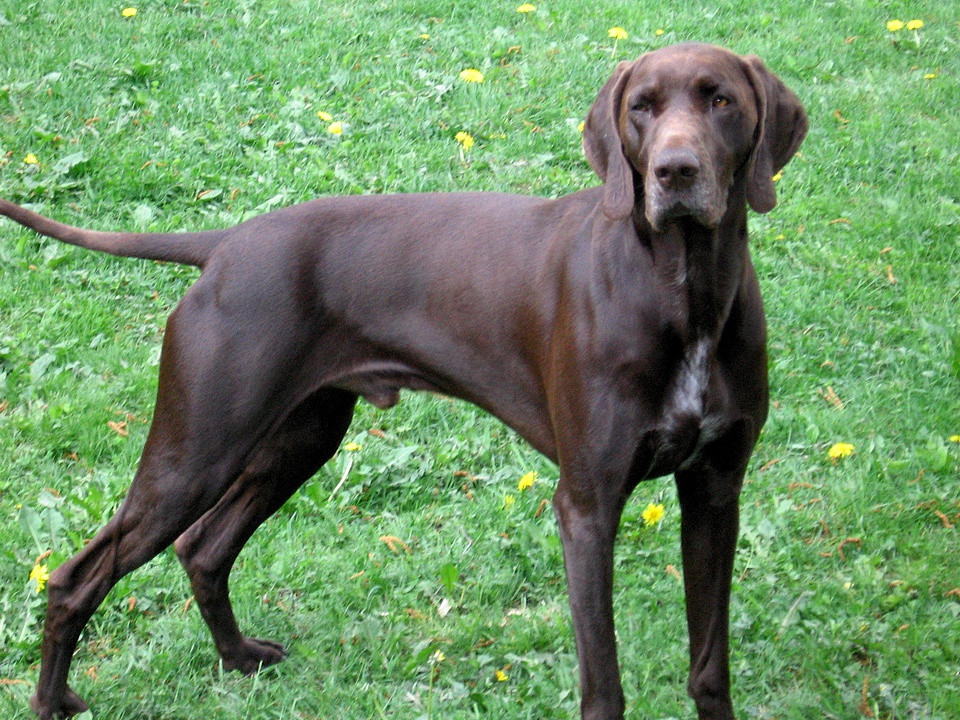
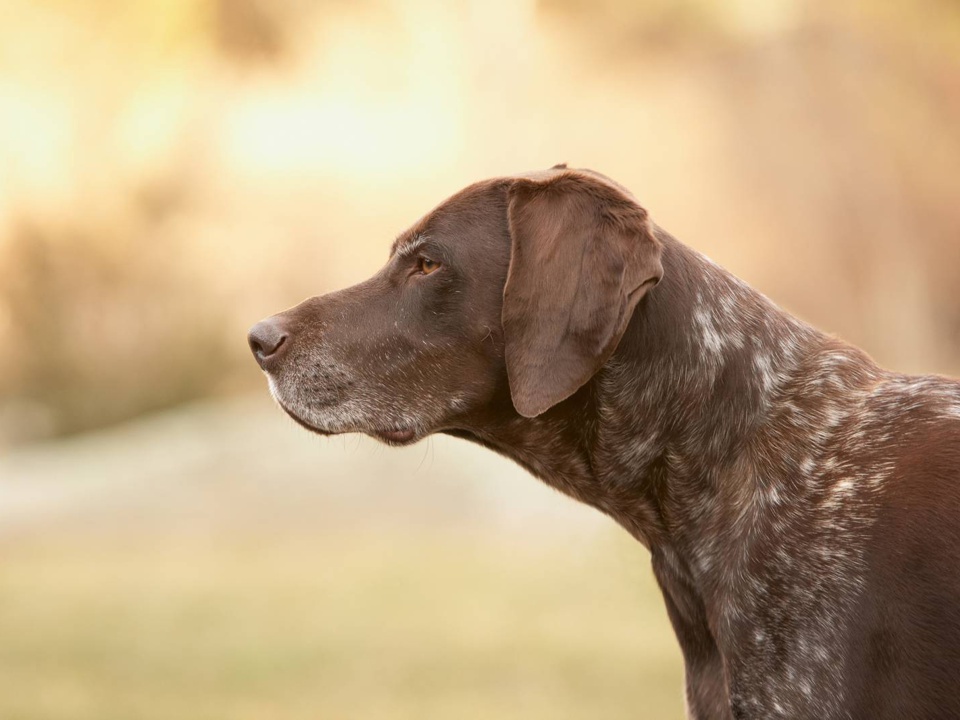
Череп достаточно широкий, плоский выпуклый череп, слабо выраженный затылочный бугор, не слишком глубокие лобные складки, четко выраженные надбровные дуги. Нос с немного выдающейся мочкой. Ноздри достаточно широкие и подвижные. В принципе коричневые, но у черных или крапчатых собак черные. Только при доминирующем белом цвете допустим красноватый или с крапинками нос. Морда длинная, широкая, глубокая и сильная морда для того, чтобы облегчить собаке правильную подноску дичи. При осмотре со стороны спинка носа показывает прямую линию с легкой горбинкой, более выраженной у кобелей. Точно также еще допустимая совершенно прямая линия спинки носа менее привлекательна, прогнутая (вогнутая) спинка носа – существенный порок. Губы прилегающие, не слишком сильно свисающие, с хорошей пигментацией. Направление от носа до точки разделения почти вертикальное, затем идет плоский изгиб до средне выраженного угла губ. Зубы мощные, стоят в челюсти вертикально, 42 здоровых зуба в соответствии с формулой зубов. Челюсть идеальная, регулярная и полная (ножницеобразный прикус), причем верхний ряд резцов смыкается с нижними без промежутка. Скулы сильные, с хорошими мускулами. Глаза среднего размера, не навыкате и не слишком глубоко посаженные. Идеальный цвет – темно-коричневый. Плотно прилегающие веки. Уши средней длины, посаженные высоко и широко, плотно прилегающие к голове, гладкие и свисающие без скручивания, снизу притуплено округленные. Не слишком мясистые и не слишком тонкие. Лежат спереди, заканчиваются приблизительно у угла губ.
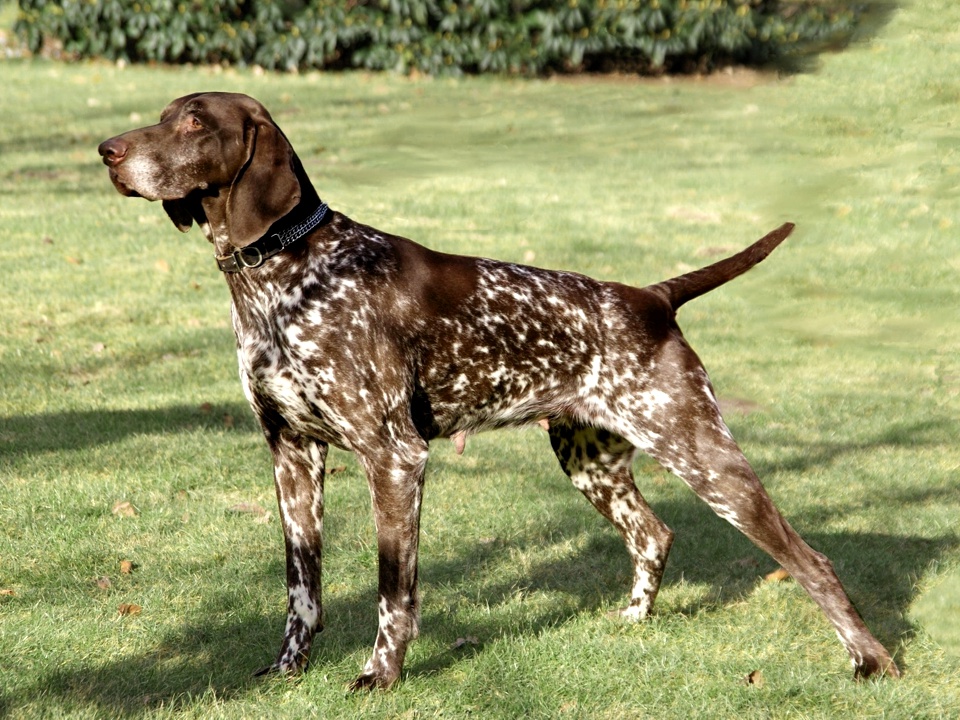
Шея гармонирует с общим видом, постепенно расширяющаяся к туловищу. Очень мускулистый, легко выгнутый затылок, плотно прилегающая кожа горла. Корпус с верхними профильными линиями, холка явно выраженная. Спина твердая с хорошей мускулатурой. Остистые отростки скрыты мускулатурой. Поясница короткая, широкая, мускулистая, прямая или с легким изгибом. Переход от спины к пояснице подтянутый и хорошо завершенный. Круп широкий и достаточно длинный, не обрубающийся коротко, легко идущий к хвосту, с хорошей мускулатурой. Грудь скорее глубокая, чем широкая, с хорошо выраженным килем и по возможности с направленной далеко назад грудиной. Грудина и локтевой сустав находятся на одной высоте. Ребра хорошо изогнутые, не плоские и не бочкообразные. Задние ребра хорошо направлены вниз. Живот не слишком подобран.
Передние конечности при осмотре спереди прямые и параллельные, со стороны – хорошо стоящие под телом лапы. Плече-лопаточное сочленение: косо и назад плоско прилагающая лопатка. Сильная, сухая мускулатура. Хорошие сочленения между плечом и лопаткой. Лопатки длинные, плоские, с хорошей и сухой мускулатурой. Пясти никогда не поставлены круто, минимальный сгиб угла предплечья и пясти. Задние конечности при взгляде сзади прямые и параллельные. Хорошие углы сочленения. Мощные кости. Бедра длинные, широкие и мускулистые. Хорошее сочленение между тазом и бедром. Колени мощные, с хорошим сочленением между голенью и плюсной. Плюсны мощные, отвесно поставленные. Лапы от круглых до ложкообразных, с плотно прилагающими друг к другу, достаточно изогнутыми пальцами. Мощные когти. Грубые, крепкие, подушечки. Они параллельно опираются на поверхность, при стоянии или движении не вывернуты вовнутрь или наружу.
Высоко поставленный, сильный в основании, суживающийся кверху, средней длины. Для использования в охоте приблизительно наполовину купирован.В спокойном состоянии - свешивающийся, в движении - поставлен параллельно и не слишком высоко над линией спины и не сильно изогнутый. В странах, где законодательно запрещено купирование хвоста, он может оставаться естественного вида. Он должен доставать до скакательного сустава, и быть прямым или несколько саблевидным.
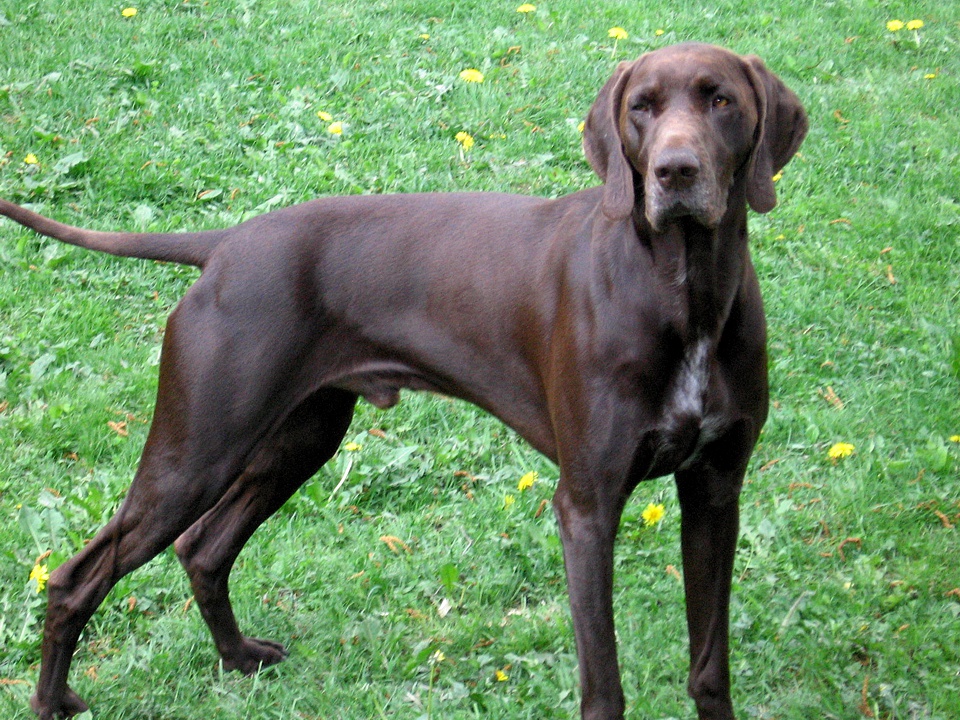
Шерстный покров короткий. Шерсть блестящая, прямая, жесткая, густая. Длина шерсти по корпусу и шее 1,5-2 см. На ушах и голове шерсть короче (до 1 см) и мягче. На ногах шерсть короче и жестче, чем на корпусе. Окрас нескольких видов: коричневый, без отметин; коричневый, с небольшими белыми или крапчатыми отметинами на груди или лапах; темный крапчатый с коричневой головой, коричневыми пятнами или с крапом; светло-коричнево крапчатый с коричневой головой, коричневыми пятнами, крапинками или без пятен; белый, с коричневыми отметинами на голове, с коричневыми пятнами или крапинами; черный окрас с теми же оттенками, как у коричневых или коричнево-пегих; песочно-желтый. Допускаются белые пятна на лбу, мелкие пятнышки и крап на губах.
С большим размахом и соответствующим забеганием вперед, передние и задние лапы прямые и параллельные, при этом хорошо выпрямленная осанка.
Рост кобеля 58-63 см, суки – 53-58 см. Вес кобеля 29-32 кг, суки – 20-27 кг.
Чтобы оставить здесь комментарий, войдите или зарегистрируйтесь на сайте.
Авторизация
