Animals / Dogs

Swedish Vallhund

History of occurrence

The Swedish Vallhund, also known as Västgötaspets or the Swedish Shepherd/Cattle Dog, dates back to the 500's in Sweden, yet was only recognised by the Swedish Kennel Club in 1948. There are two camps of thought about its origin: one being that it developed naturally over the centuries in Sweden as a herding dog, the other being that it is descended from the Welsh Corgis; yet there are those who contend that the Corgi descended from the Vallhund. In the 1940's, it nearly became extinct, but was restored due to a dedicated breeder. They are still used as herding dogs today, and are tireless in their work.

General form

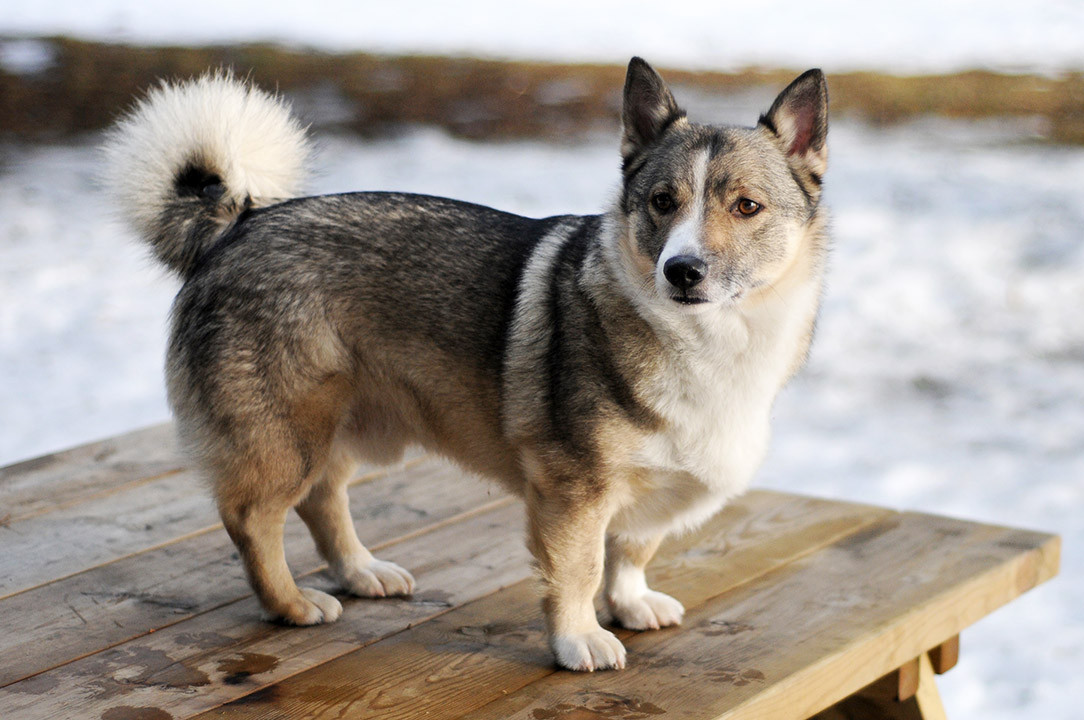
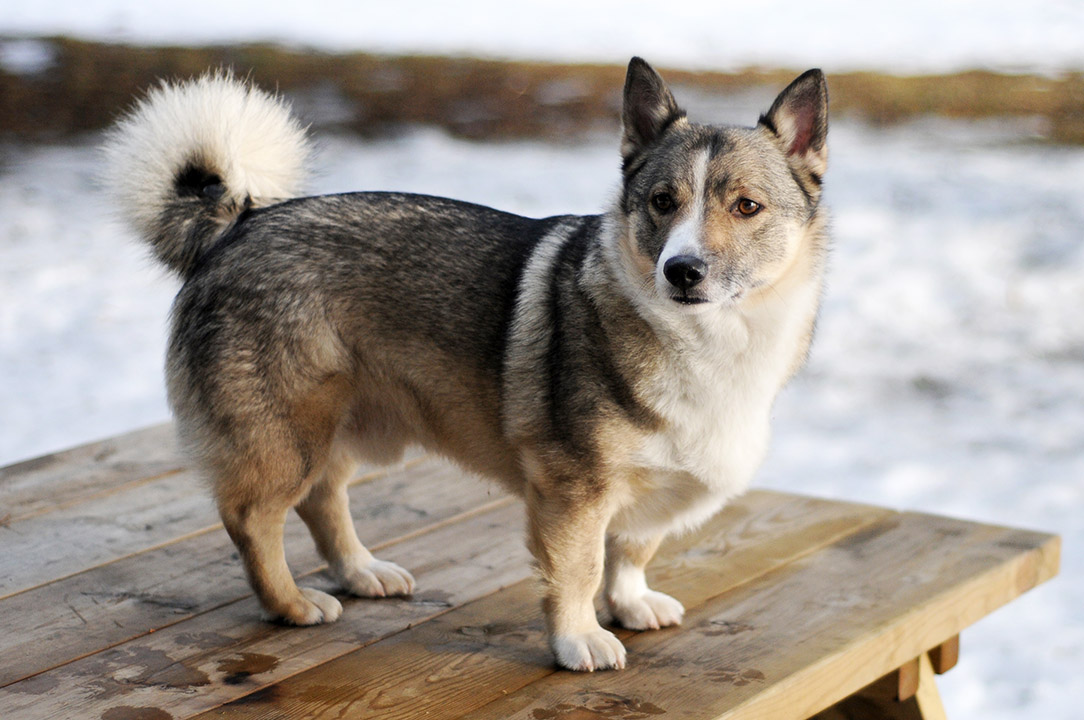
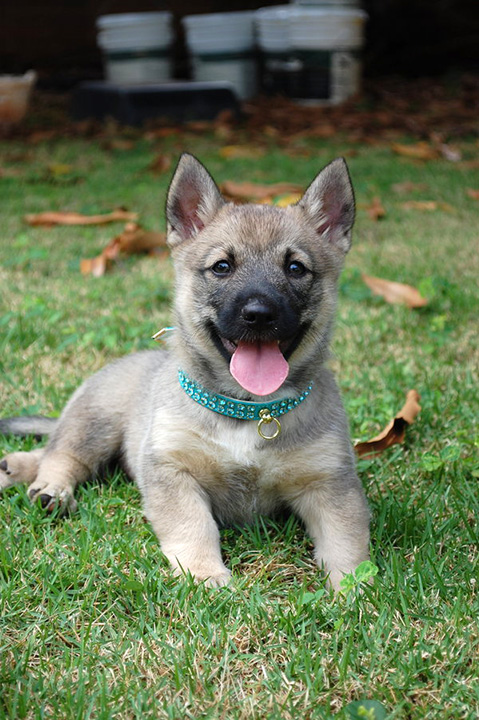
A small, powerful, fearless short-legged dog. Appearance and expression denote a watchful, alert and energetic dog.

Отличительная особенность породы Swedish Vallhund

Head

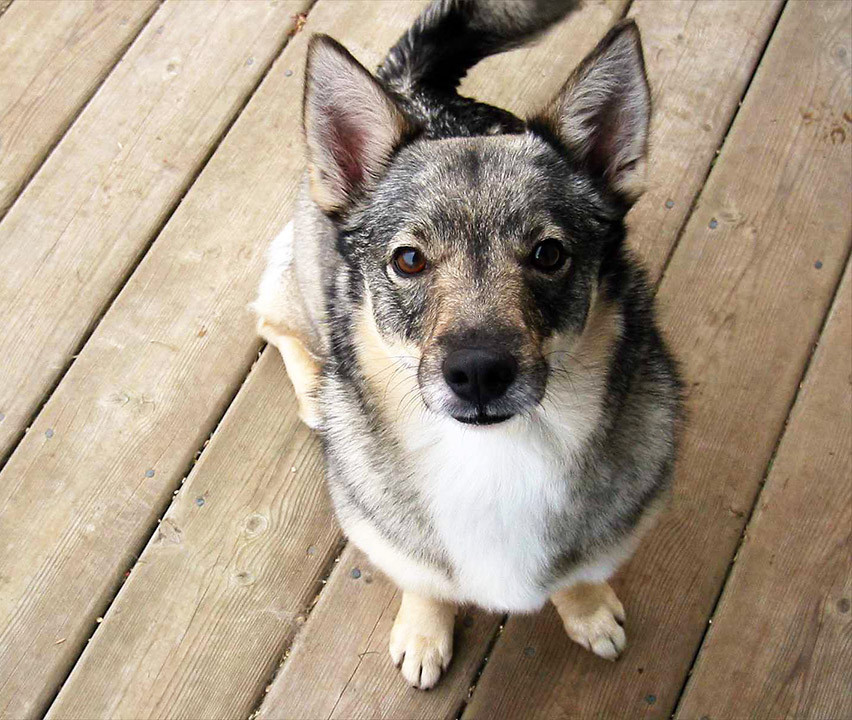
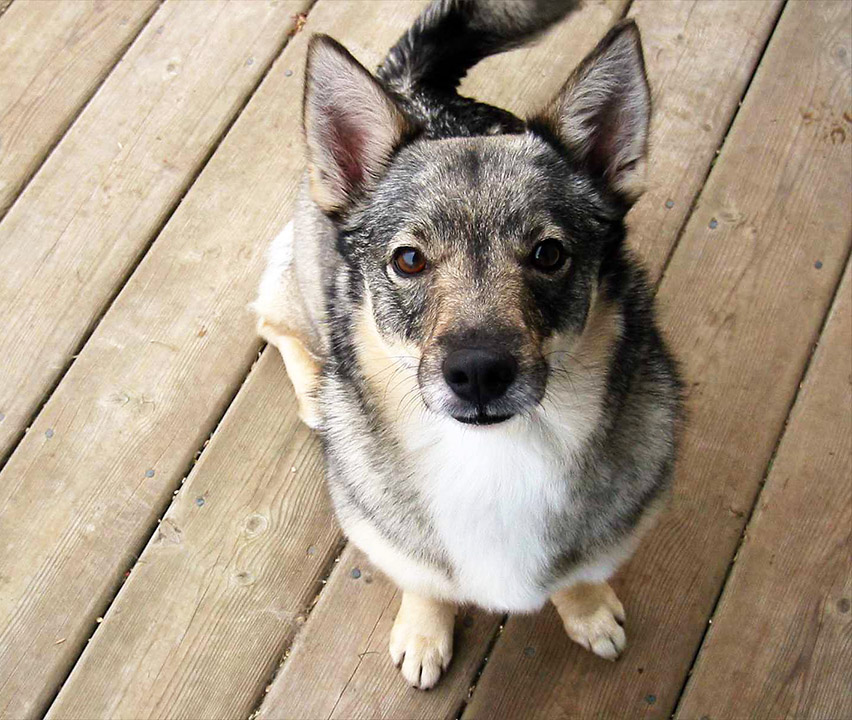
Head: rather long and clean cut with an almost flat skull. When viewed from above, forms, an even wedge from skull to tip of nose. Well defined stop. Nose: pigmentation jet black. Muzzle: when viewed from the side, looks rather square. The muzzle is slightly shorter than the skull. Lips: tightly closed. Jaws/teeth: perfect and regular scissor bite with even and well developed teeth. Eyes: medium size, oval in shape and dark brown. Ears: medium size, pointed, pricked and ear leather is hard from base to tip, smooth haired and mobile. Set on not too low. Neck: long, and strongly muscled with good reach.

Body

Topline: back level, well muscled and with short, strong loin. Croup: broad and slightly sloping. Chest: long with good depth. Underline: belly slightly tucked up.

Paws

Shoulders: long and well laid back. Upper arms: slightly shorter than the shoulders and set at a distinct angle. Upper arm lies close to ribs, but is still very mobile. Forelegs: when viewed from the front, slightly bent, just enough to give them free action against the lower part of the chest. Pasterns: elastic. Legs: well boned. Hindlegs: well angulated at stifle and hock. Thighs: strongly muscled. Legs: seen from behind the legs are parallel. Lower thigh: slightly longer than the distance from hock to ground. Feet: medium sized, short, oval pointing straight forward with strong pads and well knuckled up.

Tail

Two types of tail occur, long or natural short tail. In both cases all variations are acceptable.

Wool

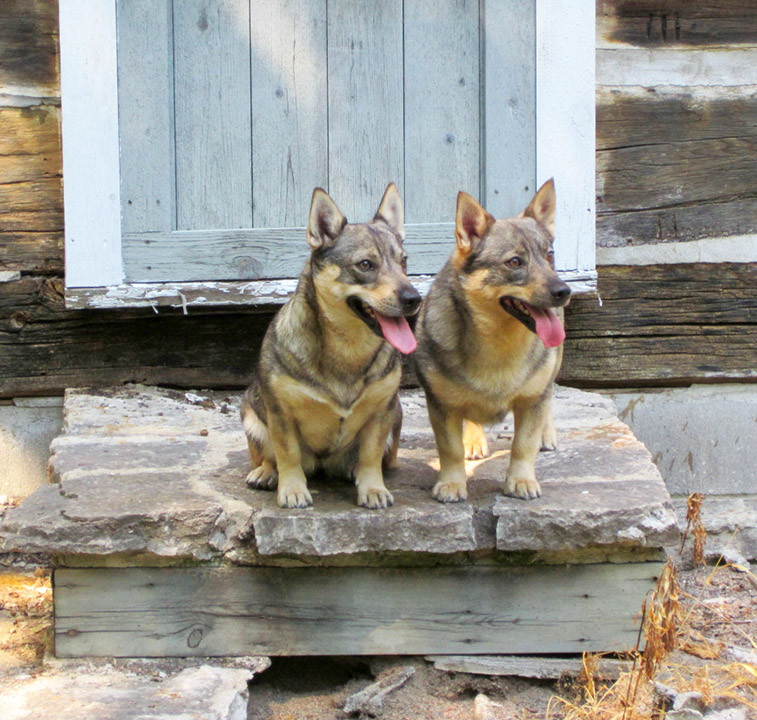
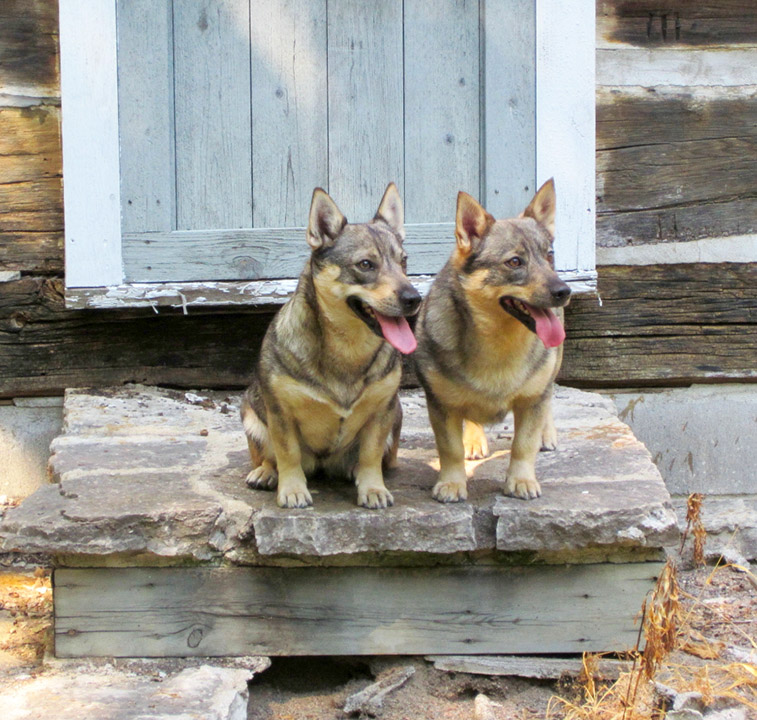
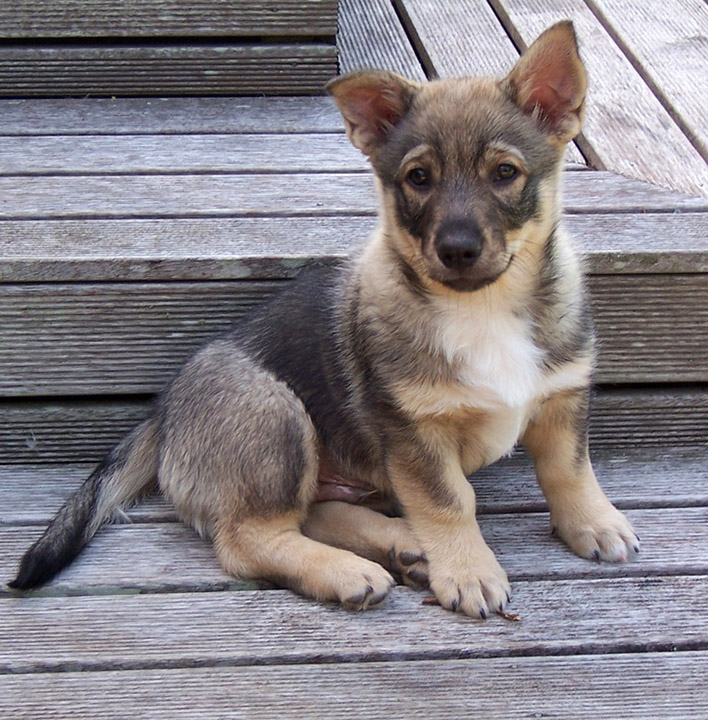
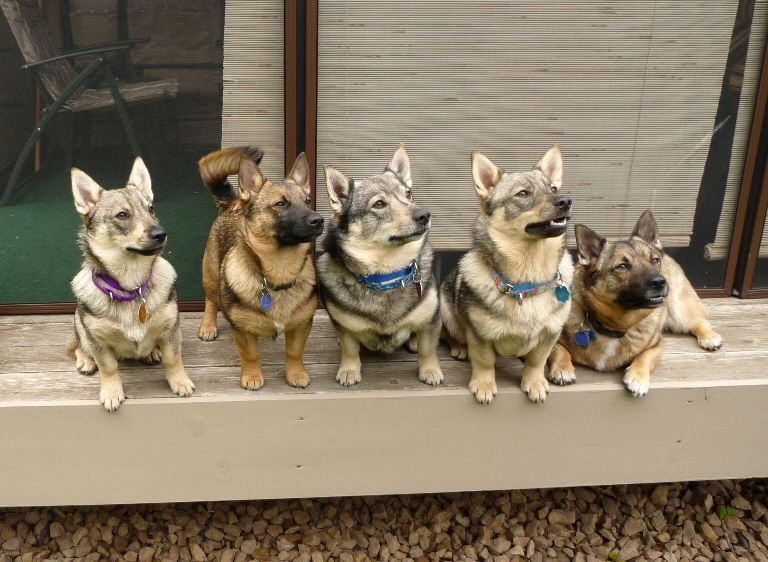
Hair: medium length, harsh close and tight topcoat: undercoat soft and dense. The coat is short on foreparts of the legs, slightly longer on neck, chest and backparts of the hindlegs. Colour: desirable colours are grey, greyish/brown, greyish/yellow, reddish/yellow or reddish/brown with darker hairs on the back, neck and sides of the body. Lighter hair in the same shade of colour as mentioned above can be seen on muzzle, throat, chest, belly, buttocks, feet and hocks. Lighter markings on shoulders, so called harness markings, desirable. White is permitted to a small extent as a narrow blaze, neckstop or slight necklace. White markings are permitted on fore and hindlegs and on the chest.

Movement

The Swedish Vallhund is a herding dog which requires an easy, almost floating movement, agility, and endurance. The correct shoulder assembly and well-fitted elbows allow a long, free stride in front. The forelegs should reach well forward without too much lift. Viewed from the front, the legs do not move in exact parallel planes, but incline slightly inward to compensate for shortness of leg and width of chest. Hind legs should drive well under the body and move on a line with forelegs, with hocks turning neither in nor out. Feet should travel parallel to the line of motion with no tendency to swing out, cross over, or interfere with each other. Short, choppy movement; rolling or high-stepping gait; or close or overly wide movement are incorrect. 
 

Size

Height — 33 cm. Weight — 9-14 kg.

Character

The Swedish Vallhund is a responsive and even-tempered companion. It is intelligent and affectionate. He loves attention and can be casually grayish and show-offish. Owners are never disappointed in his multi-faceted ability or his spontaneous sense of humour. They are usually good with considerate children. They will try to guard your home even if they are too small for the situation. Wary of strangers, it should be properly socialised and trained when it is still young to avoid over-protective behavior as an adult. They sometimes try to herd people by nipping at their heels, although they can be trained not to do this. The Swedish Vallhund tends to bark a lot and makes a good alarm dog. Males can be aggressive with other males. This breed makes a great companion and can be used for herding and ratting.

Maintenance care

The Swedish Vallhund loves to herd. It can do fine without herding, however, as long as it gets a moderate walk on leash or a good play and training session off leash. It is physically able to live outdoors in temperate climates, but it is mentally far better suited to share its family’s home and have access to a yard. Coat care consists only of brushing once a week to remove dead hairs. Lifespan — 12-15 years.

Dignity

Has a short easy-care coat. The Swedish Vallhund is spirited and athletic, but needs only moderate exercise to maintain his muscle tone. Combines the working intelligence of a herding breed with the playful nature of a spitz. The Swedish Vallhund is less "bossy" than a Pembroke Welsh Corgi, but less "mellow" than a Cardigan Welsh Corgi. The Swedish Vallhund is polite with guests and makes a sensible watchdog. The Swedish Vallhund is usually fine with other family pets, and especially good with livestock.

Difficulty keeping

Providing lots of mental stimulation that fulfills his desire to work and gives him something productive to do. Destructiveness when bored or left alone too much. Territorial aggression toward dogs and cats he doesn't know. Strong-willed mind of his own, requiring a confident owner who can take charge. Chasing and nipping at things that move: children, joggers, other animals, bikes, cars. Barking. Heavy shedding. Waiting lists (hard to find) and a high price tag.

Diseases

The health issue most associated with this dog breed is progressive retinal atrophy, a genetic disease that causes blindness in both eyes.
Authentication required

You must log in to post a comment.

Log in
There are no comments yet.