История возникновения
Первый ландсир прибыл в Европу из Ньюфаундленда приблизительно 200 лет назад. Британские и французские рыбаки ловили рыбу возле побережья Ньюфаундленда и завезли оттуда этих собак. Рыбаки начали продавать ландсиров в Англии, где они стали очень популярными благодаря своему дружественному нраву и необычному происхождению. Фактически, рыбаки импортировали так много собак, что собственная популяция Ньюфаундленда в начале XIX в. стала уменьшаться. В Англии порода приобрела популярность уже к середине XIX в., и стала известной за пределами Англии благодаря известному живописцу сэру Эдвину Ландсиру (Edwin Landseer). В 1837 он нарисовал известную картину “Достойный член человеческого общества”. На той картине была изображена гигантская черно-белая собака по имени Пол При. Эта собака спасла своего владельца и других людей, не дав им утонуть. После этого люди начали называть эту породу ландсир. Даже в настоящее время бело-чёрная собака с высокими ногами из Ньюфаундленда известна как ландсир. Британцы экспортировали много этих собак на Европейский континент, что было очень хорошо, потому что в Великобритании появились другие, более фешенебельные породы, и популяция ландсиров стала сильно уменьшаться. Первый помёт чистокровных ландсиров был зарегистрирован в 1902 в “Newfoundländer–Klub fur den Kontinental”. Он был получен от двух собак, которые были импортированы из Великобритании. От этого кобеля селекционеры получили 11 собак соответствующего ландсирам окраса в четырех поколениях. Позже они скрещивали тех собак с черными Ньюфаундлендами. Это, вероятно, произошло потому, что люди не знали, как наследуется окрас. Только в 1904 и 1905 годах селекционеры скрестили неизвестного кобеля нужного окраса и собак, унаследовавших крови импортированных из Великобритании предков, и снова получили чистокровный помёт ландсиров. На Европейском континенте их начали сводить главным образом с импортированными из Великобритании собаками. Например, они комбинировали некоторых местных черных или черно-белых Ньюфаундлендов. Также возможно они сводили импортированных собак с какими-нибудь большими белыми пастушьими собаками. Селекционер Отто Вальтершпиль (Otto Walterspiel) из Германии проделал огромный труд в селекции ландсиров в своём питомнике “von Schartenberg”. Благодаря нему эта порода не исчезла в Европе и в целом мире. В 1960 FCI (Federation Cynologique Internationale) признала этих бело-чёрных собак с длинными ногами самостоятельной породой, и присвоила ей название "ЛАНДСИР ЕВРОПЕЙСКО-КОНТИНЕНТАЛЬНОГО ТИПА" или, кратко, просто Ландсир.
Общий вид
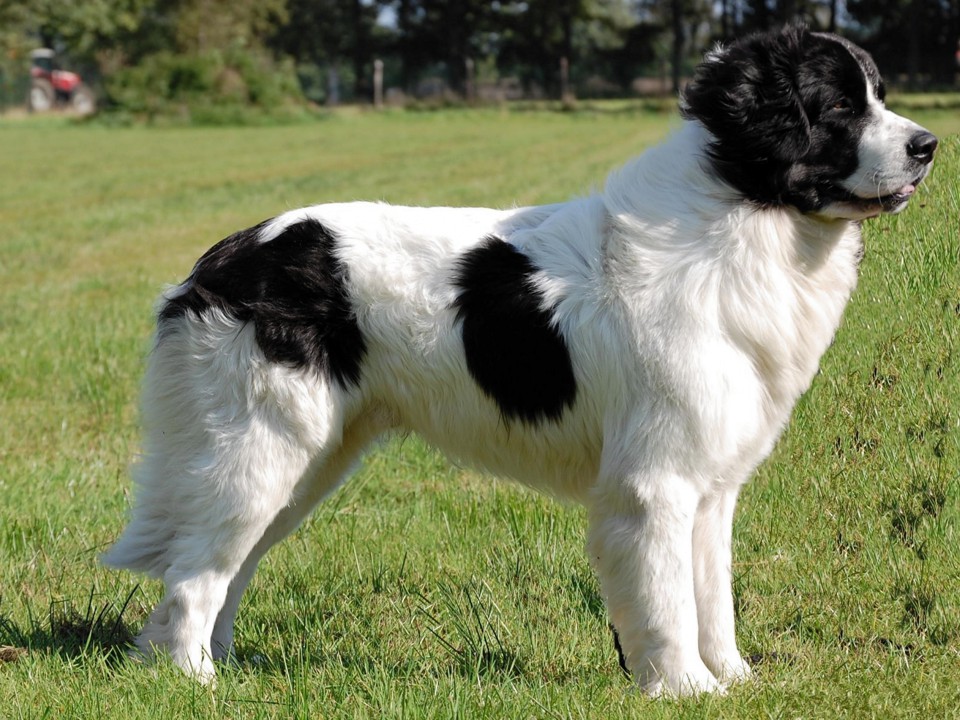
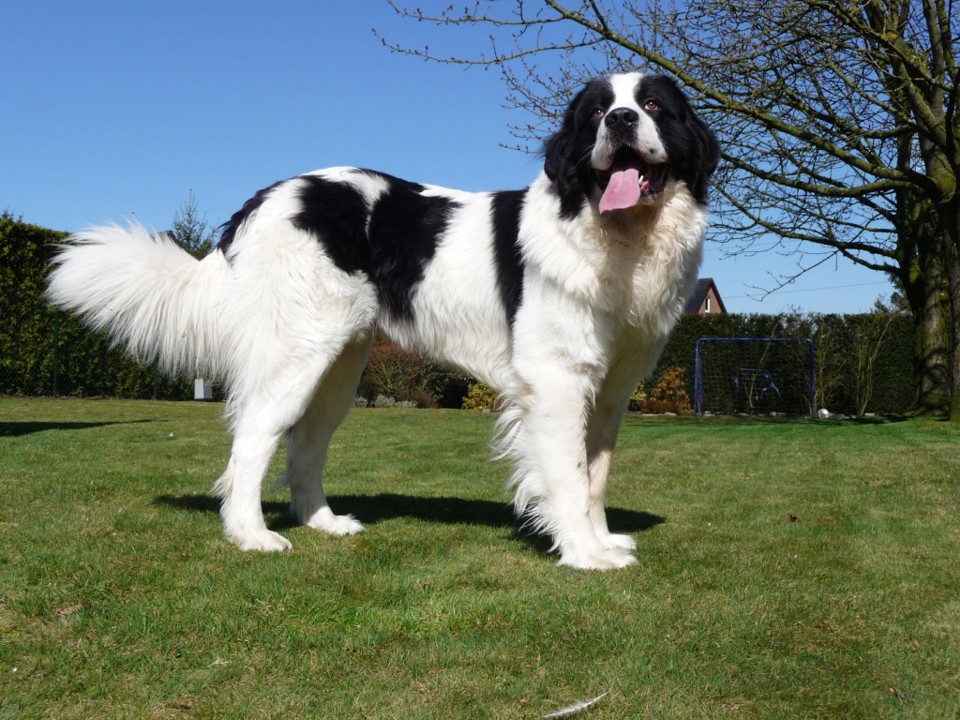
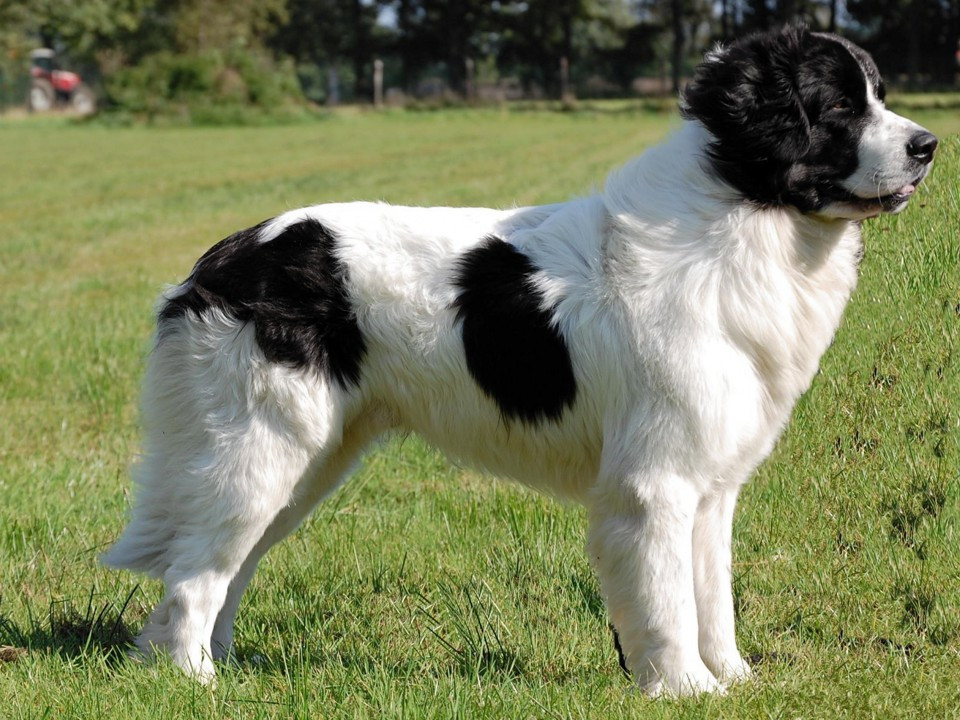
Ландсир – высокая, мощная и пропорционально сложенная собака с более длинными, чем у черных ньюфаундлендов ногами, особенно это заметно у кобелей.
Отличительная особенность породы Ландсир
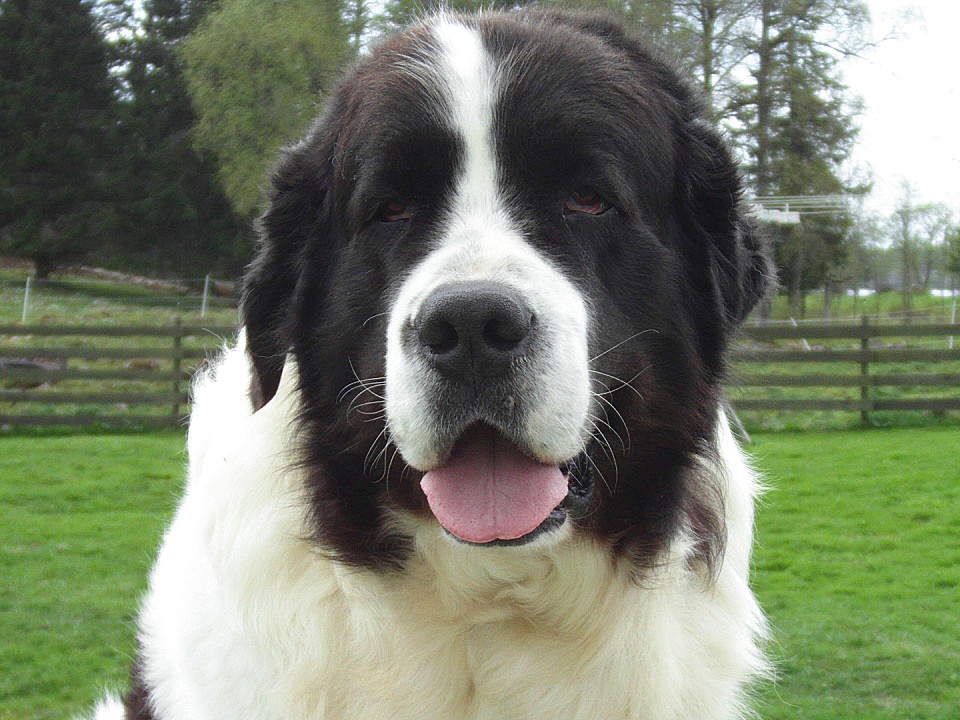
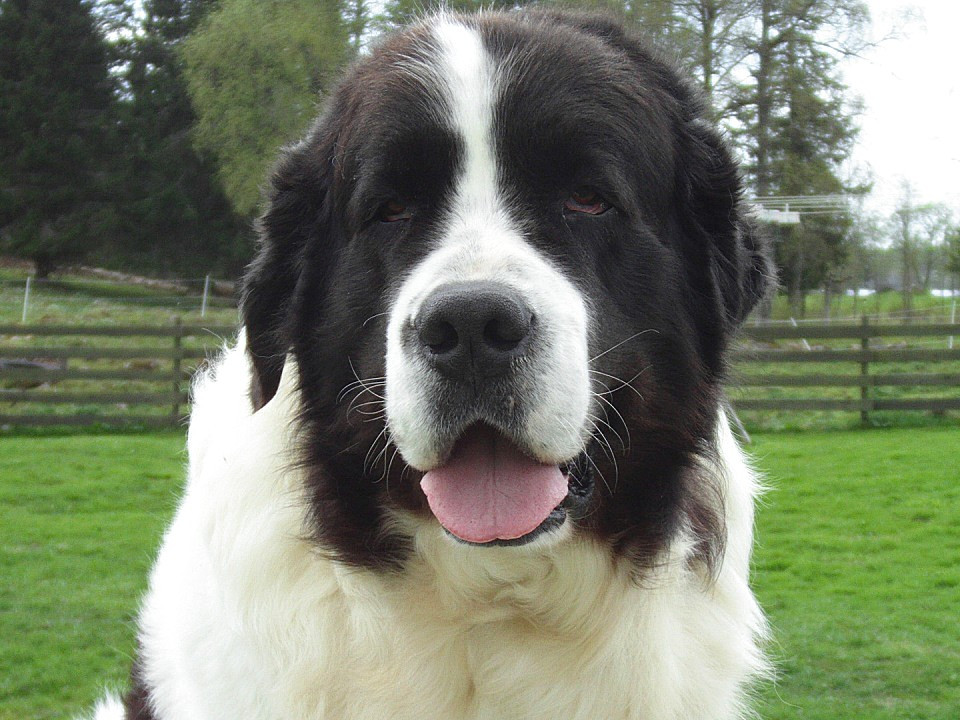
Голова: на голове ландсира не должно быть складок, череп широкий и массивный, с хорошо заметным затылочным бугром.
Морда: длина и глубина морды равны, переход ото лба не резкий, но выражен достаточно хорошо.
Скулы умеренно развиты, постепенно сужаются к морде, нос черный.
Губы чистые, черные, не слюнявые, очень плотные, верхняя губа немного опускается на нижнюю, прикус ножницеобразный.
Глаза: миндалевидные, среднего размера коричневые глаза с умным дружелюбным взглядом посажены не очень глубоко, третьего века нет.
Уши: треугольные уши с немного закругленными кончиками свисают по бокам головы, плотно к ней прилегая.
Шея мускулистая и широкая, но не круглая, а овальная. Длина шеи от затылка до холки должна быть приблизительно на четверть меньше длины от затылка до кончика носа.
Корпус широкий и сильный, с прямой, ровной спиной. Длина тела от основания хвоста до холки должна быть вдвое больше длины головы.
Грудь глубокая и широкая.
Живот слегка подтянут.
Ноги у ландсиров очень сильные, с мощной мускулатурой.
Лапы большие, по-кошачьи компактные, между пальцами хорошо развитые перепонки.
Длинный прямой хвост может быть чуть изогнут на конце.
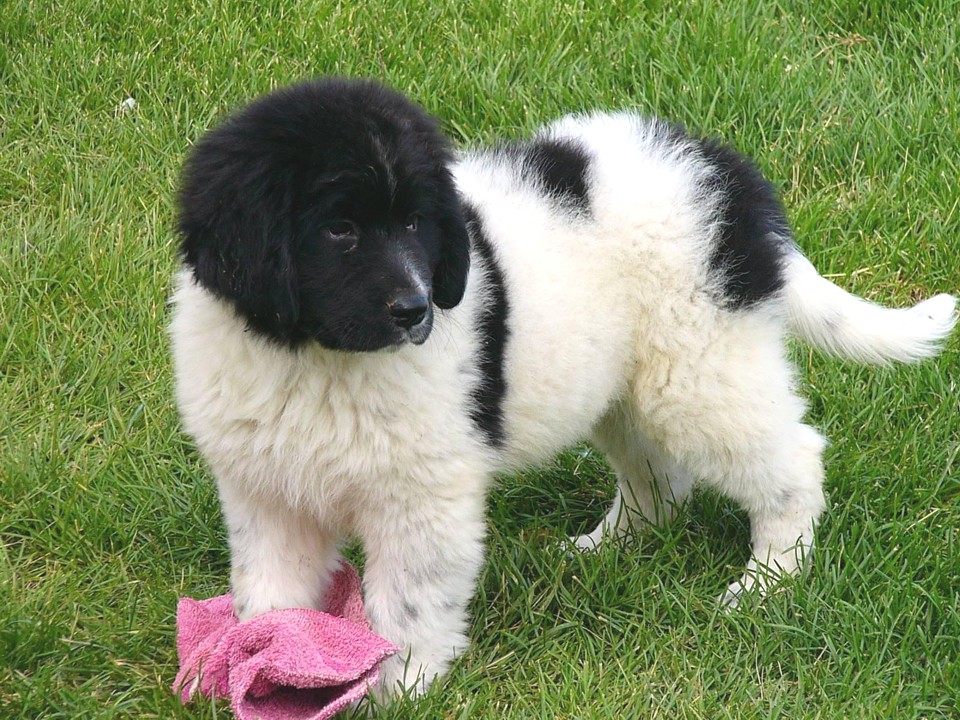
Шерсть на голове и ушах собаки короткая и тонкая, на всем остальном теле – длинная, прямая, плотная и мягкая на ощупь, с хорошим подшерстком. У основания ушей и на ногах бахрома из длинных волосков. Допускается, чтобы на спине и задних ногах шерсть была волнистой.
Окрас: на белом фоне четкие черные пятна на теле и крупе. Воротник, живот, передняя часть груди, хвост и ноги должны быть белыми. На черной голове – белый ободок вокруг носа, соединенный с воротником белой полосой, которая не должна быть ни слишком узкой, ни слишком широкой.
Движения мускулистых конечностей ландсира должны характеризоваться размашистым шагом, с легким наклоном вперед.
Рост — кобели: 72-80 см, суки: 67-72 см.
Вес — кобели: 65-80 кг, суки: 50-70 кг.
Характер
Смелая и чуткая собака, очень любит воду. Любящий, добрый, преданный друг и защитник, надежная нянька для детей. Собаки поздно взрослеют и отличаются покладистым и миролюбивым характером.
Содержание и уход
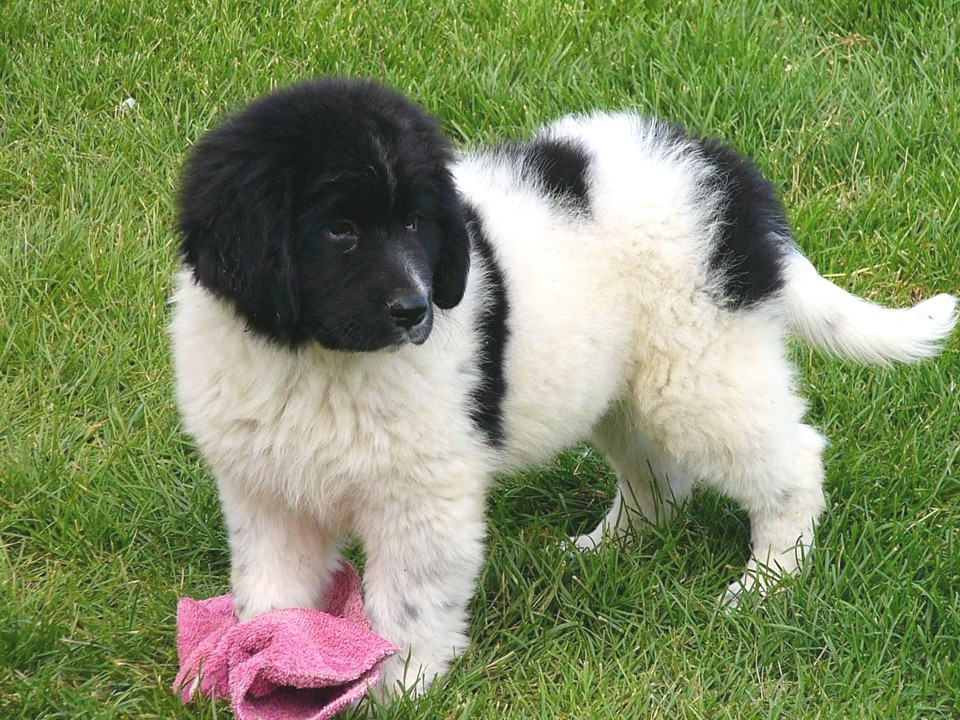
Несмотря на свои размеры, ландсир очень подвижен, иногда бывает упрямым, что требует терпения и чуткости во время его воспитания. На первом году жизни этих крупных, тяжелых собак следует обратить особое внимание на то, чтобы щенки не имели физических перегрузок и получали сбалансированное питание, иначе впоследствии могут возникнуть проблемы с суставами. Ему требуются большое пространство. Ландсиры любят много двигаться, поэтому им необходимо давать нагрузки и занятия, соответствующие их склонностям. Поскольку эти собаки - прекрасные пловцы и очень любят приносить из воды какие-либо предметы, желательно при случае давать им возможность поплавать. Экзамен на сопровождающую собаку Ландсир выдерживает без каких-либо проблем, но для охранной службы не пригоден. Длинная шерсть ландсиров требует ухода и частого расчесывания, особенно во время линьки. Они очень любят купаться и с удовольствием поплещутся в любой встреченной луже, испачкавшись с ног до головы. Тем не менее, частое мытье собак с шампунями нежелательно, оно может повредить естественную смазку шерсти. Из-за длинной шерсти ландсиры плохо переносят жару, поэтому летом надо давать им больше воды и не оставлять надолго на солнце. Ландсирам не требуются длительные физические нагрузки, ежедневных прогулок им вполне достаточно. А вот плавать эти собаки любят до самозабвения, и надо давать им возможность вволю порезвиться в воде. Взрослые собаки едят совсем немного, тем не менее, надо следить, чтобы у них не было ожирения.
Продолжительность жизни — 10-11 лет.
Достоинства
Выдающийся темперамент. Отсутствие агрессии по отношению к незнакомым людям и другим собакам. Способность к обучению.
Сложность содержания
Шерсть требует ежедневного ухода. Собаки храбрые и мужественные, в качестве сторожевой собаки не подойдут. При реальной угрозе членам семьи прикроют собой, но нападать не будут. Может упрямиться при обучении.
Болезни
В щенячьем возрасте нужно обращать внимание на то, чтобы собака не получала тяжелых физических нагрузок, иначе могут возникнуть проблемы с суставами в дальнейшем. Собаки склонны к дисплазии и сердечным заболеваниям.