Классификация
Тип/Отдел — Mollusca (моллюски).
Класс — Gastropoda (Брюхоногие молюски, улитки, гастроподы).
Подкласс — Orthogastropoda (Настоящие брюхоногие).
Инфраотряд — Stylommatophora (Стебельчатоглазые).
Семейство — Achatinidae (Ахатины).
Род — Archachatina (Архахатины).
Вид — Archachatina marginata (Окаймлённая архахатина)
Ареал обитания
Западная и южная части Африки, влажные почвы, покрытые листовым опадом.
В условиях террариума чаще всего содержатся следующие подвиды:
Archachatina marginata var. marginata — обитает в Западной Африке — Конго, Габон, Гвинея, Нигерия;
Archachatina marginata var. ovum;
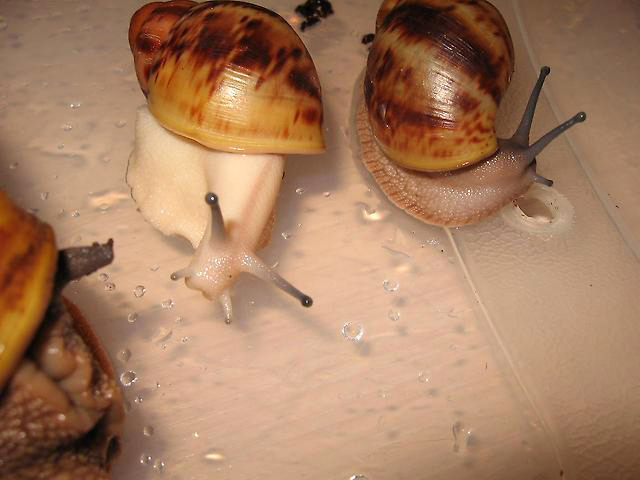
Archachatina marginata var. ovum acromelanik — с белой ногой и тёмными рожками;
Archachatina marginata var. ovum albino body;
Archachatina marginata var. suturalis;
Archachatina marginata var. eduardi;
Archachatina marginata var. eduardi rodei - более тёмный подвид.
Внешний вид и половые отличия
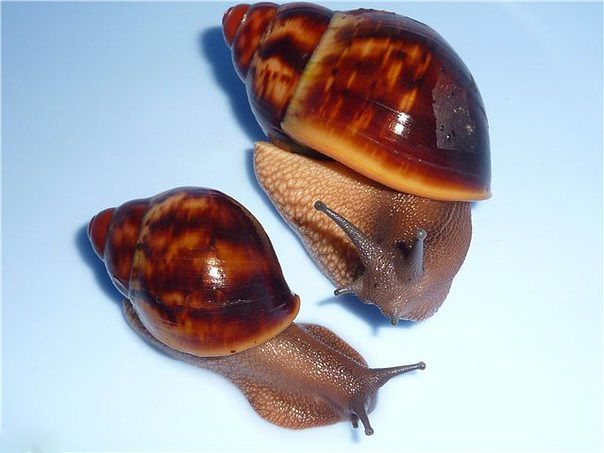
Длина тела: 11-15 см, это одна из крупнейших наземных улиток.
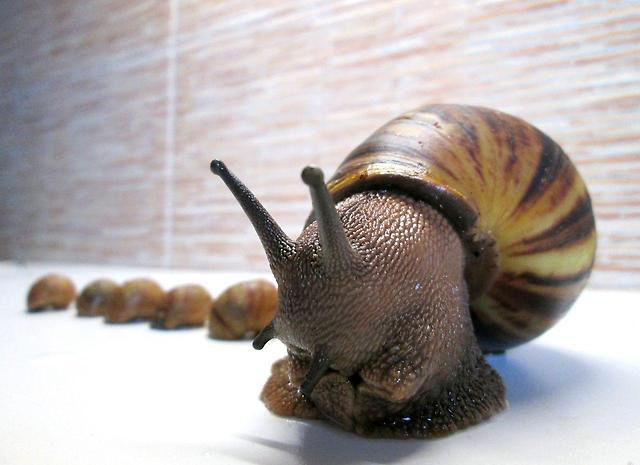
Окрас раковины в основном полосатый от светло коричневого до почти черного цвета. Подошва в основном темного цвета, но так же бывают вариации светлого-кремового цвета.
Особенность этого вида V-образный хвост.
Кормление
У архахатин обычно хороший аппетит, кормят их обычно ежедневно, причём лучше вечером, так как архахатины - ночные улитки. Кормить архахатин можно огурцами, яблоками, салатами, капустой, фруктами, кабачками, тыквой... Бывает что у отдельных архахатин бывают свои пищевые пристрастия. На улице для архахатин можно собрать клевер и одуванчики.
Архахатинам обязательны кальцийсодержащие подкормки, они идёт на построение панциря. В этом качестве можно давать улиткам молотую яичную скорлупу, сепия (панцирь каракатицы), мел кормовой (не школьный!), специальные добавки (гаммарус, дафния), мясокостная и костная мука.
Категорически нельзя давать жаренное, солёное, маринованное, соль.
Корм необходимо регулярно менять на свежий, не допуская его порчи, гнили и размножения в нём мушек-дрозофил.
Разведение
Архахатины-гермафродиты с перекрёстным оплодотворением. Полового созревания они достигают примерно к году-полтора. Обычно сначала они откладывают неоплодотворённые яйца, потом начинаются уже оплодотворённые кладки. Брачные игры могут происходить бурно, оплодотворение происходит при соприкосновении половыми органами — белыми точками возле головы справа.
Самка может хранить сперму в своих половых путях и откладывать яйца ещё в течение года после спаривания.
Такое количество улиток полноценно вырастить невозможно, поэтому кладки нужно изымать и уничтожать, или скармливать улитках же в растолчённом виде.
Половозрелыми улитки становятся после 1,5 лет, размер кладки от 6 до 20 яиц. Яйца относительно крупные, как правило, более 15 мм диметром. Продолжительность инкубационного периода зависит от температуры воздуха и субстрата. Так, при температуре воздуха 26-28°С и температуре почвы 17-19°С выход молоди произойдет через 35-41 день, а при температуре воздуха 26-28°С и температуре почвы 22,5 23,0°С инкубационный период займет 29-35 дней.
Содержание
Содержание несложное, подойдёт для начинающего любителя.
При неблагоприятных условиях содержания улитка может впасть в спячку — она закрывается в панцире и неактивна. Вывести её из такого состояния несложно — стоит лишь подержать под струёй тёплой воды.
Содержание и уход
Террариум для содержания одной архахатины подойдёт размером от 10 литров, террариум на группу должен быть больше. Он может быть как стеклянный, так и пластиковый. Крышка обязательна, с вентиляционными отверстиями. На дно кладут грунт, лучше всего подходит кокосовый субстрат — он должен лежать толстым слоем, чтобы улитка, если упадёт с высоты, не травмировалась. Можно использовать и простой торф, главное чтобы не было добавок и удобрений, иначе улитка может обжечься. Можно добавить и небольшой неглубокий водоём — улитки любят купаться. Можно положить так же мох и коряги, предварительно помыв их. Опрыскивать террариум нужно ежедневно. Влажность определяют эмпирически - если улитка сидит на стекле, грунт слишком влажный, если зарывается в субстрат и закрывается, значит слишком сухой. Стенки лучше протирать ежедневно-улитки их сильно пачкают. А вот субстрат меняют по мере загрязнения.
Время от времени улитку нужно мыть под краном, тёплой водой, обычно им очень нравится эта процедура.
Температура содержания 24-29°С.
Влажность: 50-80%.
Длительность жизни — в среднем 4-4,5 года, но могут дожить и до 7 лет.