Habitat
This species is endemic to the Carpathian Mountains in Eastern Europe.
Outward appearance
Length: 10-14 cm.
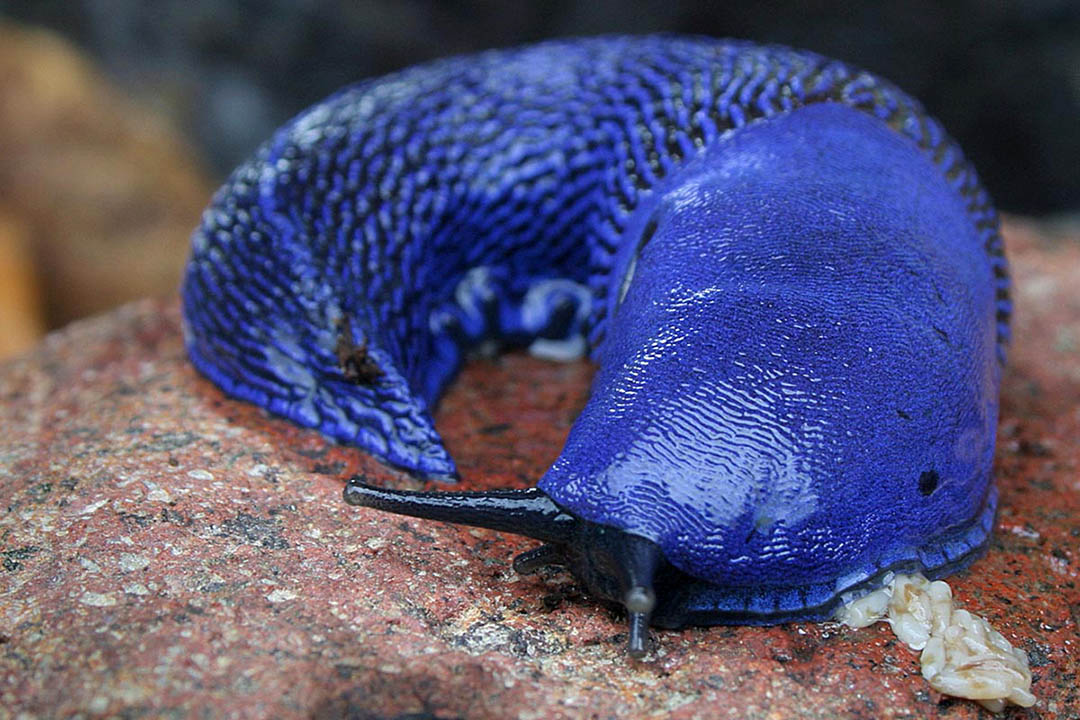
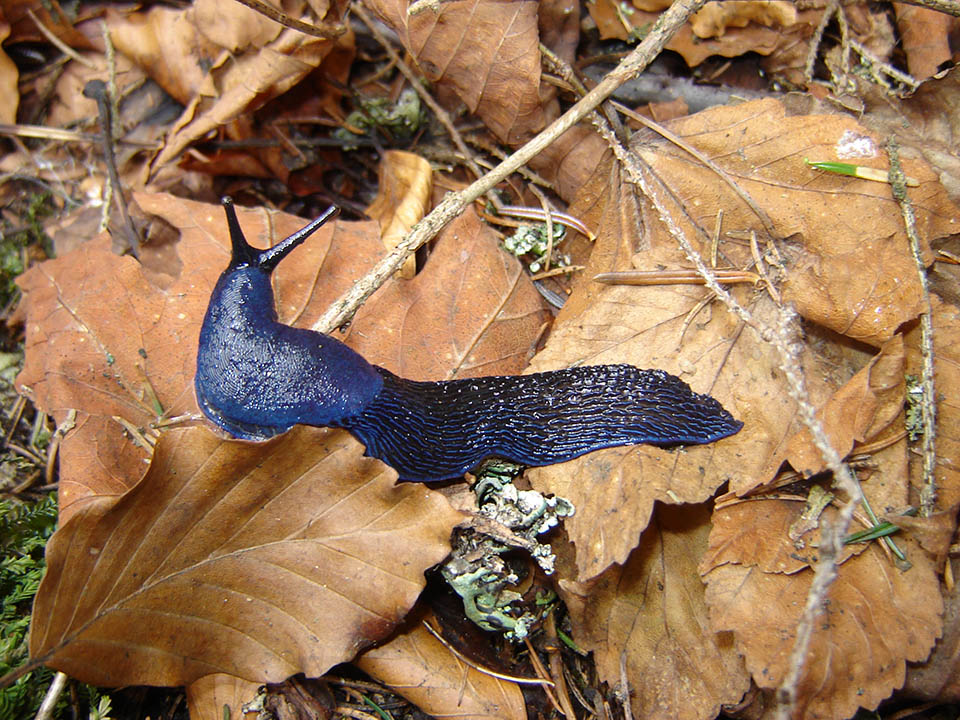
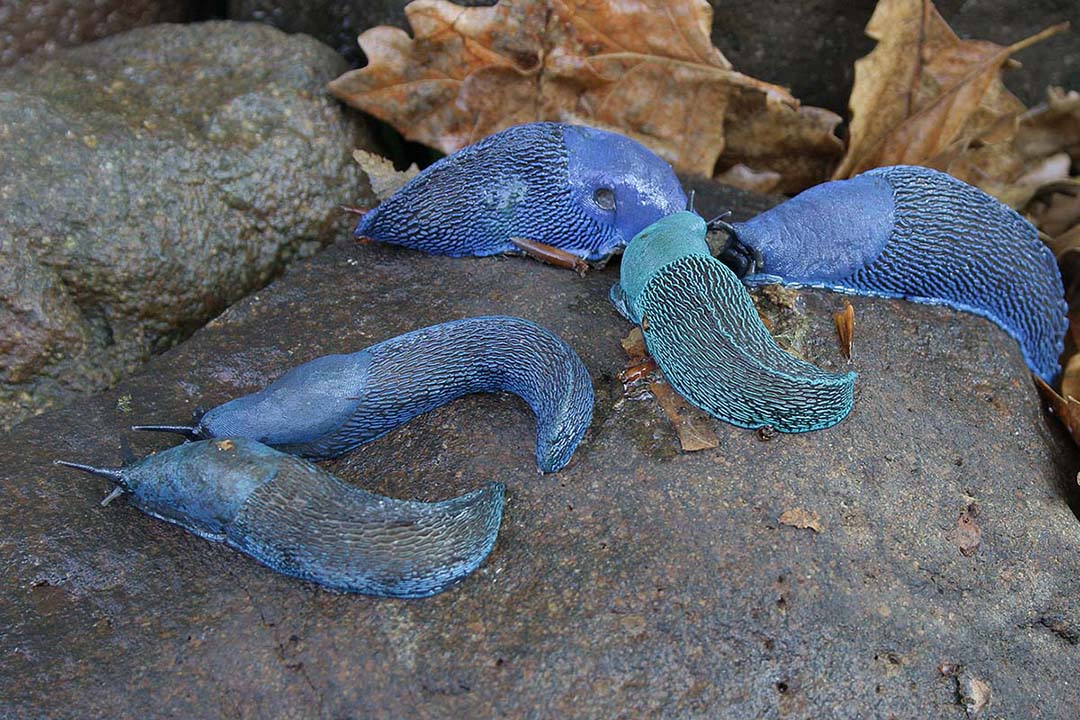
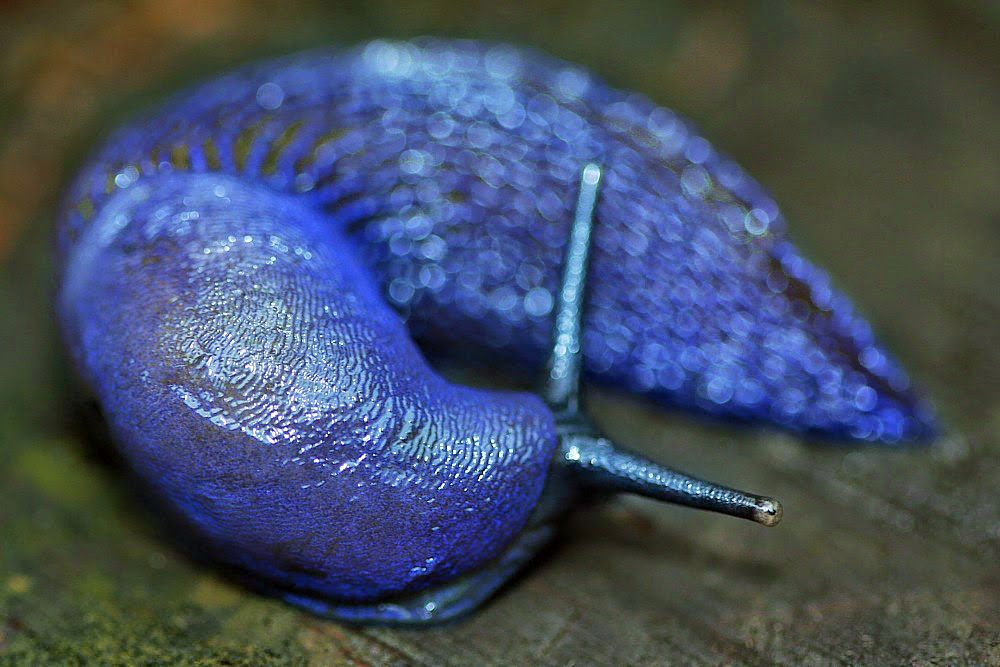
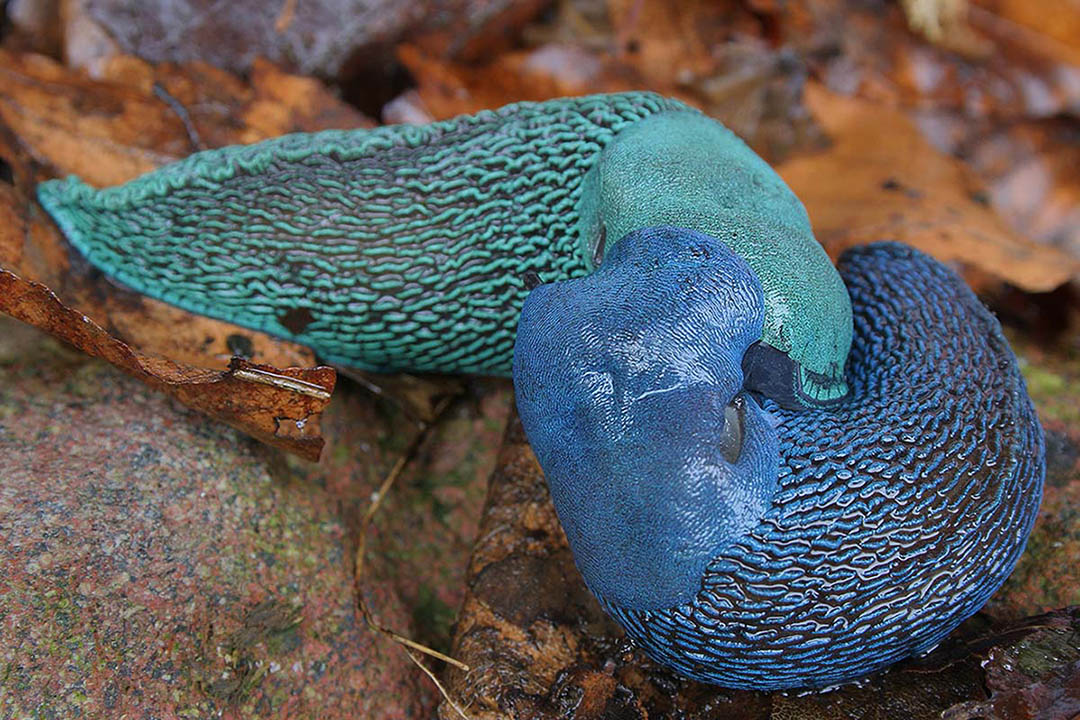
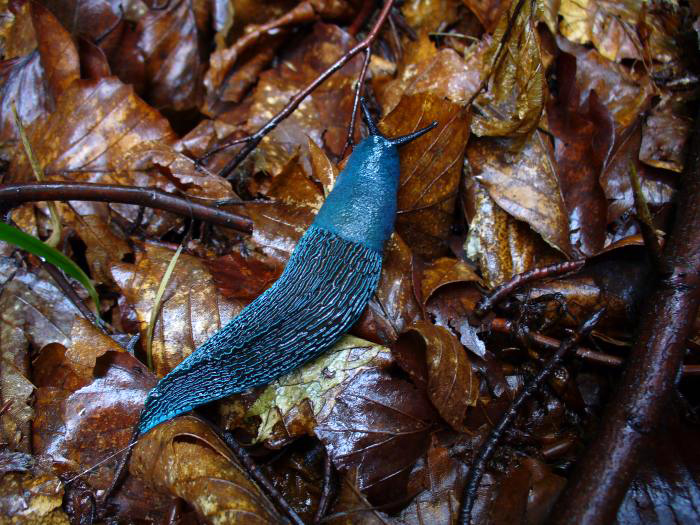
Colour: Slug evenly blue or bluish green (occasionally black) with dark greyish head and tentacles, margins pale yellowish, sole pale yellowish or whitish. Juveniles are yellowish brown with dark lateral bands.
Reproductive system: Genitalia are without penis. There is only an accessory organ for the copulation.
Feeding
Feeding your slug is fairly simple and actually quite fun. Make sure the food you're feeding the slug has not been sprayed with chemicals. After all, many of those chemicals were manufactured specifically to kill slugs! Home grown and organic foods are the best. Even so, wash all food carefully before giving it to your slugs or snails.
Try all sorts of vegetables on your slug. Some favorites are kale, cucumber (slice it so its easier to eat), lettuce (NOT iceburg; romaine, green leaf, and red leaf are good), bok choy, mustard greens, chard, and other leafy stuff. Anything you notice slugs have been munching in your garden is good too. Some individual slugs and snails will devour one thing that others avoid or vice versa. You can give them things like flowers and other ornamental plants that you notice "wild" slugs have been eating. Hostas are a particular favorite! Nasturiums, primroses, dandelions, nettles and oxalis are also great plants to give your creatures. Avoid marigolds. Fruits are also good for your slug or snail. Strawberries are devoured with relish. Slicing or cutting vegetables makes them more desirable. Slugs will often eat decaying plant matter, so veggies that are a bit wilted are fine. They will often eat the parts of the fruit you discard from your own meal, such as the tops sliced off strawberries. Try to feed a variety.
Breeding
The first thing to keep in mind is that mating can be very hard on your snail, and some (about a third) do not survive after laying eggs. Keep this in mind if you intend to keep more than one snail together.
There is no guarantee your snails will breed, but if they do so it will generally happen when the conditions in their habitat mimic those of late spring and early summer in their native environment (temperature, humidity, and length of daylight).
Snails are hermaphrodites. Because of this, any pair can breed. Some snails will act as a male one time and then a female the next time they mate. Other times, both will play both rolls at once and fertilize each other simultaneously (which makes for a LOT of babies!). Many species can even reproduce when alone, and even if you keep only one snail, you may be surprised by eggs!
If you intend to breed your snails, they should have deep, loose soil to lay their eggs in (at least two inches deep). They dig holes and lay 30 - 90 eggs in them. Some lay in one hole, others dig several holes and distribute their eggs. The genital opening from which they lay their eggs is right behind their head. Snails will not be able to lay their eggs in soil that is too heavy (such as clay), or too dry. Soil should be 20 - 40% orcanic material, and 65 to 80 degrees Farenheit (preferably 70 F). Soil moisture should be high, about 80%.
Eggs are usually laid within weeks of mating, though the snail can hold off for a whole year. It can take them a day or more to lay their eggs, and sometimes they take a break between laying, up to several weeks. Eggs hatch anywhere from 10 to 30 days after laying (varying by species, temperature and other factors).
Maintenance care
Slugs and can get sick from tap water (the water that comes out of your faucets) because of the chemicals added to it. You must use dechlorinated water, bottled spring water, or aged tap water. You need to age any tap water you use for your slug. To do this, put the water in a bucket or open container, and let it sit for about a week, covered lightly with a cloth. The chlorination, which is poisonous to snails, especially since they partially absorb water through their skin, will evaporate. You can also use dechlorination drops, available at your pet store, to make this process go faster and remove other harmful additives. You purchase such drops in the fish section; ask a pet store employee which are best. Follow the instructions carefully.
Keep a mister bottle (spray bottle; you can find them either at the pet store or in the hair care section of the grocery store) filled with safe water near your slug's home. Do not use a mister bottle that previously had been used with a chemical like hairspray; it's best to buy a new one for your slug. Everyday, mist the slug's habitat so that it's damp but not wet. Use the fine mist setting. Spray leaves, moss and rocks or other furniture. This is where the slug will get its moisture. Be sure the slug does not get too dry. Dry conditions kill slugs!
If you want to go all out, an alternative to the mister bottle is a misting set up, which is sold for lizards which will only drink dew and misted water, and can be purchased at a pet store. This will automatically mist your habitat (and also looks cool).
You will need to keep your slug's habitat clean or it will begin to smell rancid and also attract pests like fruit flies. Clean out uneaten food every day. Don't let the habitat develop standing water, or it will start to smell sour.
In habitats with a reptile/amphibian substrate, replace the substrate every month or so. With planted dirt terrariums, remove a layer off the top of the dirt and replace it with new every few weeks.
With a natural planted terrarium, you must dismantle and clean the entire habitat every so often (every three months or so). Replace the dirt with clean, fresh dirt, replace the gravel and moss, clean out plants that have died, and wash your slug's furniture. One way to clean rocks, sticks, bark and the like is to rinse them off with hot water, and set them outside on the grass. The chlorophyll in the grass and the sun will take away any bad smell. Don't leave it on the grass in one place too long because it will kill the grass. Do not use chemicals or soap on any slug furniture that is porous (wood, some rocks, etc.). On plastic and similar materials RINSE VERY THOROUGHLY after using soap on them, with hot water, at least twice, drying inbetween rinsings! An alternative to washing found objects such as sticks and rocks is simply to replace them.
Slugs like cooler temperatures. Too warm will make them sick. 50-70 degrees, depending on where you got your slug or snail, is a good bet. Hot, dry weather will cause slugs and snails to die, or to go into estivation (inactivity during hot weather, sort of a summer version of hibernation). However, don't let them chill. The wrong temperature may make them go into hibernation.
Don't use hairsprays, aresols or other sprays around your slugs and snails (even in the same room). They will absorb it through their skin and it can kill them.