Классификация
Тип — Mollusca Linnaeus (Моллюски, мягкотелые).
Подтип — Conchifera (Раковинные).
Класс — Gastropoda Cuvier (Брюхоногие, улитки).
Подкласс — Prosobranchia (Переднежаберные).
Семейство — Ampullariidae (Ампулярии).
Род — Ampullaria (Ампулярии).
Вид — Ampullaria Gigas (Ампулярия).
Ареал обитания
Родина ампулярии - Южная Америка, река Амазонка, но сейчас ареал её обитания расширился и охватил Гавайские острова, полуостров Флорида а так же Юго-восточную Азию.
Ампулярия - водная улитка, обитает в пресноводных водоёмах, на воздух выползает только для того чтобы отложить икру.
Внешний вид и половые отличия
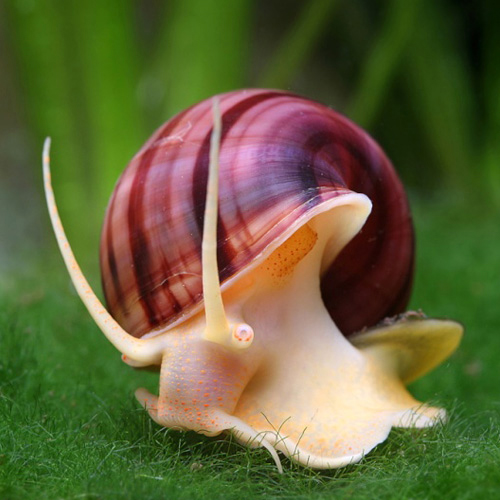
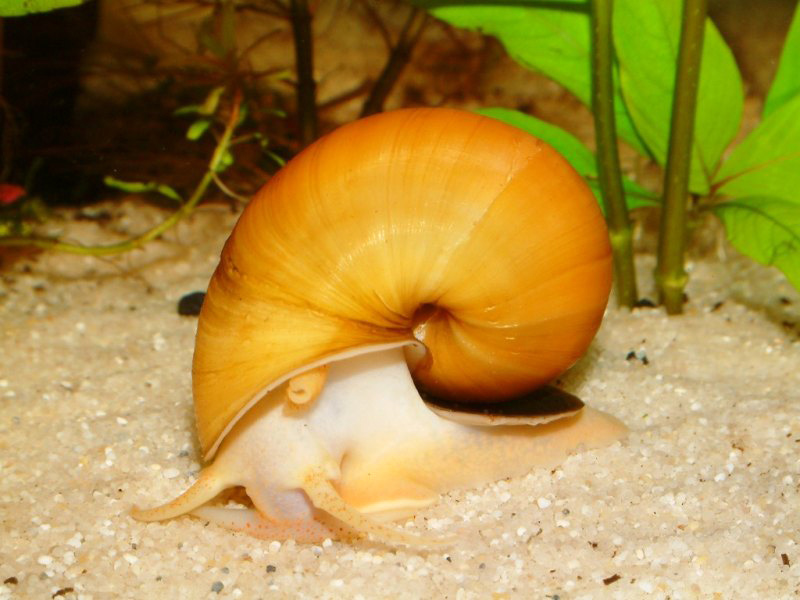
Ампулярия обладает привлекательной внешностью, строение её типично для водной улитки - роговая крышечка, находящаяся на задней части ноги моллюска, позволяет герметично закрыть устье, когда улитка прячется в спиральнозавитую раковину. Две пары осязательных щупалец помогают быстро находить пищу. Мантийная полость, разделенная перегородкой (одна часть функционирует как легкое, другая как жабра) позволяет дышать кислородом на воздухе и в воде. От мантийной полости ответвляется сифон - трубка которую улитка может вытягивать и забирать с её помощью воздух с поверхности, не приближаясь к поверхности.
Длина тела: 9-10 см.
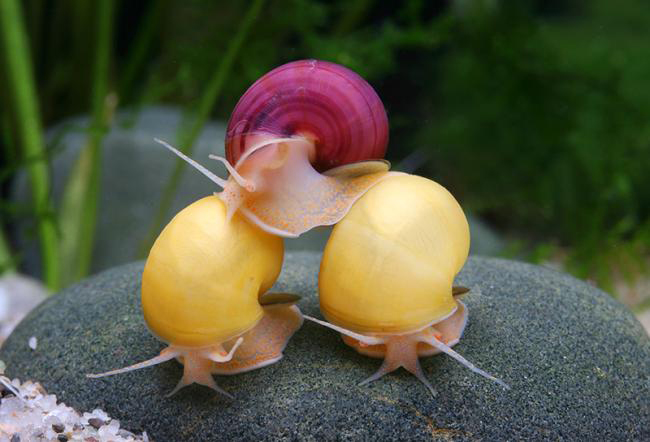
Окрас раковины ампулярии обычно светло-коричневый с широкими более темноватыми полосками. Окрас может варьировать от светлого до темного оттенка. Глаза янтарно-желтого цвета. Выведены ампулярии с разным окрасом панциря и ноги - жёлтые, голубые, белые, черничные.
Усы 12 см.
Длина ноги 11 см.
Ширина ноги 3,5 см.
Кормление
Ампулярии всеядны и в их рацион входит практические все, что они сумеют перетереть и проглотить: листья растений, органические остатки, корм для рыбок, овощи (например, шпинат, салат-латук, морковь).
Количество еды для улиток не должно превышать их потребностей в ней, бояться перекормить их не следует. В пищеварительной системе ампулярий существует большое количество микроорганизмов, которые помогают усваивать пищу. Но если кормить улиток слишком много, выделяется слишком много отходов жизнедеятельности улиток и вода мутнеет. Хотя угрозы для других обитателей аквариума это не представляет, декоративность аквариума снижается. С помощью уменьшения количества еды и хорошей фильтрации этого можно избежать.
Рацион молодых улиток - размельченный корм для рыб, риччия, ряска, листвой салат.
Разведение
Ампуллярии раздельнополы, но визуальные отличия незначительны и определить по внешнему виду кто перед вами-самце или самка, невозможно. Половозрелыми улитки становятся в год.
Размножаются ампулярии икрой, откладывая ее выше уровня воды на стенку аквариума или растение. Таким образом, они защищают свое потомство от рыб, которые с удовольствием поедают чужую икру.
При высокой температуре воды и достаточном питании размножение ампулярий происходит круглый год, отсаживать улиток необязательно, они размножаются и в общем аквариуме. Самка ампулярии откладывает несколько кладок с маленькими интервалами на протяжении нескольких дней, при этом размер кладок постепенно уменьшается. После активного периода следует большой перерыв, а потом все повторяется сначала. Наткнувшись на ранее отложенную чужую или свою кладку, улитка ее не съедает.
Откладывание икры происходит только вечером. Икринки крупные (в диаметре до 2мм), глянцевые на вид, эластичные и мягкие. Они выходят по генитальной складке ноги улитки и приклеиваются к стеклу. Через 25 часов кладка затвердевает, а оболочка икринок приобретает серый матовый оттенок, в целом кладка становится розоватой. Со временем окраска темнеет, и незадолго до выклева молодых улиток яйца становятся совсем черными.
Период развития икринок в кладке в большой степени зависит от температуры воды: при 24-26°С - 12-16 дней, при 18-20°С - 20-24 дня - чем ниже температура, тем медленнее развитие. Влажность также является важным фактором. При ее недостатке – кладка усыхает, зародыши погибают; при ее переизбытке – конденсат разъедает поверхностный слой икринок и убивает зародышей.
Содержание
Несложный в содержании вид, подходит новичкам.
Содержание и уход
Ампулярии очень неприхотливы. Если содержать их в отдельном аквариуме - 10-ти литров воды хватит на одну особь. Аквариум необходимо накрыть крышкой или покровным стеклом, так как улитки могут сбежать и погибнуть на суше. Но должно быть 10 см воздушного пространства над уровнем воды, чтобы улитки могли дышать свежим воздухом, в ином случае они утонут. Так же это пространство пригодится для откладки икры.
Оптимальные параметры воды для ампулярий:
Температура 17-30°C,
pH 6.9-7.8,
dH 8-18°.
Желательны аэрация, фильтрация и регулярные подмены воды – то есть все то же, что необходимо для рыб. Следует учесть, что температура воды влияет на подвижность и длительность жизни ампулярий - чем выше температура, тем они быстрее передвигаются и меньше живут. Также необходимо помнить, что им необходим в достаточном количестве кальций – строительный материал для раковин. Если его не хватает в воде (dH слишком низкий), то раковина улитки может разрушиться. Чтобы повысить dH, добавляют в воду мелко дробленый известняк, морские раковины или мрамор, а также специальные препараты.
Большинство видов ампулярий питается растениями в аквариуме, особенно страдают широколиственные эхинодорусы.
Освещение: естественное.
В качестве соседей подойдут все рыбки (например, гуппи, скалярии, сомики, гурами, другие улитки), кроме тех, кто питается моллюсками (боции) и крупных хищных рыб (цихлиды).
Ампуллярии обладают развитой способностью регенерировать свои утерянные части тела (например, глаза, усы, дыхательные трубки), кроме кончика своей раковины. Регенерировавшие органы будут чуть меньше первоначальных.
А аквариумах где живут ампулярии, нельзя лечить рыб препаратами меди.
Продолжительность жизни - примерно 4 года, при этом следует помнить, что при повышении температуры жизненный цикл улитки намного уменьшается.