Классификация
Тип/Отдел — Mollusca (Моллюски).
Класс — Gastropoda (Брюхоногие молюски, улитки, гастроподы).
Подкласс — Orthogastropoda (Настоящие брюхоногие).
Инфраотряд — Stylommatophora (Стебельчатоглазые).
Семейство — Achatinidae (Ахатины).
Род — Helix.
Вид — Helix рomatia (Виноградная улитка).
Ареал обитания
Основной ареал обитания - Австралия и Южная Европа, юг России. Интродуцирована на других территориях, при активном размножении становится вредителем.
В природе виноградные улитки предпочитают селиться на лугах, в небольших деградирующих лесах с густой почвопокровной растительностью, в садах с меловой или известняковой почвой, имеющей щелочную реакцию. В сухую погоду улитки прячутся под камнями, в тени растений или в сыром мху.
Зимний период покоя у виноградной улитки продолжается до 3-х месяцев.
Внешний вид и половые отличия
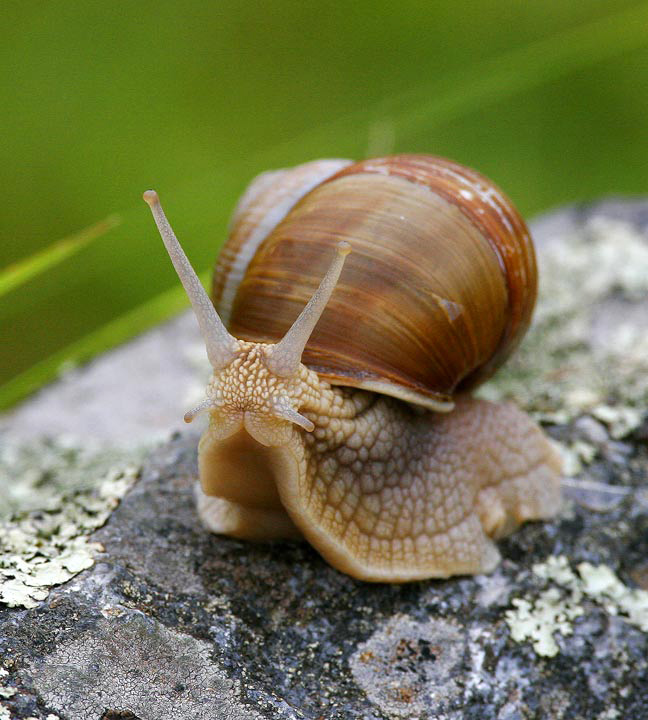
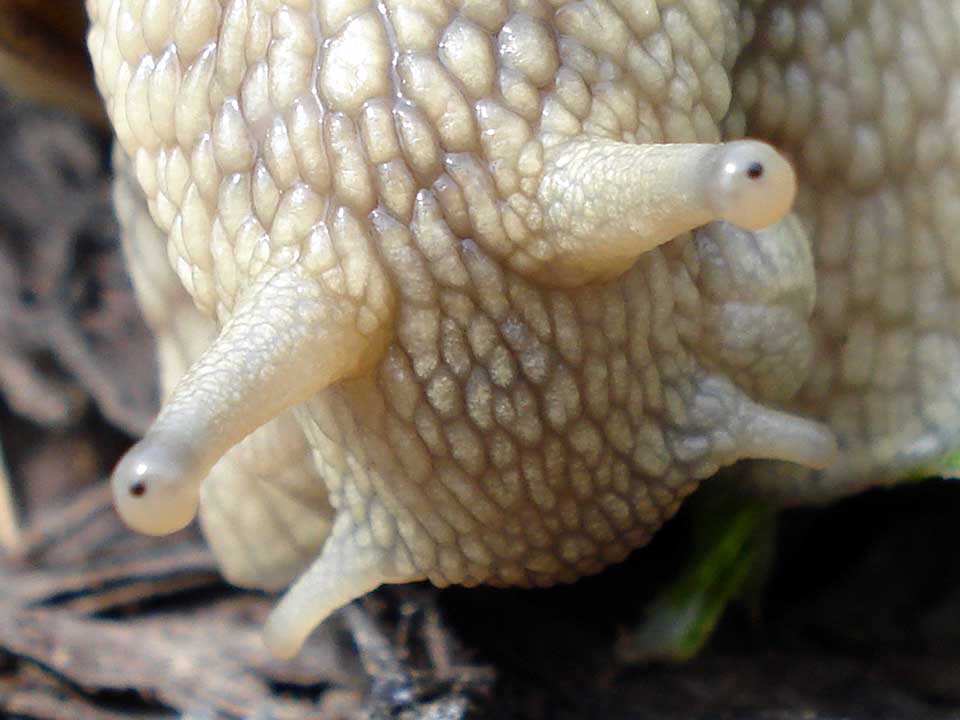
Окрас коричневый разной степени интенсивности. Панцирь с более светлыми прожилками. Раковина окрашена однотонно, обычно в оранжево-желтоватый цвет. Голова улитки заметно выделяется и несет две пары щупалец, на кончиках одной из пар располагаются глаза моллюска.
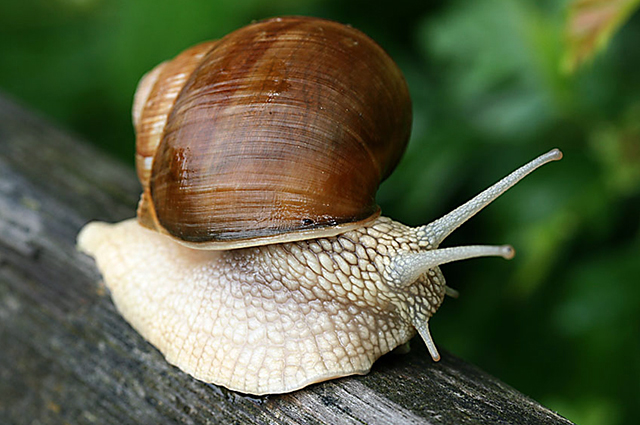
Раковина округлая, почти шаровидная, состоит из известняка. Закрученные в спираль обороты раковины выпуклые, наружная часть их гладкая. Последний виток большой и вздутый.
Нога большая, мускулистая. Виноградная улитка и передвигается с помощью этой своей ноги. С помощью сокращений мышц животное, скользя, отталкивается от поверхности. При передвижении выделяется слизь, смягчающая трение, облегчающая передвижение по субстрату. Железы, выделяющие слизь, расположены в передней части тела.
Кормление
Кормят виноградных улиток обычно ежедневно, причём лучше вечером. Кормить виноградных улиток можно огурцами, яблоками, салатами, капустой, фруктами, кабачками, тыквой... в сезон можно собирать для них клевер и одуванчики.
Обязательны кальцийсодержащие подкормки, они идёт на построение панциря. В этом качестве можно давать улиткам молотую яичную скорлупу, сепия (панцирь каракатицы), мел кормовой (не школьный!), специальные добавки (гаммарус, дафния), мясокостная и костная мука.
Категорически нельзя давать жаренное, солёное, маринованное, соль.
Корм необходимо регулярно менять на свежий, не допуская его порчи, гнили и размножения в нём мушек-дрозофил.
Поить улиток желательно ежедневно, опрыскивая террариум водой из распылителя.
Разведение
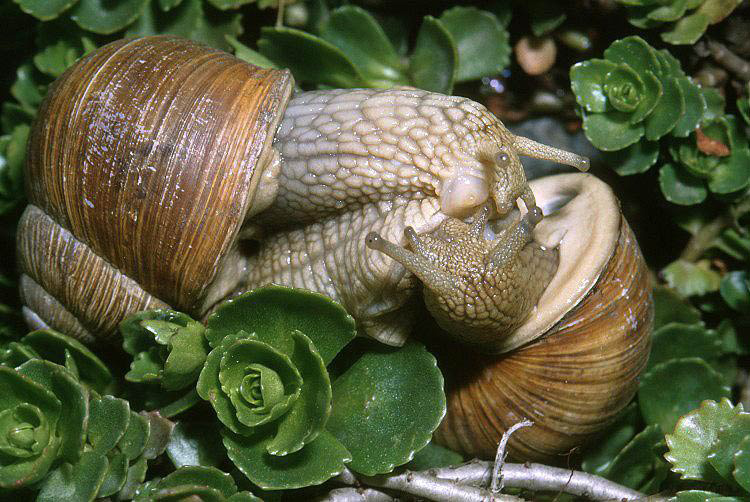
Виноградные улитки это гермофродитные улитки с перекрёстным оплодотворением. Полового созревания эти достигают примерно к полугоду. Обычно сначала они откладывают неоплодотворённые яйца, потом начинаются уже оплодотворённые кладки. Брачные игры могут происходить бурно, оплодотворение происходит при соприкосновении половыми органами-белыми точками возле головы справа. Через 1 - 2 недели каждая самка откладывает до 40 яиц диаметром 4 - 7 мм. Чем выше температура, тем быстрее из яиц вылупляются улитки, обычно это 1 - 3 недели. В процессе развития скорлупа яйца истончается и улитка выходит на воздух.
Самка может хранить сперму в своих половых путях и откладывать яйца ещё в течение года после спаривания.
Такое количество улиток полноценно вырастить невозможно, поэтому кладки нужно изымать и уничтожать, или скармливать улитках же в растолчённом виде.
Содержание
Легко содержать в неволе, подойдёт в качестве первого домашнего питомца.
Содержание и уход
Террариум для содержания одной улитки подойдёт размером от 10 литров, террариум на группу должен быть больше. Он может быть как стеклянный, так и пластиковый. Крышка обязательна, с вентиляционными отверстиями. На дно кладут грунт, лучше всего подходит кокосовый субстрат - он должен лежать толстым слоем, чтобы улитка, если упадёт с высоты, не травмировалась. Можно использовать и простой торф, главное не было добавок и удобрений, иначе улитка может обжечься. Можно добавить и небольшой неглубокий водоём-улитки любят купаться. Можно положить так же мох и коряги, предварительно помыв их. Опрыскивать террариум нужно ежедневно. Влажность определяют эмпирически - если улитка сидит на стекле, грунт слишком влажный, если зарывается в субстрат и закрывается, значит слишком сухой. Стенки лучше протирать ежедневно-улитки их сильно пачкают. А вот субстрат меняют по мере загрязнения.
Время от времени улитку нужно мыть под краном, тёплой водой, обычно им очень нравится эта процедура.
Температура 23-25 градусов.
Влажность 60 - 80 %.
Продолжительность жизни обычно 5 - 7 лет.
Виноградная улитка может переносить низкие температуры, например, температуру -7'C в течение нескольких часов.