Отряд
Бесхвостые
Классификация
Отряд — бесхвостыеСемейство — веслоногие
Род — телодермы
Вид — телодерма звездчатая
Ареал обитания
Распространена на востоке Таиланда, во Вьетнаме, Лаосе и Камбодже. Населяет влажные тропические леса.
Внешний вид и половые отличия
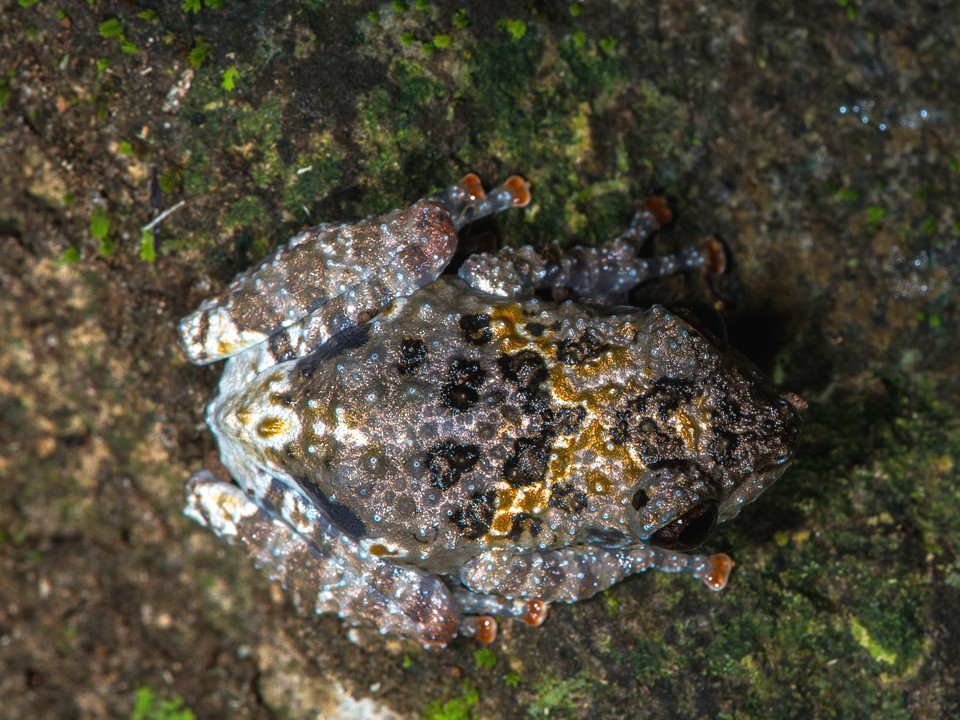
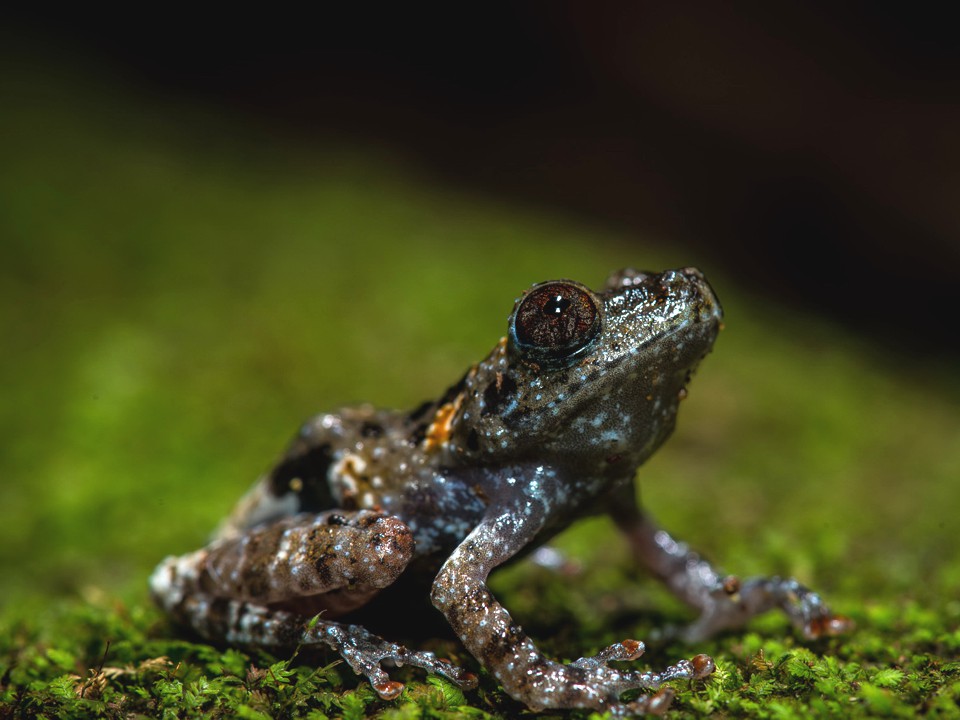
Маленькая лягушка, длиной 3 – 3,5 сантиметра.
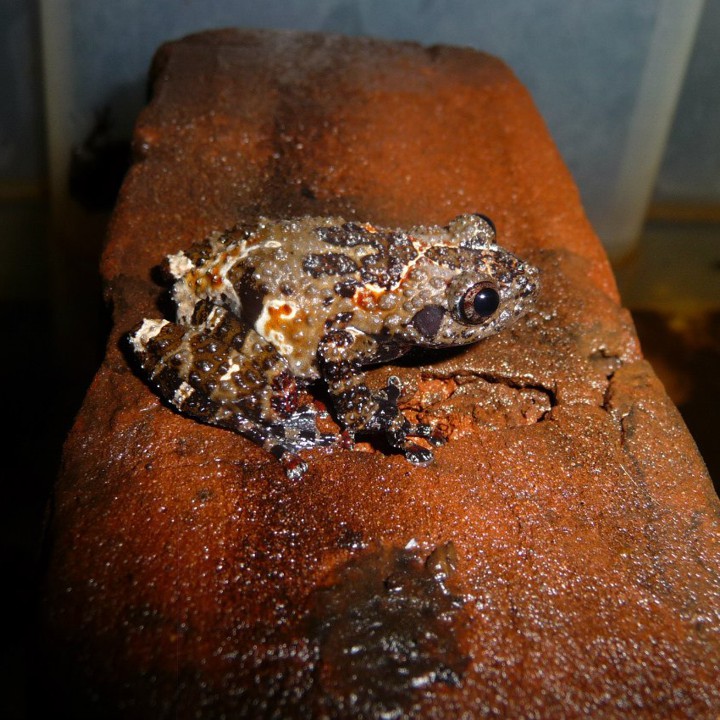
Перепонка на задних лапах неплохо развита, достигает середины пальцев, на передних лапах практически отсутствует. Присоски крупные только на трёх наружных пальцах передних лап. На внутреннем пальце и на задних лапах они маленькие, округлые. Основной тон окраски спины коричневый, с рисунком из черных и рыжевато-оранжевых вытянутых пятен неправильной формы. Задняя часть туловища, основания задних лап и голеностопные суставы светлые, почти белые. Спина и спинная сторона лап покрыты многочисленными мелкими пупырышками, однако, кожа на боках практически гладкая. Брюхо сероватое с рисунком из крупных черных пятен и многочисленных голубых точек между ними. На барабанной перепонке крупное черное пятно неправильной формы.
Характер
В природе ведёт исключительно древесный образ жизни. Кормом могут служить любые насекомые, предпочтительно мягкотелые (сверчки, тараканы, пауки). Крупные лягушки с удовольствием едят "голых" мышей и птенцов мелких птиц. Поедают звездчатые телодермы и более мелких амфибий, включая представителей своего вида.
Содержание и уход
Для звездчатых телодерм необходим террариум "вертикального" типа (его минимальные размеры 30х30х60 см) с большим количеством живых растений, предпочтительно лиан (филодендроны, плющи сциндапсусы). Очень желательно наличие декораций - коряг, кусков коры, скорлупы кокосовых орехов, толстых вертикальных веток. Суточная температура - от 18 С ночью до 28 С днем. Влажность - около 80%. На дно террариума можно положить пластиковый или поролоновый коврик, который легко мыть.
Состав грунта значения не имеет и зависит от потребностей растений, хотя лучше, если верхний слой будет мягким и влагоемким: иногда лягушки не утруждают себя постройкой гнезда и откладывают икру прямо на грунт. Свет для взрослых животных необязателен, а для молодых особей, активных и днем, нужна подсветка ультрафиолетовыми лампами, типа Репти Гло 2.0.
Кормление
Кормление телодерм особых сложностей не представляет. Все они хорошо поедают сверчков подходящего размера. Крупным видам можно давать и тараканов. Всех кормовых насекомых перед скармливанием следует обсыпать порошком препаратов кальция и витаминов для амфибий и рептилий.
Болезни
Инфекционные заболевания.
Проявления эпизоотического характера, приводящие к поголовному вымиранию колоний, возникают, как правило, при резком изменении условий содержания (при пересадке в другие помещения и т.п.) или создании неблагоприятных условий содержания (свежая вода, высокие температуры содержания и др.).
Картина заболевания проявляется в помутнении слизистых оболочек глаз, их последующем ослизнении, ослизнении кожных покровов, всегда приводящих к летальному исходу. При этом труп лягушки имеет студенистую консистенцию.
Одним из основных признаков, по которым возможно раннее диагностирование заражения веслоногов - помутнение слизистых оболочек глаз.