Отряд
Бесхвостые
Классификация
Отряд — бесхвостыеСемейство — древолазы
Род — листолазы
Вид — двухцветный листолаз
Ареал обитания
Встречается в тёплых влажных лесах на северо-западе Южной Америки, в основном на западе Колумбии.
Внешний вид и половые отличия
Самцы достигают 45—50 мм в длину, самки — 50—55 мм. Одни из самых крупных представителей семейства.
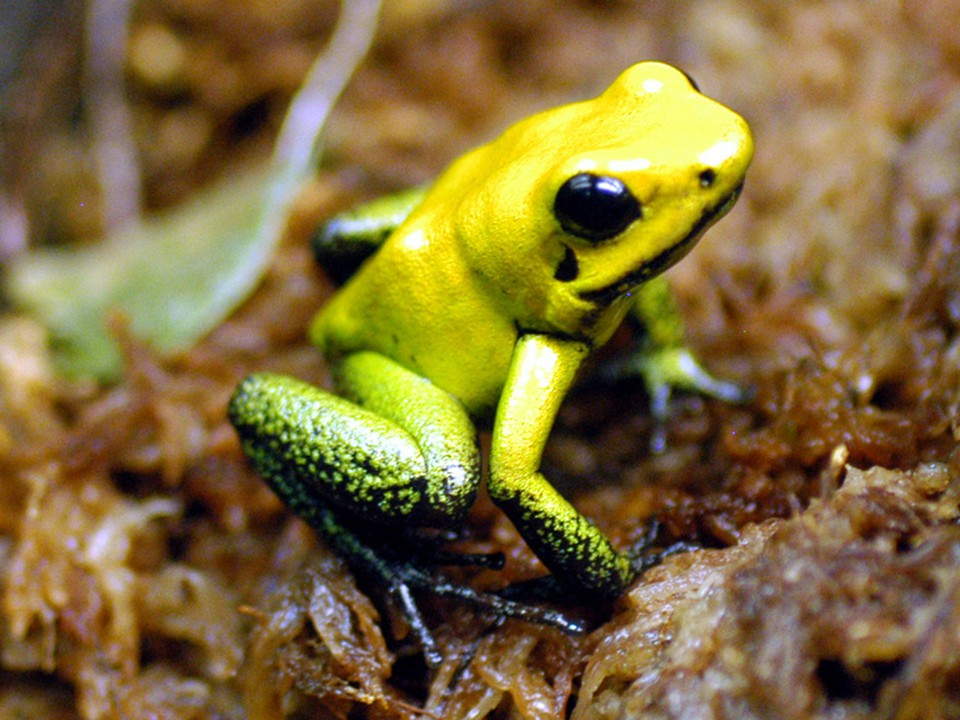
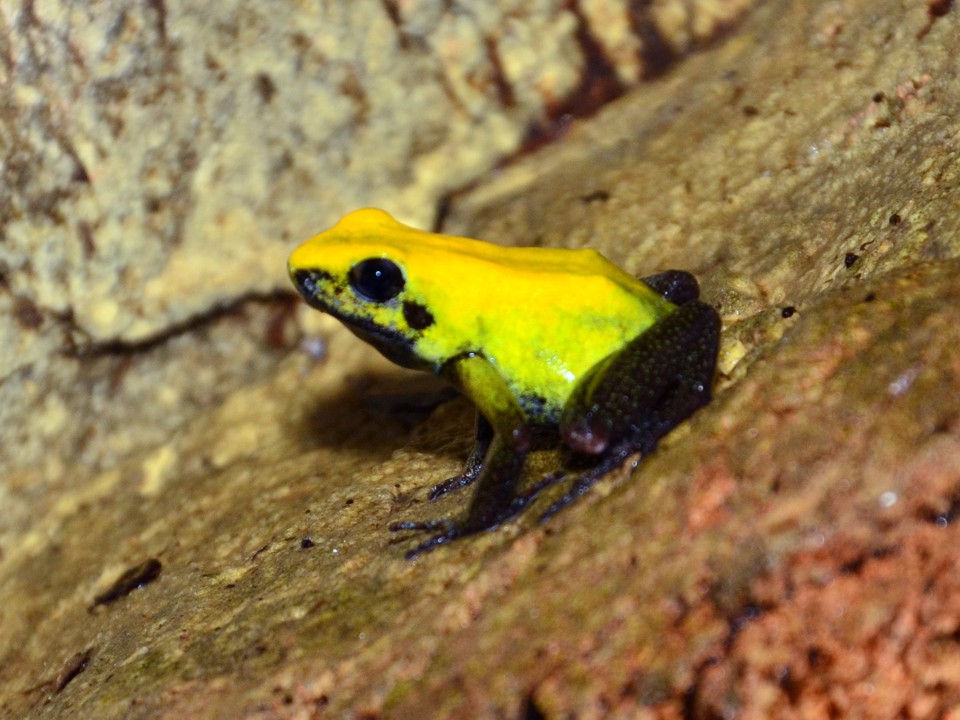
Вид получил свое название из-за желтой или оранжевой окраски тела с черными или темно-синими задними и передними конечности ниже сгиба.
В отличие от большинства других лягушек, у которых самцы гораздо мельче самок, эти листолазы примерно одинаковой величины. Это можно объяснить территориальностью древолазов: самцы вынуждены защищать свою территорию от посягательств соперников и преимущество остается за самым крупным из них.
Характер
В природе лягушки ведут в основном наземный образ жизни. Обычно живут поодиночке и редко группами.
Содержание и уход
Для содержания листолазов нужен террариум, обеспечивающий как сохранение влажности, так и хорошую вентиляцию. Переделанные старые аквариумы этим требованиям обычно не отвечают. Больше всего подходят цельностеклянные или собранные на силиконовом клее емкости, у которых четверть крышки и третья часть боковой стенки изготовлены из мелкой капроновой сетки.
Объем террариума определяется не требованиями животных, а величиной растений, которые обязательно должны там находиться. Желательно предусмотреть возможность уменьшения вентиляции - сдвижными створками, кусочками стекла и т.д. Температуру (около 27°С днем и 23°С ночью) приходится поддерживать при помощи нагревателей, закопанных в грунт. Большое значение имеет состав грунта. У листолазов очень нежная кожа, и камешки, гравий, даже песок могут повредить ее. Рекомендуем почву такого состава: листовая земля, хвойная земля, измельченный сфагнум (2:1:2). Часть грунта можно покрыть дернинами живого мха и лишайниками.
Растения используют как грунтовые, так и эпифитные. Чтобы облегчить уход за ними, желательно ограничиться 2-3 видами. Из грунтовых это могут быть традесканция, хсльксине, селагинелла, из эпифитных -различные бромелиевые с гладкими неколючими листьями. Эпифиты надо разместить так. чтобы животным было легко добраться до них. Например, крупный экземпляр гуцмании может находиться на невысоком пеньке. Вода, скапливающаяся в пазухах листьев бромелий, служит для лягушек не только "ванной", и "родильным домом".
Сажают эпифиты следующим образом. Корни покрывают тонким слоем питательного субстрата (листовая земля, торф, дробленая сосновая кора - 1:1:1) и закрывают тонким слоем живого сфагнума, который обматывают мягкой проволокой или леской. Получившийся "конверт" укрепляют на нужном месте при помощи той же проволоки. Сфагнум необходимо 2-3 раза в неделю обильно опрыскивать кипяченой или дождевой водой. Растения в таком блоке могут годами расти без пересадки.
Кормление
При содержании листолазов приходится организовывать дома целый кормовой цех, так как эти животные, в отличие от большинства других амфибий, весьма активны и трех-четырех-дневная голодовка способна не только ослабить здоровую упитанную особь, но и вызвать ее гибель. Для кормления лучше всего использовать сверчков, тараканов и мушку-дрозофилу.
Можно также периодически давать им мух, пауков, мокриц, мотыля, трубочника. Восковую огневку следует применять очень ограниченно, не чаще одного раза в неделю, так как она вызывает ожирение. Кормить листолазов необходимо каждый день - утром и вечером. Желательно, чтобы какое-то количество пищи постоянно присутствовало в террариуме.
Особенности
Этот вид обладает вторым по токсичности ядом после ужасного листолаза — 150 мг яда, содержащего батрахотоксин, достаточно, чтобы вызвать смерть взрослого человека вследствие паралича дыхательных мышц.
Болезни
Не выявлены. Продолжительность жизни в неволе до 20 лет.