Отряд
Бесхвостые
Классификация
Отряд — бесхвостыеСемейство — настоящая лягушка
Подсемейство — raninae
Род — настоящие лягушки
Вид — остромордая лягушка
Ареал обитания
Распространена в Европе в северо-восточной части Франции, в Швеции, Финляндии; на юге до Адриатического моря, на востоке до Урала; попадается также в Западной и Средней Сибири, на севере Казахстана, на востоке ареала доходит до Алтая и Якутии. Остромордая лягушка — единственный вид бесхвостых земноводных в тундре. Водится в лесной, лесостепной и степной зонах, а также в полупустыне (северный Казахстан) и в горах до высоты 800 м над уровнем моря.
Остромордая лягушка попадается в лесах, на лугах, болотах, на пашнях, полях, в садах, огородах, парках, на обочинах дорог, возле жилья. Чаще она обитает в лиственных лесах (ольховники, дубровы, березники) и пойменных лугах. В то же время - это самый засухоустойчивый вид среди лягушек попадается и в лесу, на суходольных лугах. Важнейшим условием жизни остромордой лягушки является наличие в окрестностях пригодных для размножения водоёмов.
Наиболее активные остромордые лягушки вечером, однако их нередко можно встретить и днём. При благоприятных условиях постоянно держатся в одних и тех же местах и не удаляются от них более чем на 25—30 метров. В то же время они могут делать и дальние летние миграции в поисках более благоприятных и богатых кормом участков. Остромордая лягушка ведёт преимущественно наземный образ жизни, даже в большей степени чем травяная.
Внешний вид и половые отличия
До 7 см.
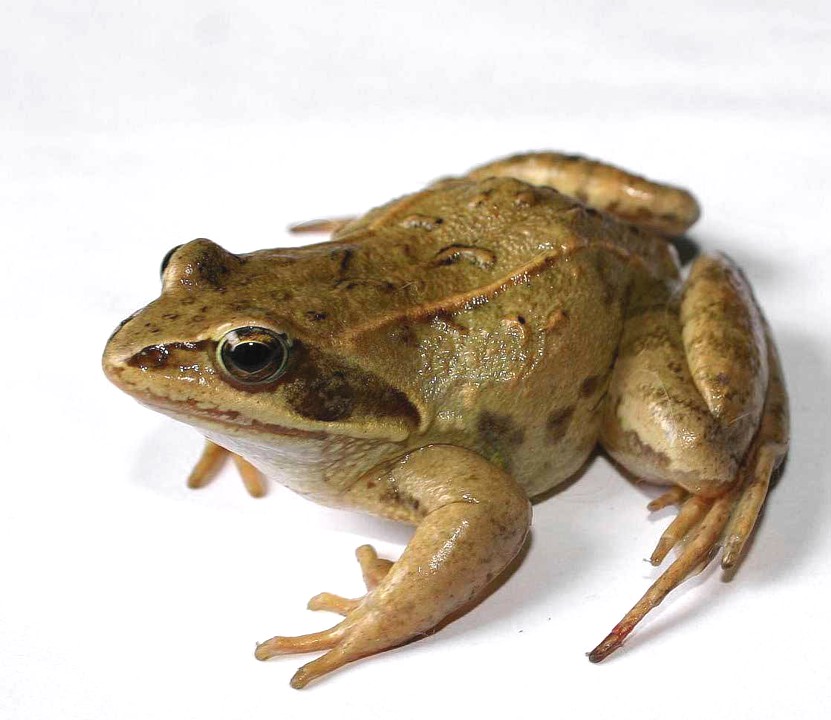
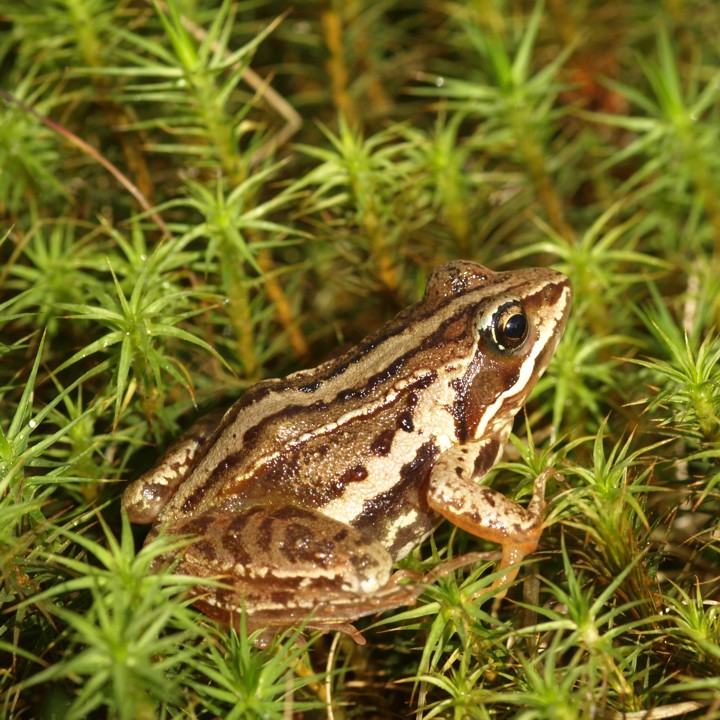
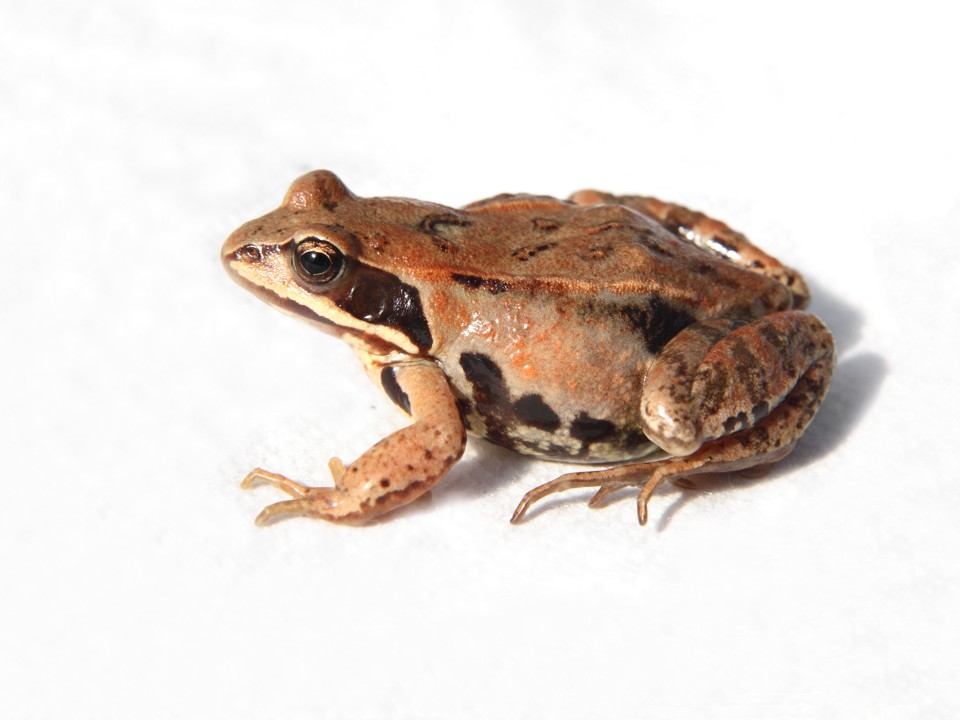
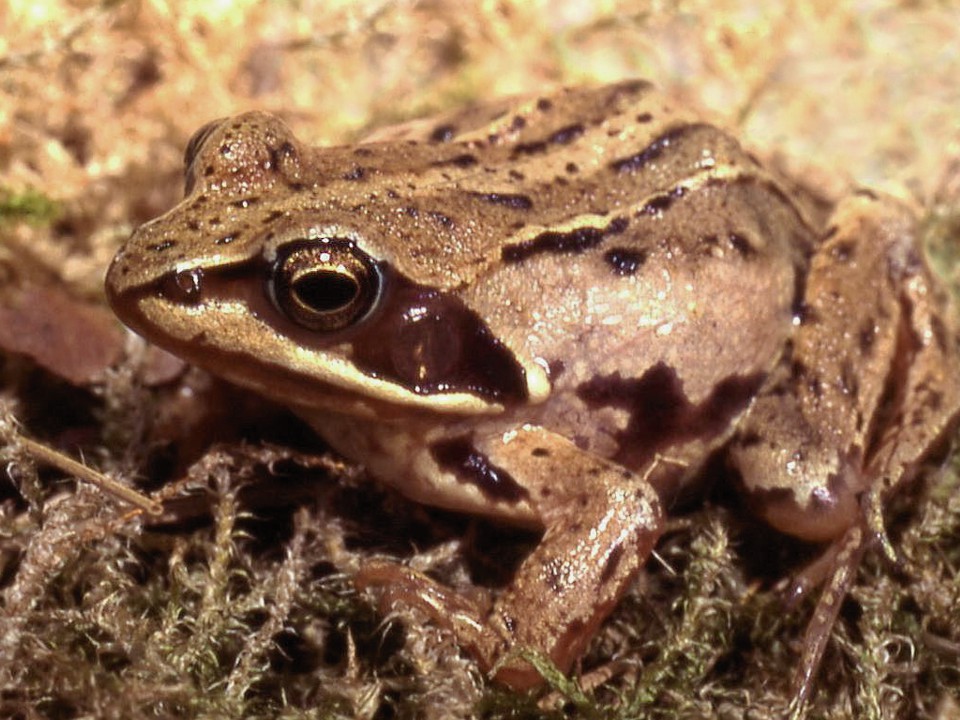
Морда заострённая. От глаз через барабанную перепонку почти до плеч часто идёт тёмное височное пятно, которое постепенно сужается. Спина светло-оливковая, светло-бурая, красновато-кирпичная или почти чёрная. Брюхо однотонное, светлое.
Общий тон окраски тела этих амфибий может меняться в зависимости от температуры, влажности и освещения. В солнечную погоду он заметно светлее. Лягушки, живущие на открытых сухих местах, более светлые по сравнению с теми, которые попадаются в густых и влажных зарослях травы, кустарника, лесах. Остромордой лягушке свойственен полиморфизм по рисунку спины. Окраска нижней части тела резко отличается от верхней. Брюшко и горло обычно белого цвета, нередко с желтоватым оттенком. Самцы в брачный период приобретают серебристо-голубую окраску. На первых пальцах передних конечностей развиваются брачные мозоли для удержания самок.
Характер
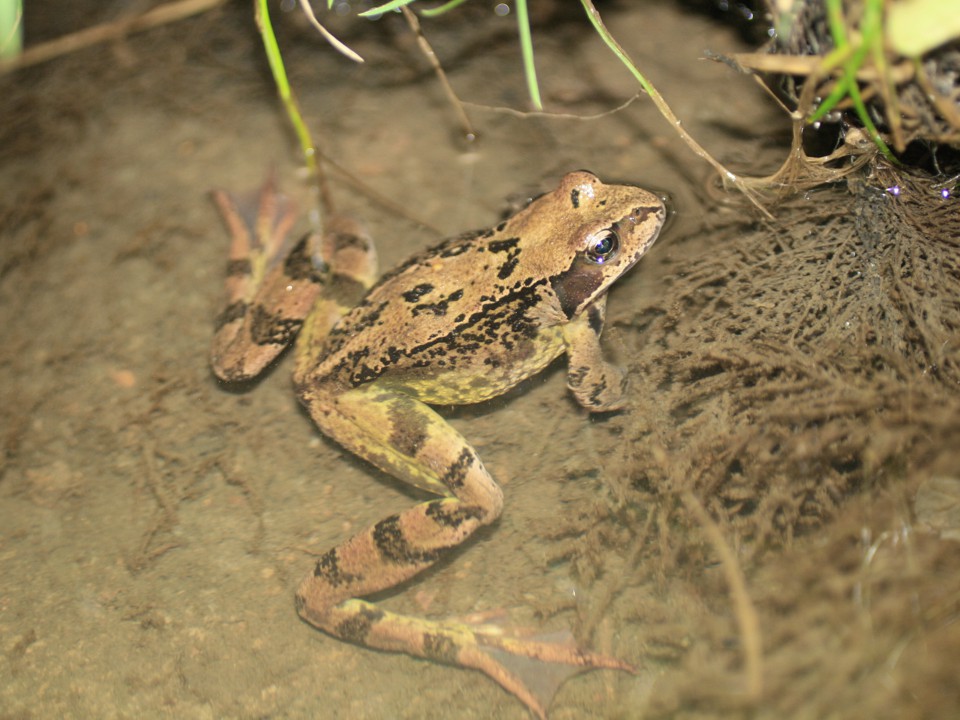
Большую часть жизни болотная лягушка живет на суше, размножается в воде ранней весной. Выйдя на сушу, выбирает подходящий, обычно площадью 200-300 кв.м., участок, на котором охотится и который охраняет от сородичей. Живет на этом участке до зимы. На охоту выходит вечером и активно кормится между 20-22 часами. После полуночи активность начинает снижаться, а с 4 часов и до 18 активность низкая. В неактивное время скрывается на дне водоемов, летом прячется в более влажных местах (под упавшими деревьями, в пнях и т.п.) На зимовку остромордая лягушка уходит с начала сентября - конец октября. Длительность зимней спячки 165-170 дней. Молодые лягушки уходят на зимовку позже взрослых. Зимует на суше группами: в ямах, засыпанных листьями, в кучах листвы и хвороста, в норах грызунов и т. п.
Содержание и уход
Террариум:
Тип: паллюдариум или террариум.
Температура: дневная - 18-20'C, ночная - 16-17'C. Не выносят высоких (выше 25'C) температур.
Обогрев: при комнатной температуре не требуется.
Освещение: не требуется.
Влажность: раз в день над субстратом распыляют воду.
Растения: желательны.
Оформление: под уголок леса.
Кормление
Как и все лягушки, остромордая кормится на суше различными беспозвоночными, съедают они также мух, комаров, оводов, наземных раковинных моллюсков, водных беспозвоночных.
Охотясь за насекомыми, остромордая лягушка сама часто становится добычей млекопитающих или птиц. Такие пресмыкающиеся, как ящерицы, ужи, гадюки питаются этими лягушками. Молодые лягушки и головастики могут стать жертвой не только других видов лягушек (например, крупной прудовой лягушки), но и своих сородичей.
Болезни
Большинство особей заражены гельминтами.