Классификация
Отряд — Чешуйчатые (Scuagmata).
Семейство — Гадюковые (Viperidae).
Род - Гадюки (Vipera)
Вид - Гадюка габонская (Bitis gabonica)
Ареал обитания
Обитает вдоль экваториального пояса Африки, в влажных тропических лесах, например вдоль леса Итури в Кении.
Наземный вид, обитает в лесах, много времени проводит в засаде, зарывшись в опавшие листья.
Внешний вид
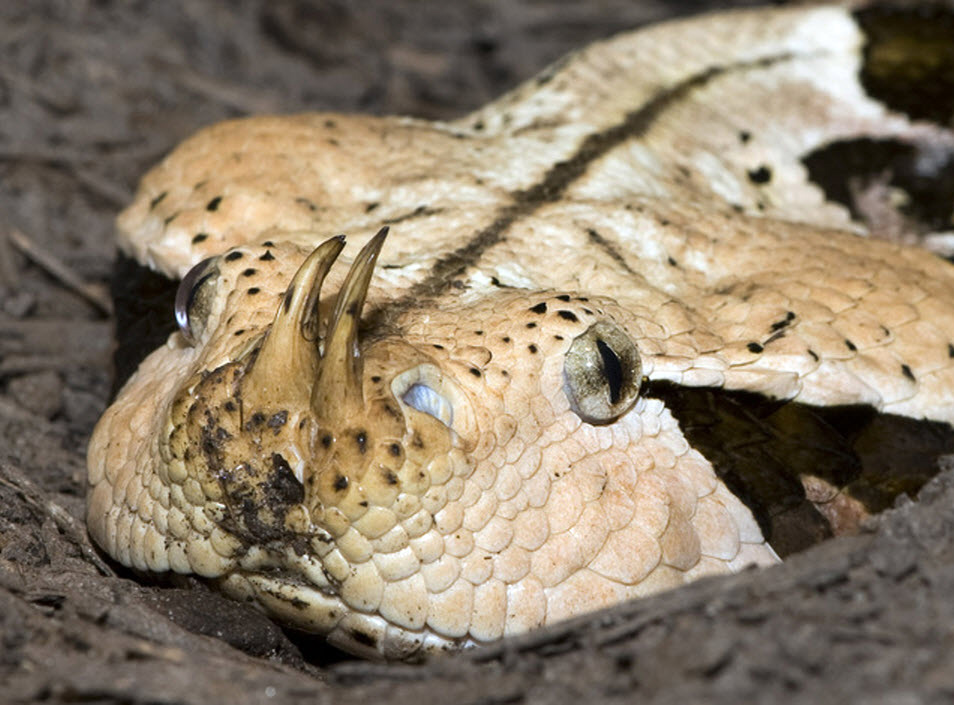
Размер габонской гадюки около 1,2 метра, но встречаются и двухметровые особи. В террариуме достигают чуть меньших размеров, чем в природе. Вес около 8 - 10 килограмм, ядовитые клыки у наиболее крупных особей могут достигать 5, 5 см в длину.
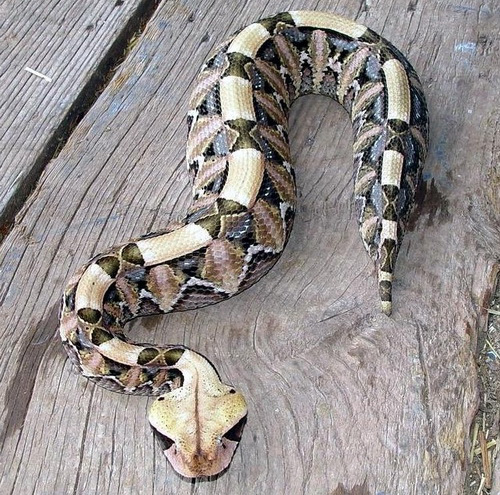
Окраска тела этих змей является одной из наиболее ярких отличительных черт и имеет рисунок геометрической формы в фиолетовых и темно коричневых тонах на бежевом фоне. Окраска головы имитирует опавшую листву.
Характер
В засаде эта змея малоподвижная и вялая, но в атаке преображается, становится стремительной и опасной. Ядовита.
Ведет ночной образ жизни.
В отличие от других видов гадюк, которые кусают и отпускают жертву, габонская гадюка держит свою жертву, пока она не умрёт.
При наступлении на змею сперва она остается неподвижной, но громко шипит, а потом следует стремительный бросок в сторону опасности.
Содержание и уход
Террариум для гадюки нужен большой, горизонтального типа, размер примерно 60 – 100 см в длину и 60 см в высоту. Необходимы вентиляционные отверстия в верхней и нижней частях террариума. В качестве субстрата можно использовать сосновую кору или кокосовые чипсы. Для лазания и в качестве укрытий нужно установить в террариуме несколько коряг. Под лампой накаливания или зеркальной лампой хорошо поставить пенёк, змея сможет на нем греться. В одном из углов террариума можно положить влажный мох-сфагнум, змея сможет туда закапываться при желании. Поилка необходима, воду в ней следует менять ежедневно. В качестве укрытий можно поместить в террариум искусственные растения.
Температура воздуха днём 25 – 28°C, ночью на 2 – 3°C градуса ниже. Для обогрева можно использовать термошнур или термоковрик.
Влажность воздуха следует поддерживать высокую, около 70%. Обязательно ежедневное опрыскивание террариума и самой змеи.
Освещение люминесцентными лампами продолжительностью 9 – 10 часов в день.
Кормление
В условиях террариума основной пищей гадюки являются грызуны - взрослые крысы. Обычно их помещают в террариум, давая змеям возможность поохотиться самостоятельно.
Взрослые змеи, как правило, имеют хороший аппетит,.
В корм следует добавлять витаминные и минеральные подкормки курсами.
Особенности
Ядовитый и опасный вид, требует очень осторожного обращения с использованием специальных крюков, брать их руками недопустимо.
Яд гадюки обладает кардиотоксическим и цитотоксическим действием. На месте укуса образуется сильный отёк, часто с некрозом, появляются тошнота, повышается общая температура тела. Может возникнуть почечная недостаточность, тахикардия, тромбоз крупных артерий, остановка сердца. Нарушение свертываемости крови может привести к гематурии и рвоте кровью.
Разработана сыворотка от яда габонской гадюки.
Болезни
Отказ от пищи может быть вызвано стрессом, неподходящим кормовым объектом, новым кормовым объектом, нетипичным для вида кормовым объектом, или змея просто не голодная. Не стоит сразу кормить змею насильно, ведь они достаточно долго могут прожить без еды без вреда для здоровья. Беспокоиться следует начинать, если змея не ест несколько месяцев. Тогда нужно проанализировать условиях содержания и рацион змеи до начала проблемы. Искуственно кормить габонских гадюк не рекомендуется.
Срыгивание может возникать из-за стресса, болезни, слишком большого кормового объекта, кормления во время линьки, нарушение температурного режима. После срыгивания нельзя кормить змею в течение 7 – 10 дней, потом стоит покормить змею снова с учётом анализа ошибок.
Линька – это не болезнь, а необходимый этап роста змеи. При этом глаза змеи мутнеют, окрас светлеет, а кожа начинает слезать. В этот период следует следить за влажностью в террариуме и наличия водоёма.
Клещи – это небольшие паразиты, живущие на коже змеи, они при присасываются к тему змеи между чешуйками и сосут кровь. Змея при этом становится медлительной и может отказываться от пищи. Лечат змею обычно слабым раствором фронтлайна препарат от клещей для собак и кошек). Необходимо так же продезинфицировать весь террариум.
Респираторные инфекции – обычно их вызывают условно-патогенные бактерии в случае снижения иммунитета змеи в результате стресса из-за неправильных условий содержания. Симптомы – затруднённое дыхание, открытый рот, истечения из носа. Лечится антибиотиком – байтрилом, в инъекциях.
Разведение
Размножается достаточно просто. После ссаживания самца и самки необходимо частое опрыскивание террариума с целью имитации сезона дождей. После спаривания самка откладыват до 40 яиц, из них вылупляются детёныши размеров от 25 до 32 см, массой от 25 до 45 грамм, после рассасывания желточного мешка они начинают питаться новорождёнными мышатами.
Продолжительность жизни около 15 лет.