История возникновения
Тайский Риджбек - древняя порода, первое упоминание о которой встречается в древних тайских рукописях, датированных серединой XVII века. В основном использовалась в восточной части Тайланда для охоты, в качестве сторожевого пса, а также для сопровождения повозок. Благодаря изолированности восточного Тайланда от внешнего мира, тайский риджбек сохранил свой изначальный вид почти без изменений по сей день.
Общий вид
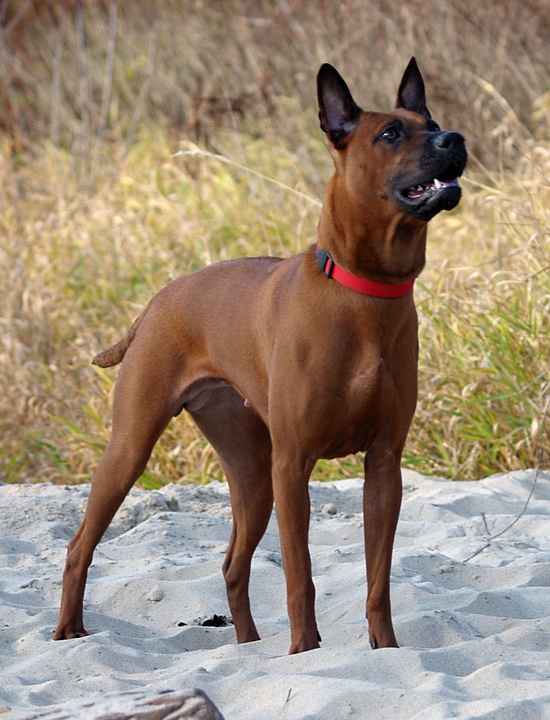
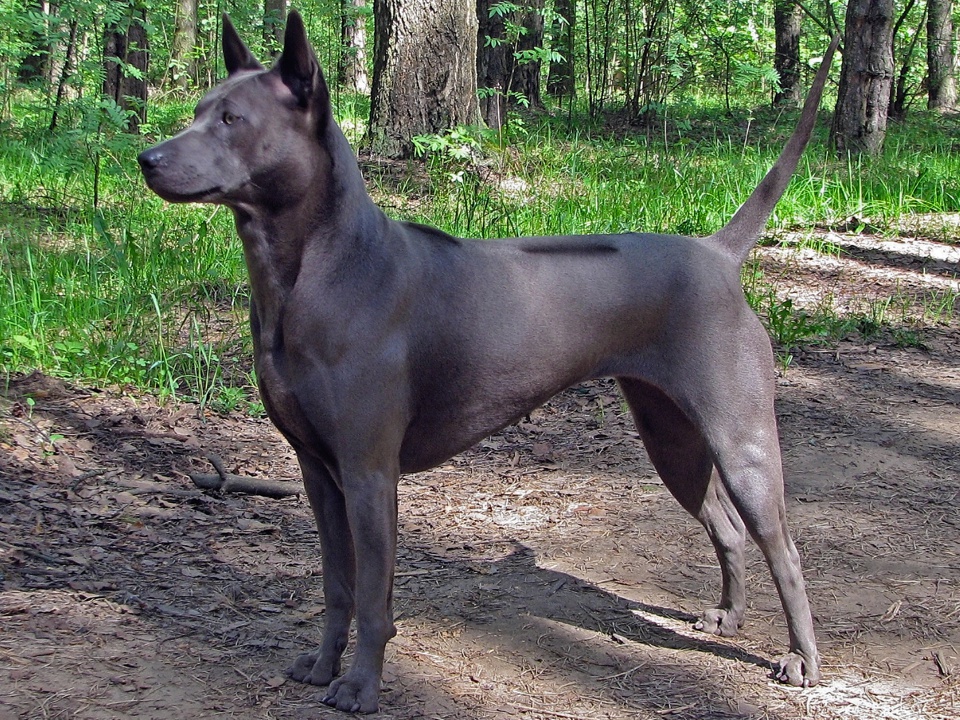
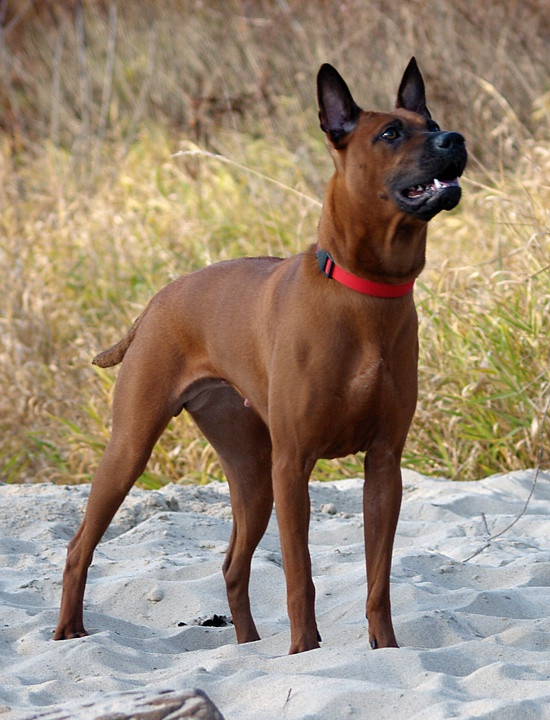
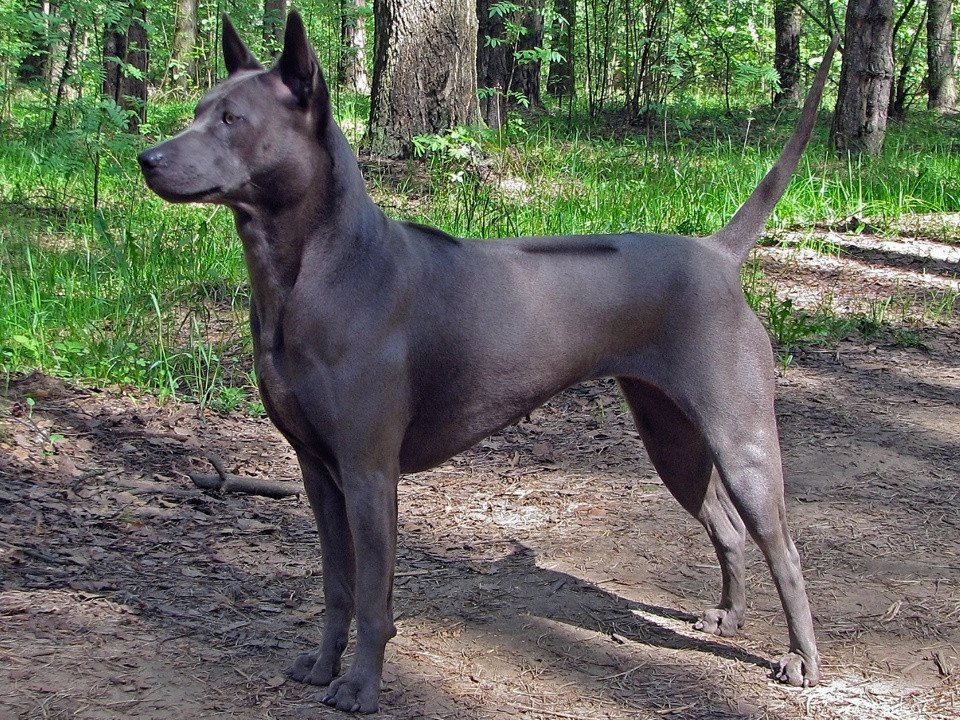
Среднего размера атлетически сложенная собака - с короткой шерстью, формирующей вдоль спины характерный гребень (ридж), направленный назад. Пропорции гармоничные, анатомическая структура тайского риджбека является подходящей для физической активности. Корпус слегка длиннее, чем высота в холке.
Отличительная особенность породы Тайский риджбек
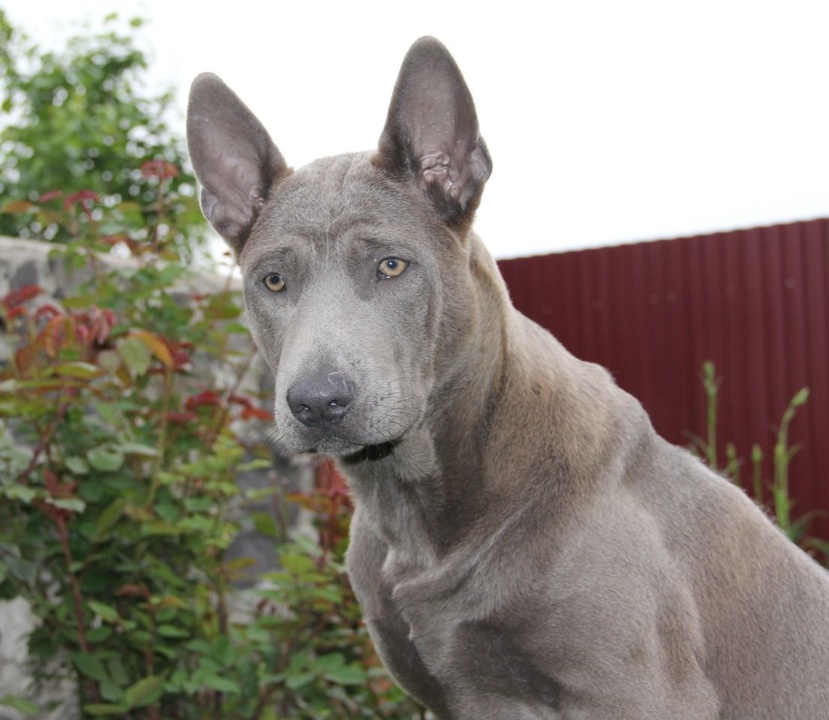
Череп плоский между ушами, слегка округлый при осмотре сбоку. Лоб: Когда собака насторожена, складки кожи на голове образуют морщинки. Стоп/Переход ото лба к морде: Ясно выражен, но умерен.
Нос черный. У голубых и изабелловых собак голубой. Спинка носа прямая и длинная.
Морда в форме клина, чуть короче верхней части головы. У красных собак желательна чёрная маска.
Губы плотно прилегающие, сухие. Хорошо пигментированы.
Зубы белые и крупные, ножницеобразный прикус.
Скулы
Глаза среднего размера, миндалевидные. Темнокоричневые. При голубом окрасе допускается янтарный цвет глаз.
Уши расположены по бокам черепа. Среднего размера, треугольные; наклонены вперед, прямостоячие. Не купированы.
Шея крепкая, мускулистая, средней длины, высокого постава.
Корпус по длине чуть выше высоты холки.
Спина сильная и ровная.
Поясница крепкая и широкая.
Круп слегка наклонный.
Грудь глубокая грудная клетка, достигающая уровня локтей.
Ребра округлые, подвижные, но не бочкообразные.
Живот умеренно подтянутый, не должен быть ни провисшим, ни поджарым.
Передние конечности поставлены немного косо.
Лопатки крепкие, отведены назад.
Пясти при осмотре спереди прямые, при осмотре сбоку слегка наклонные.
Задние конечности при осмотре сзади с коленным и тазобедренным суставами, находящимися примерно на одной линии.
Бедра хорошо развиты, с выраженными углами коленных суставов. Скакательные суставы сильные и и хорошо подведенные.
Колени с хорошо выраженными углами.
Плюсны при осмотре сзади прямые и параллельные.
Лапы овальные. Когти черные. Но могут быть более светлыми в зависимости от окраса шерсти.
Толстый у основания, с постепенным суживанием по направлению к кончику, кончик может достигать углов сочленения. Держится высоко, слегка изогнут (саблевидный), на сторону не загибается.
Шерстный покров короткий и гладкий. На спине вдоль хребта, волос растет в направлении от хвоста к голове, образуя характерный ремень (ридж). Допустимы различные формы риджа, главное, чтобы он был симметричен, чётко очерчен и не заходил на бока собаки. Короны и завитки в голове риджа допускаются.
Окрас сплошной: голубой, красный (предпочтительно наличие чёрной маски), изабелловый и чисто черный.
Стелющаяся, сбалансированная, без подпрыгивания и виляния телом походка. След укладывается в две параллельные линии. Собака двигается по прямой без выворачивания лап наружу или внутрь туловища, тем самым делая движение протяженным и мощным. При осмотре спереди передние конечности перемещаются по прямой вперед и назад, так что плечевые, локтевые суставы и пясти лежат приблизительно в одной плоскости. При осмотре сзади коленные и скакательные суставы располагаются приблизительно на одной воображаемой вертикальной линии.
Рост кобеля 56-61 см, суки - 51-56 см.
Вес кобеля 22,7–34 кг, суки - 15,9–24,9 кг.
Характер
Независимый характер делает её тактичной и ненавязчивой, во многом скорее похожей на кошку. К тому же она также как кошка чистоплотна, а очень короткая шерсть не имеет запаха и делает её максимально «гигиеничной» для содержания в квартире. Эта собака не будеть заглядывать в глаза любому, обратившему на неё внимание. Для неё важен лишь хозяин и его семья, в которой она может веселиться, «улыбаться» и искренне радоваться. Из-за своего серьёзного, внимательного взгляда, а также из-за достаточно прохладного отношения к посторонним, производит впечатление очень серьёзной, иногда даже «бойцовской» породы, что, в целом, даже не плохо, поскольку вы можете не беспокоиться о своих близких, которые отправились на прогулку с собакой. Тайский риджбек необычайно умная собака с хорошо развитой интуицией. Она способна анализировать ситуацию и принимать оптимальные в конкретном случае решение.
Тайцы способны удивлять своей находчивостью и изобретательностью. Но это порой создаёт трудности в тренировках, так как риджбек может не захотеть «тупо» выполнять команды. Процесс обучения нужно строить на доверии и уважении к хозяину, и приятном времяпровождении обоих. На сегодняшний день, эта порода является великолепным компаньоном, а также благодаря своему азарту, уму и скорости, может быть прекрасным партнером во всех скоростных и азартных видах спорта с собаками (аджилити, фристайл, фризби и т. д.).
Содержание и уход
В вопросах чистоплотности собаки породы тайский риджбек достаточно скромны, их не выделяет обильное слюнотечение, как некоторых бойцовских и охотничьих. Также линька – не самое страшное горе для хозяев: собака в действительности может линять, но если вычесывать ее и регулярно убирать в квартире, это не бросается в глаза. Заводчики советуют регулярно расчесывать риджбека при помощи резиновой, смоченной в воде щеточки. Что касается купаний, то после прогулки достаточно протирать лапы, потому что унести тяжелого пса в ванную проблематично. Раз в 1,5-2 месяца можно купать риджбека по полной программе, с шампунем. Но хозяева с удовольствием отмечают общую чистоплотность породы: на самом деле, эти четвероногие не переносят сырость и слякоть. Держать собак даже среднего роста и выше среднего в квартире нежелательно. Тайских риджбеков, как правило, заводят те, кто желает иметь друга, но при этом и хорошего сторожа в помещении. Только, воспитывая охранника, важно социализировать его в раннем щенячьем возрасте. Собака должна спокойно относиться к людям и возникающим неожиданно ситуациям, и без позволения хозяина не разрешать их насильственным путем. Советуют гулять в местах большого скопления людей, чтобы щенок привык к громким звукам и толпам. Пожалуй, единственный болезненный момент в отношениях хозяина и риджбека – длительная разлука. Они очень скучают за людским вниманием и постоянно требуют его со стороны владельца. Зато риджбек всюду будет следовать по пятам, как вторая тень, оберегая хозяина и составляя ему компанию.
Продолжительность жизни — 12-13 лет.
Достоинства
Красивая экзотическая внешность. Синий язык, необычно и интересно. Умеренная линька. Выносливы, здоровы и сильны. Прекрасный преданный охранник-компаньон.
Сложность содержания
Ко всему незнакомому относятся с интересом, но настороженно. Бывают пугливы.
Болезни
В целом это здоровая порода собак, но встречаются такие болезни как: дисплазия тазобедренных суставов; дермоидный синус; отсутствие риджа.