История возникновения
Несмотря на то, что порода американский стаффордширский терьер выведена в Америке, возраст её значительно старше - более 300-х лет назад в Англии были популярны бои межу собаками, а так же между собаками и другими животными - медведями, быками и другими. Таких собак, дерущихся с любыми животными, называли булленбейсерами, питдогами, бульдогами. Во время переселения в Америку люди брали с собой подобных собак. В Америке собачьи бои так же были очень популярны и в результате на основе вывезенных собак сложилась порода американский питбультерьер. Наиболее лояльных её представителей стали вязать между собой и в результате получили более крупных собак с не так сильно развитой зооагрессией. Под названием «стаффордширский терьер» порода была официально признана Американским кеннел-клубом (AKC) в 1936 году, в 1972-м к названию было добавлено слово «американский». В 1936 году американских стаффордширских терьеров и питбультерьеров официально разделили. FCI признала американскую породу в 1972 году.
Общий вид
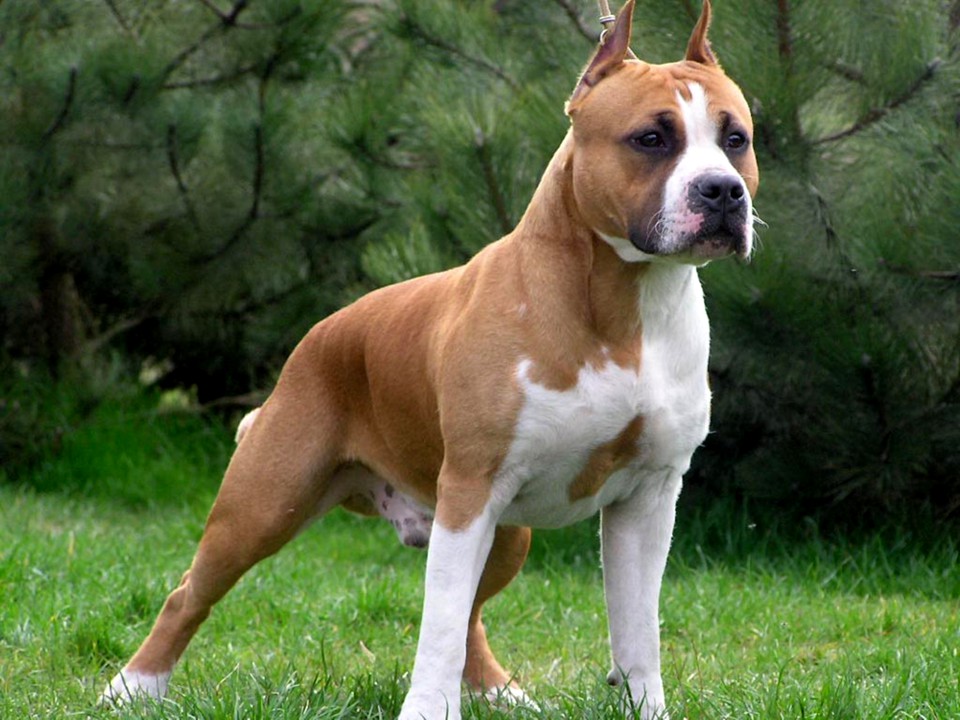
Американский стаффордширский терьер должен производить впечатление собаки большой для своих размеров силы, ладно сбитой, мускулистой, но в то же время элегантной, проворной и очень живо реагирующей на окружающее. Он должен быть коренастым, не длинноногим или борзопободным.
Отличительная особенность породы Американский стаффордширский терьер
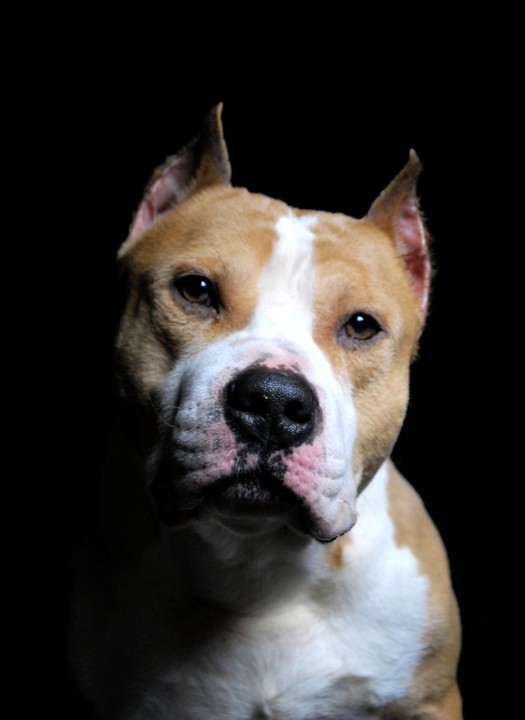
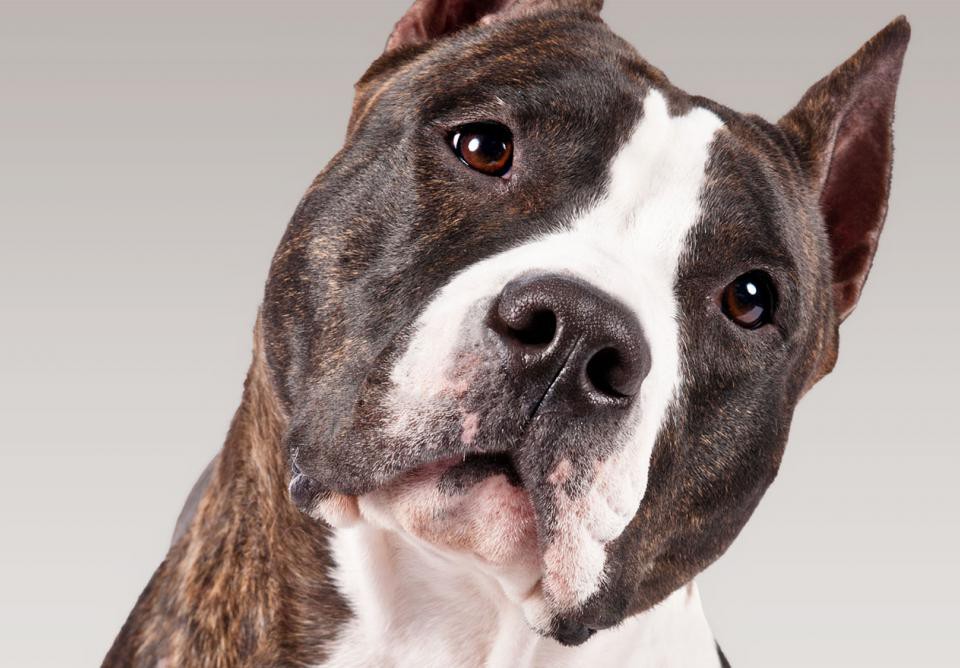
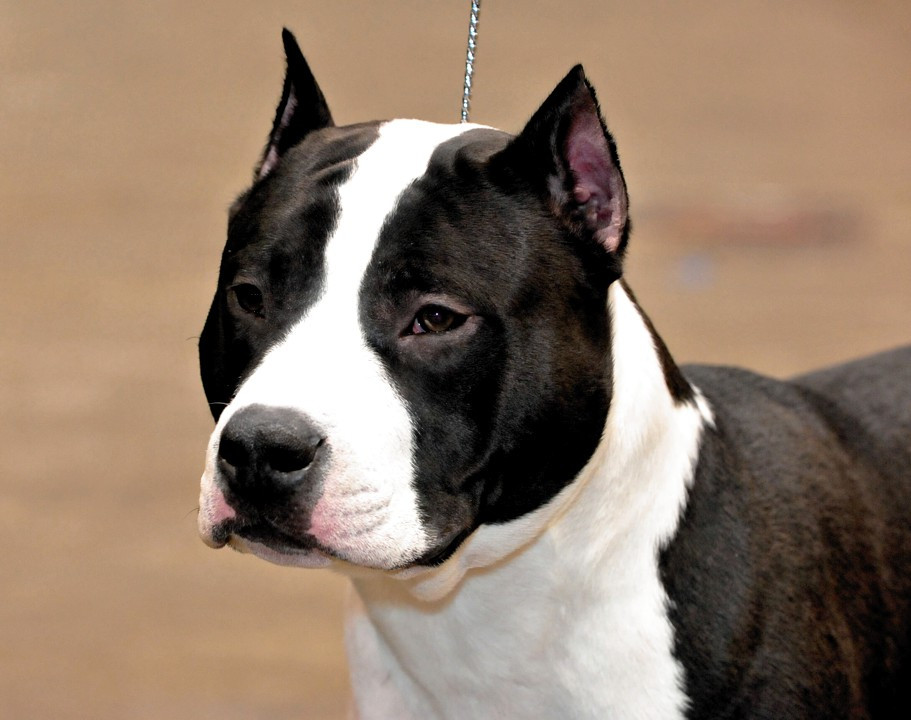
Череп глубокий по всей длине и широкий.
Нос с черной мочкой.
Морда короткая.
Губы плотно прилегающие, чистые.
Зубы крупные, с идеальным, правильным, полным ножницеобразным прикусом, т.е. верхние зубы плотно накрывают нижние и стоят в челюстях вертикально. Челюсти крепкие.
Скулы с очень выраженными мышцами.
Глаза темные предпочтительны, но могут быть в тон окраса. Округлые, среднего размера, поставлены таким образом, что глядят вперед. Веки темные.
Уши розой или полустоячие, не крупные и не тяжелые. Очень крупные и толстые, висячие или стоячие уши крайне нежелательны.
Шея мускулистая, скорее короткая, чистых линий, постепенно расширяющаяся к плечам.
Корпус компактный. Линия верха прямая.
Спина короткая, широкая и мускулистая, прямая, слегка ниспадающая к крупу.
Поясница слегка выпуклая.
Круп с легким наклоном к основанию хвоста.
Грудь с широким фронтом, глубокая грудина.
Ребра хорошо изогнутые.
Живот мускулистая и хорошо очерченная.
Передние конечности прямые с хорошим костяком, постав широкий, без признаков слабости пястей, от запястья слегка наклонные.
Лопатки хорошо наклонены назад. Локти плотно прижатые.
Пясти отвесные.
Задние конечности с хорошей мускулатурой. При осмотре сзади ноги параллельны.
Бедра с хорошо развитой мускулатурой.
Колени с хорошими углами. Скакательные суставы низко опущенные.
Плюсны умеренно короткие.
Лапы с хорошими подушечками, крепкие и среднего размера. Когти черные у однотонно окрашенных собак.
Хвост короткий по сравнению с размерами собаки, низко посаженный, сужается к концу. Не крючковатый, не закинут на спину. Не купированный.
Шерстный покров короткий, плотно прилегающий. Шерсть жесткая на ощупь и блестящая.
Окрас допускается любой одноцветный, разноцветный, пятнистый; но белый окрас, превышающий 80% поверхности тела, а также черно-подпалый или печеночный – недопустимы.
Движения пружинистые, но без развалки или иноходи.
Рост кобеля 46-48 см., суки - 43-46 см.
Вес 25-30 кг.
Характер
Амстаффы неоднородны по своему характеру. Несмотря на то что эту породу выводили как компаньонов, бойцовской прошлое может проявиться и какой характер будет у щенка таким образом понять невозможно. Агрессия к другим собакам может быть выражена очень сильно. В России негативных образ амстаффа сложился в 90-е годы, когда криминальные авторитеты использовали этих собак как телохранителей.
Несмотря на то, что американский стаффордширский терьер это семейная собака, никогда не оставляйте этих собак наедине с маленьким ребенком без присмотра. Уравновешенный и общительный американский стаффордширский терьер собака, которую приятно иметь в качестве питомца. Они стремятся угодить своему хозяину и будут делать все, чтобы сделать его счастливым. Следует отметить, несмотря на то, что эти собаки любящие и нежные с семьей они нуждаются в твердом, уверенном в себе и решительном владельце, который способен утвердить над ними свою власть. Хозяин американского стаффордширского терьера должен стать главным и заслужить уважение, но не с помощью физических наказаний, а в результате общения и совместных занятий.
Содержание и уход
Стаффордширский терьер - квартирная порода собак, содержание их в вольере неприемлимо в климатических условиях России. Кроме того, это собаки очень привязаны к хозяевам и должны регулярно с ними общаться. Содержание в чистоте и сухости ушей очень важно, особенно для собак, которые проводят много времени на улице. Американский стаффордширский терьер не нуждается в регулярном купании, поэтому купать этих собак можно тогда, когда это необходимо. Так же как и любой другой собаке амстаффу нужно периодически состригать когти, если они не стачиваются естественным образом, протирать глаза и чистить зубы. Собаки этой породы нуждаются в большом количестве физических упражнений. Они очень активны, и если их энергии не обеспечить выход, они употребят её во вред Вашим вещам и Вашему дому. Любители собак этой породы разработали много интересных соревнования для собак этой породы, можно заниматься с ними так же фрисби, скиджорингом, скипулингом, вейтпулингом, байкджорингом. В России запрещено ставить таких собак на охрану и заниматься с ними защитными видами дрессировки. Пройти курс ОКД на площадке очень желательно, но занятие такими видами кинологического спорта, как ОКД, ВН, обидиенс, затруднено из-за возможной зооагресси.
Амстаффов можно приучить к жизни в одном доме с кошками и другими животными, но нужно соблюдать осторожность.
Продолжительность жизни — 12-15 лет.
Достоинства
Смелые, сильные, выносливые, здоровые, умные, легко обучаемые.
В целом любят людей, доброжелательны к детям - при правиильном воспитании.
Сложность содержания
Требуют серьезных физических нагрузок
При неправильном воспитании могут быть очень агрессивны к собакам и другим животным, а часто и к людямм.
Болезни
Американский стаффордширский терьер - относительно здоровая порода собак. Чаще всего у этих собак встречаются следующие заболевания: дисплазия тазобедренного сустава (заболевание, характеризуюющееся неправильным развитием тазобедренных суставов, возникающее в результате генетических причин или неправильного выращивание, выражается в хромоте разной степени тяжести, лёгкие степени могут лечиться оперативно, возможна пожизненная медикаментозная поддержка),аллергия (чаще всего пищевая аллергия на курицу и куриные субпродукты, корректируется изменением рациона), при неправильном и слишком обильном кормлении питбули часто страдают ожирением.