Отряд
Чешуйчатые (Squamata)
Классификация
Отряд — Чешуйчатые (Squamata).
Семейство — Хамелео́ны (Chamaeleonidae).
Подсемейство — Сhamaeleoninae.
Род — Настоящие хамелеоны (Chamaeleo).
Вид — Йеменский хамелеон (Chamaeleo calyptratus).
Подвиды — С.c.calyptratus, С.c.calcarifer.
Ареал обитания
Родиной хамелеона является, как следует из его названия, Йемен, а также Саудовская Аравия. Хамелеоны живут в прибрежных районах, в которых регулярно идут обильные дожди и в более засушливых долинах, где также много воды и зелени.
С.c.calyptratus проживают в северной гористой части Саудовской Аравии, где высота гор достигает 3500 м. В горных районах климат сухой и умеренный, днем температура колеблется от 25 до 32, ночью на 6-7 градусов ниже. Это вид значительно превосходят по размерам и богатству окраски С.c.calcarifer. Последние, в свою очередь, живут в сухих и более жарких областях восточного побережья Саудовской Аравии.
Завезены и прижились на острове Мауи (Гавайи) и во Флориде.
Внешний вид
Размеры взрослых самцов от 45 до 60 см, самки около 35 см, но более полные. Йеменский хамелеон – один из самых крупных представителей своего семейства.
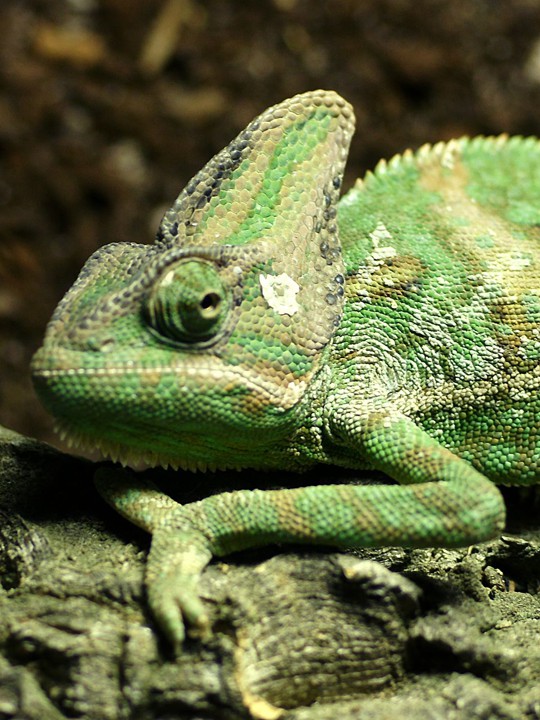
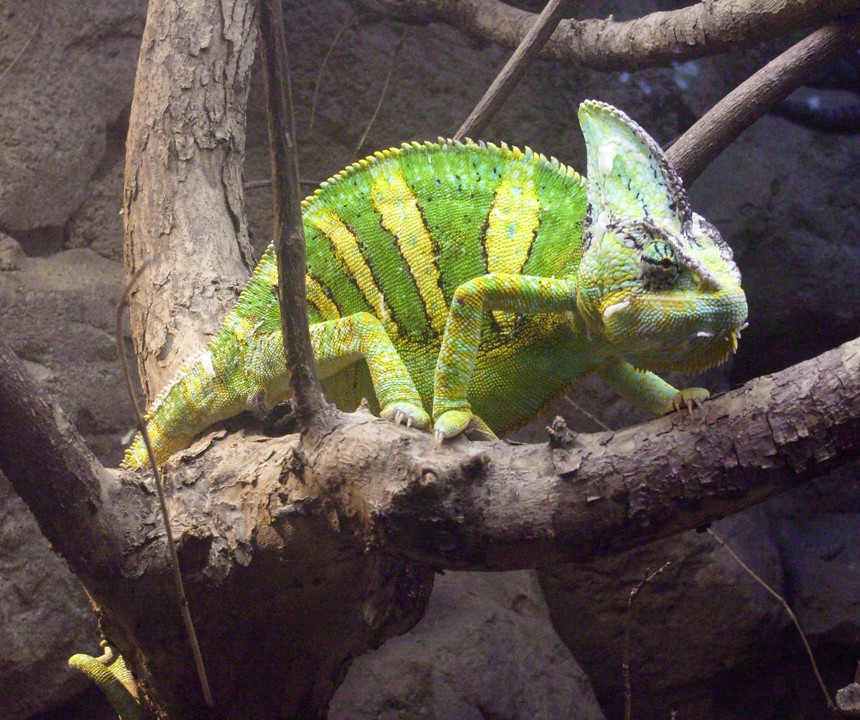
Молодые йеменские хамелеоны зеленого цвета, по мере взросления у них появляются полосы.
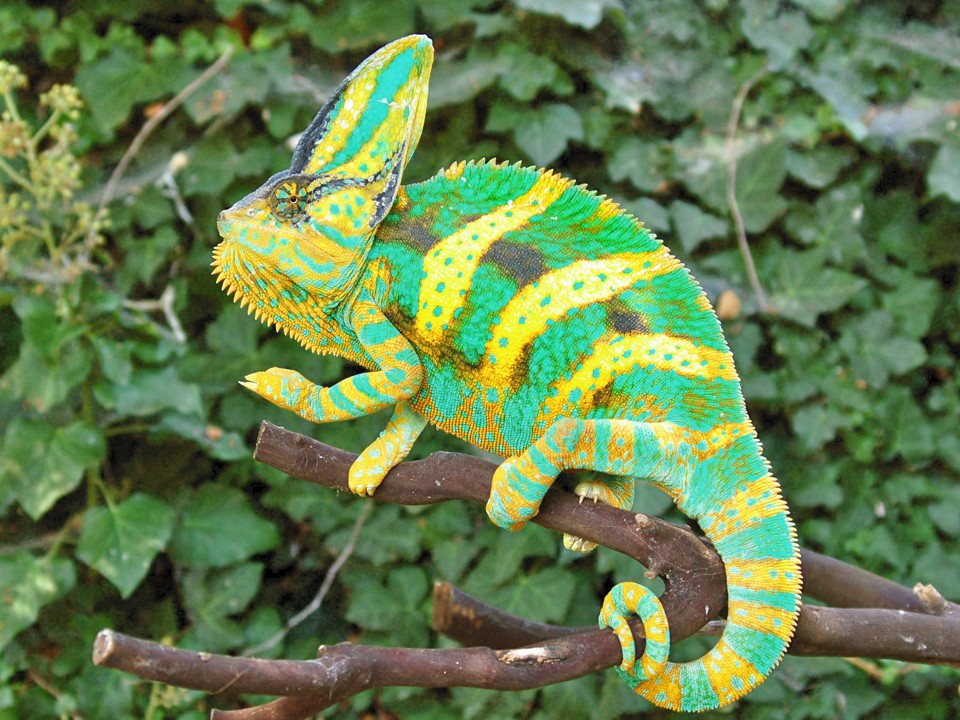
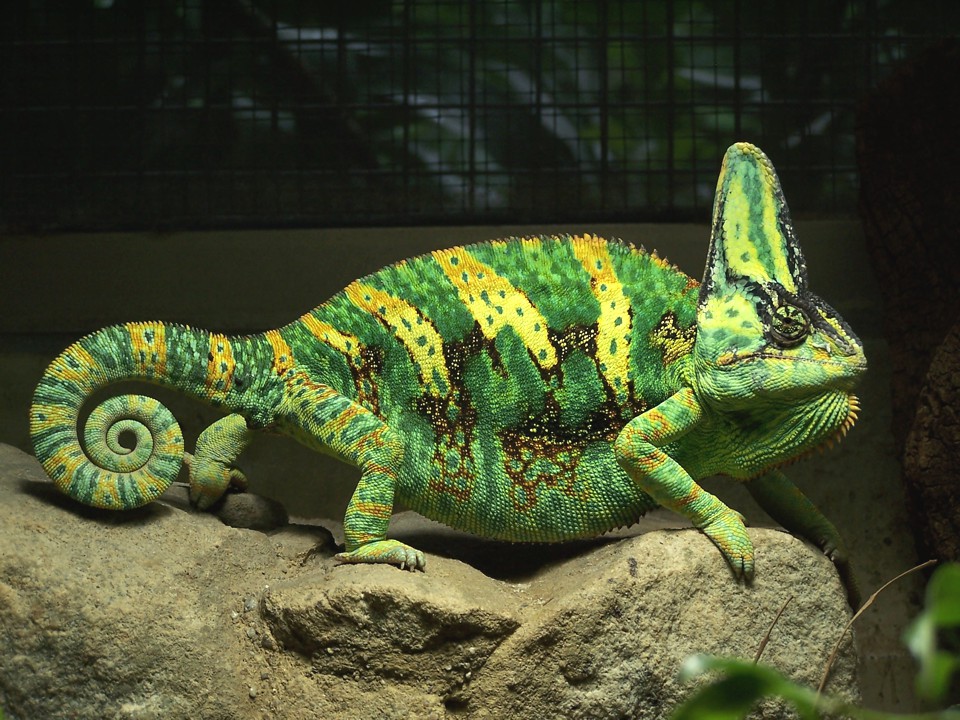
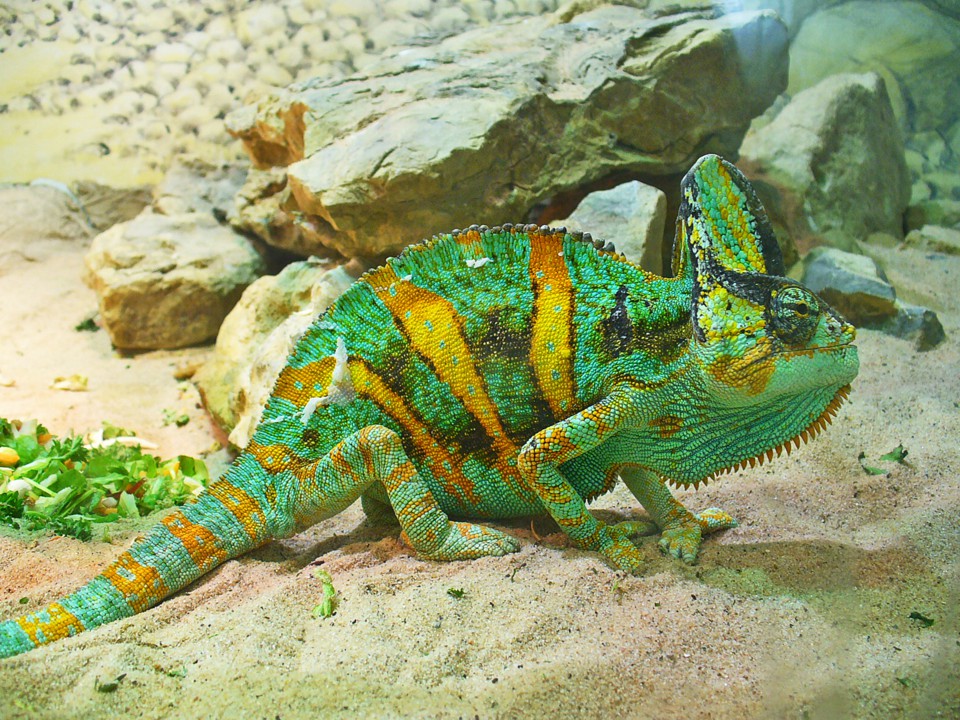
Окраска взрослых хамелеонов очень разнообразна, самцы более пестро окрашены, чем самки: на зеленом фоне по бокам ярко выделяются три желтых пятна, обрамленных оранжевыми и коричневыми поперечными полосами. Голова украшена высоким развитым гребнем, достигающим 7-8 см (у самок он намного меньше). Самцов также можно отличить по пяточным «шпорам», небольшим треугольным выступам, находящиеся на задней части ноги, чуть выше стопы. Хвост гибкий и подвижный, помогает при передвижении по деревьям.
Характер
Хамелеоны обычно малоподвижны– сидят на одном месте, обхватив ветку лапками и хвостом. При необходимости могут довольно быстро бегать и прыгать по ветвям.
Самцы агрессивны друг к другу, их нельзя содержать вместе. Содержат йеменских хамелеонов поодиночке или самца с самкой или несколькими самками.
Самки могут менять цвет во время беременности, оба пола во время стресса. Окраска так же может меняться в зависимости от разных условий, например, от социального статуса или окружающей среды.
Содержание и уход
Террариум для содержания нужен вертикальный, желательно с одной стенкой в виде сетки либо с большими вентиляционными отверстиями, закрытыми сеткой, так как йеменские хамелеоны - древесные ящерицы. Террариум должен быть большим - чем больше, тем лучше. Для одной особи подойдёт террариум в длину 1 метр, 80 см в высоту и 40 см в ширину, для пары и гарема размер должен быть больше.
В качестве субстрата лучше использовать живой мох-сфагнум, он хорошо поддерживает влажность в террариуме. В него можно поставить горшки с крупными выносливыми растениями - подойдут драцены, монстеры, сциндапсусы, филодендроны. Для лазания нужно поставить крупные ветки и коряги.
Поилка не нужна, хамелеоны слизывают капельки воды с растений, поэтому террариум желательно опрыскивать два раза в день.
Температура воздуха от 17*C ночью до 27-29*C днём, 32-35*C в в точке прогрева на одной из коряг, туда должна быть направлена лампа накаливания или зеркальная лампа. Обязательна и ультрафиолетовая лампа.
Влажность воздуха невысокая, 50 - 60%.
Освещение яркое, свет должен гореть примерно 12 часов в день.
Кормление
Йеменский хамелеон питается как растительной, так и животной пищей. Взрослых хамелеонов кормят раз в два дня, молодь - ежедневно. В качестве животных кормов можно давать соразмерных сверчков и тараканов, мучного червя. Изредка можно давать новорождённых мышат. В еду нужно добавлять витаминные и минеральные подкормки. Из растительных кормов хамелеоны предпочитают сочные фрукты и овощи-яблоки, груши, персики, сливы, тыкву, кабачок, перец, а также салаты и листья одуванчиков.
Особенности
Йеменские хамелеоны легко приучаются, могут охотно сидеть на руках.
Неприхотливы и доступны для приобретения, хорошо подходит начинающим террариумистам.
Требуют большого террариума.
Требуют обязательного присутствия в рационе живых кормов.
Болезни
Рахит - это заболевание костей. Симптомы - животное может раскачиваться в стороны, передвигается толчками, искривление суставов, гнутый шлем, деформация позвоночника, мягкая нижняя челюсть, неспособность выбрасывать язык и жевать. Рахит возникает в результате недостатка кальция, витамина D3 и ультрафиолетового освещения. В качестве профилактики нужно соблюдать правильные условия содержания.
Неполная линька характеризуется недолинявшими лоскутками белой кожи, оставшимися через несколько дней после линьки. Особенно часто страдают пальцы. Если омертвевшие участки кожи вовремя не убрать, это может привести к некрозу. Убирают их, размачивая и удаляя пинцетом. Профилактикой является регулярное опрыскивание террариума.
Недостаток минеральных веществ. Основном симптом-поедание земли. Лечится введением минеральных подкормок в рацион хамелеона.
Респираторные инфекции характеризуются слабостью, потерей аппетита, надутым телом и шумным дыханием. Причина обычно в плохой вентиляции. Лечение - антибиотики, для назначения нужной дозы необходимо обратиться к герпетологу.
Глазные инфекции характеризуются зудом, и в результате хамелеон трёт свои глаза о твёрдые предметы. Лечение - промыть глаза препаратом Ципровет.
Стресс - это наиболее распространенная проблема у хамелеонов. Возможными причинами стресса являются содержание более одного хамелеона в одном террариуме, неверное освещение, неверный подогрев, слишком много движения людей вокруг террариума. Стресс легко распознать по изменению цвета: хамелеон на долгое время принимает более темные окраски чем обычно. Если хамелеон крепко вцепился в одну ветку, или даже в свои конечности, и так сидит в течение долгого периода времени, значит, он стрессует. Лечение: найти и удалить источник стресса.
Разведение
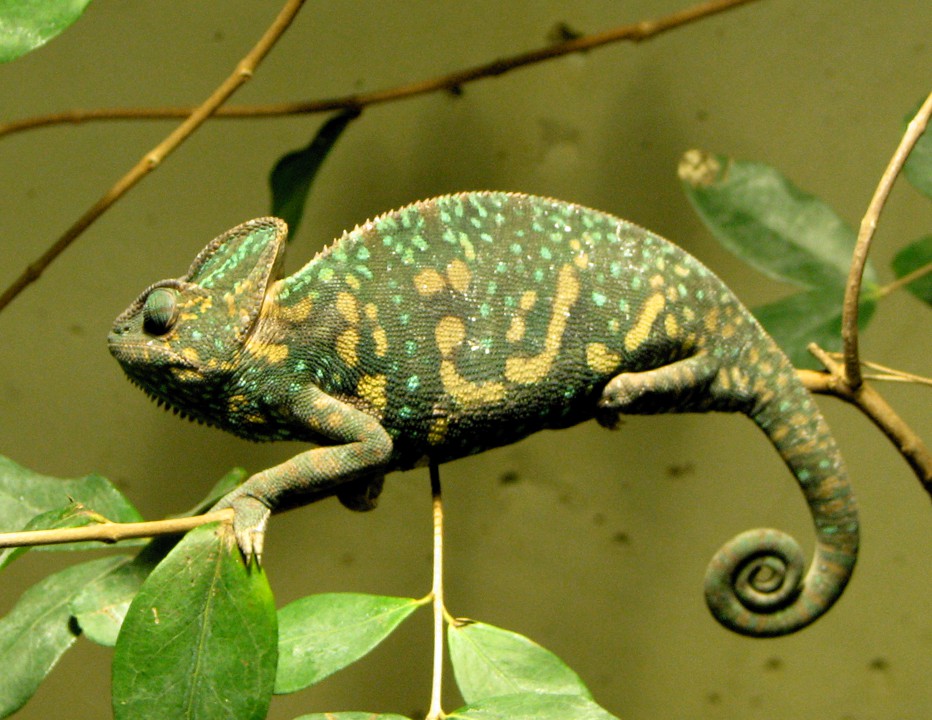
Йеменские хамелеоны становятся половозрелыми в возрасте 9-12 месяцев. Во время брачного периода самцы окрашиваются во все цвета радуги. После спаривания, которое обычно происходит в течение суток после ссаживания, самки приобретают темно-зеленую, иногда почти черную окраску с круглыми ярко-желтыми пятнами, разбросанными по всему телу. Это окраска сигнализирует о том, что данная самка уже оплодотворена. Кроме того, после спаривания самка становится очень агрессивной и не подпускает к себе самца. Через месяц после спаривания самка роет нору в субстрате и откладывает там яйца. В период беременности важно обеспечить самке достаточное количество воды.Для этой цели можно поставить в террариум ёмкость с вермикулитом или кокосовым волокном, обычно самка охотно откладывает туда яйца. Самка может отложить до 85 яиц. Инкубировать их лучше при температуре 27-28 градусов в течение 5 - 10 месяцев. Новорождённые хамелеона очень нежные, требуют частого кормления соразмерными насекомыми, добавлению в пищу минеральных веществ и витаминов и обязательного ультрафиолетового освещения. Самцы начинают проявлять агрессию друг к другу в возрасте 3 - х месяцев, тогда их стоит рассадить.
Продолжительность жизни — живут йеменские хамелеоны достаточно долго, до 10 лет.