История возникновения
Национальная японская порода.
Первоначально японские собаки имели небольшие или средние размеры, крупные породы отсутствовали. С 1603 г. в округе Акита для собачьих боев использовались Акита Матаги (собаки среднего размера для охоты на медведей). С 1868 г. Акита Матаги скрещивались с тоса и мастифами, в результате чего размеры породы увеличились, но при этом исчезли характерные для шпицев черты. В 1908 г. собачьи бои были запрещены, но тем не менее порода сохранилась и улучшилась, став японской крупной породой. В результате в 1931 г. девять выдающихся представителей породы были названы «Природными Памятниками». Во время Второй Мировой войны (1939 - 1945) собачий мех зачастую использовался для военной одежды. По приказу полиции отлавливались и конфисковались все собаки, за исключением немецких овчарок, использовавшихся на военной службе. Некоторые любители пытались обойти этот приказ, осуществляя вязки своих собак с немецкими овчарками, но ныне четы немецких овчарок в акитах не проявляются.
После вывоза в США в результате других подходов к разведению от японской акиты отделилась отдельная порода - американская Акита.
Общий вид
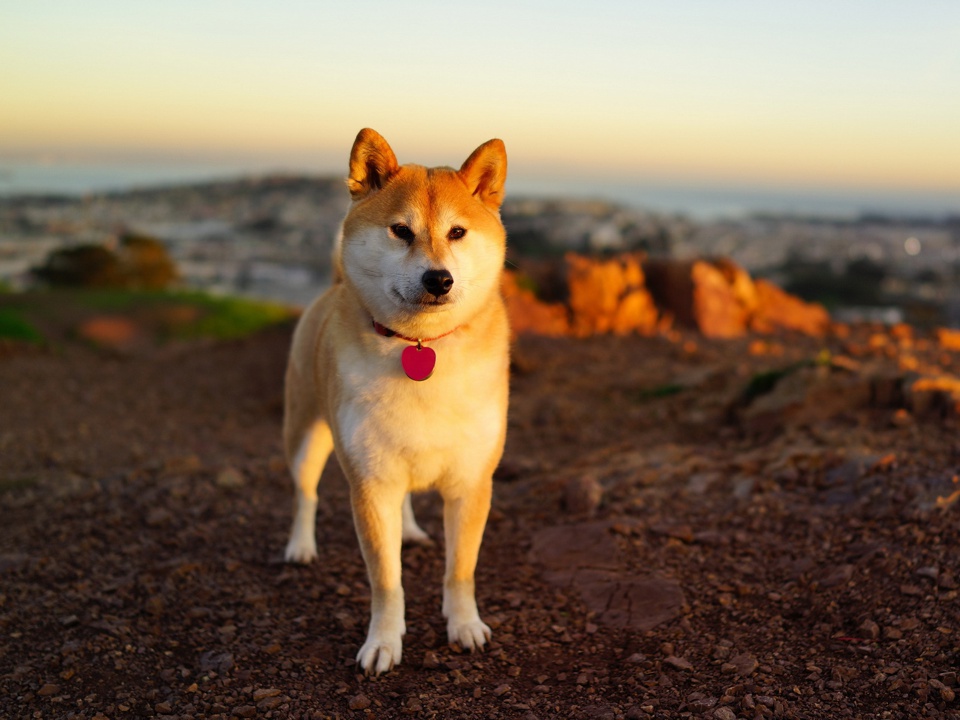
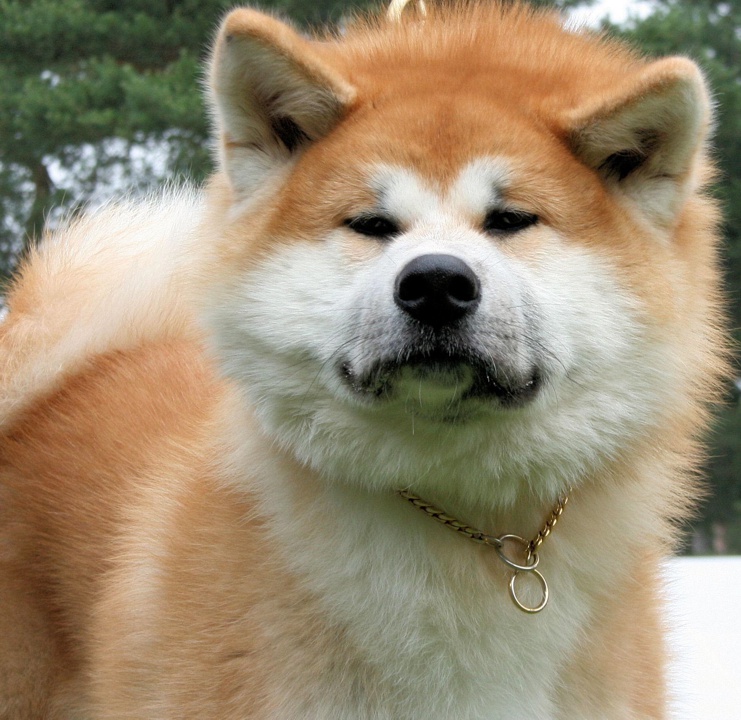
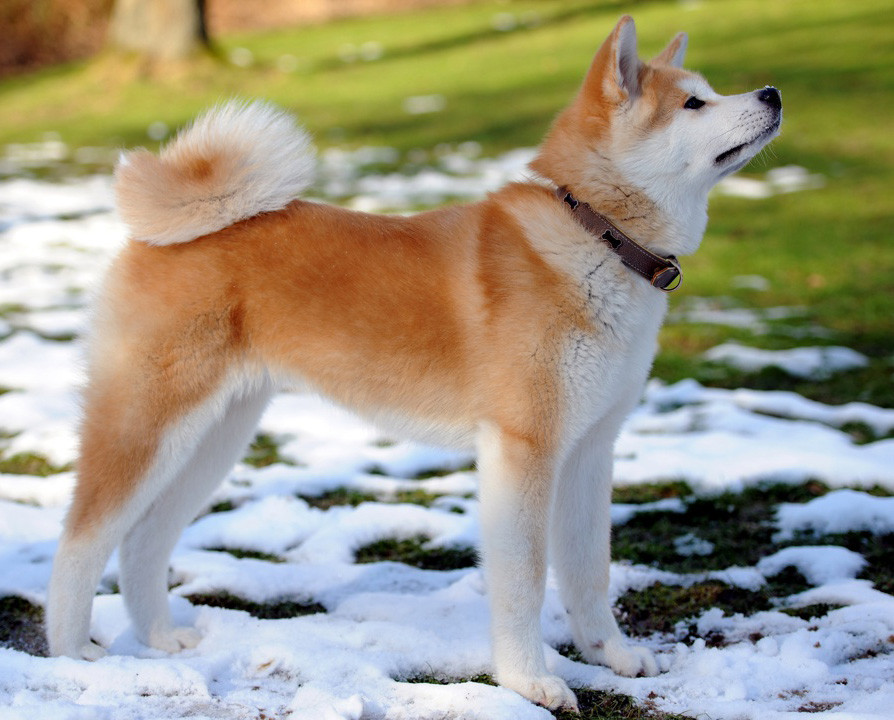
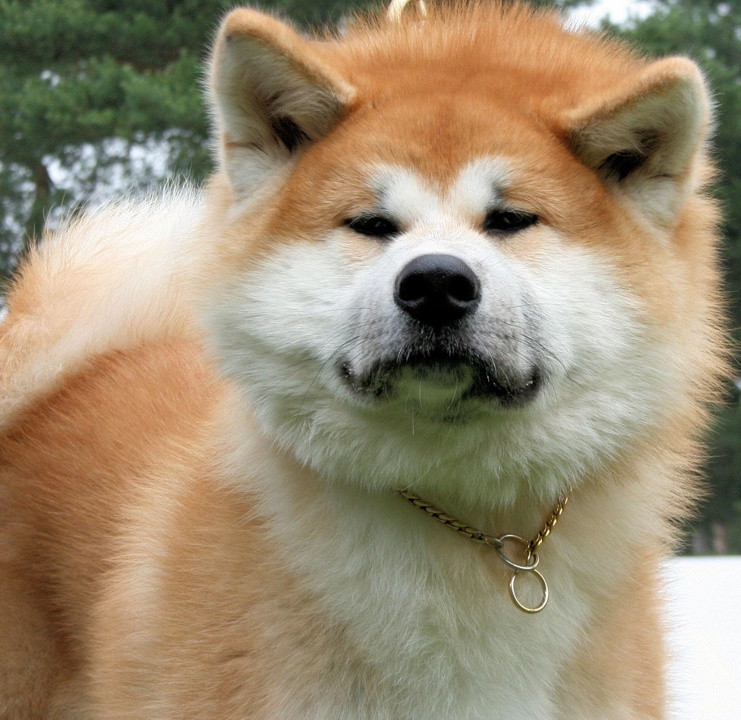
Это крупная собака крепкого сложения, хорошо сбалансирован. Половой диморфизм хорошо выражен - кобели крупнее и мощнее сук.
Собака имеет благородный облик, сдержанная, с чувством собственного достоинства.
Тип конституции крепкий.
Отличительная особенность породы Акита
Череп по размеру пропорционален корпусу.
Лоб широкий, с отчетливой лобной бороздой. Без морщин.
Нос большой и черный. Незначительное осветление пигментация допускается только при белом окрасе. Мочка носа крупная и черная.
Морда умеренно длинная, мощная, с широким основанием, сужается к носу, но не заостренная. Спинка носа прямая. Губы плотно прилегающие.
Зубы мощные, ножницеобразный прикус.
Скулы умеренно развиты.
Глаза сравнительно небольшие, поднятые внешние уголки придают им почти треугольную форму, умеренно расставлены, темно-карие: чем темнее, тем лучше.
Уши сравнительно небольшие, толстые, треугольной формы, слегка закругленные на концах, умеренно расставленные, стоячие, наклонены вперед.
Шея толстая и мускулистая, без подвеса, пропорциональна голове.
Корпус отношение высоты в холке к длине корпуса у кобелей 9:10, у сук 9:11.
Спина прямая и крепкая.
Поясница широкая и мускулистая.
Круп немного скошенный, мускулистый, широкий.
Грудь глубокая, с хорошо развитой передней частью.
Ребра умеренно изогнуты.
Передние конечности прямые, сильные, мускулистые. Поставлены передние конечности строго под корпус. Лопатки хорошо развиты, и угол наклона лопаточных костей у японских собак составляет примерно 110-120°, что считается нормой. Пясти поставлены под углом 15°.
Задние конечности хорошо развиты, сильные, с умеренными углами. Бедра плотные, крепкие. Колени с в меру выраженными углами. Плюсны вертикальны, угол голени и плюсны составляет 145-150 градусов. Стопы толстые, округлые, сводистые, устойчивые
Хвост высоко посаженный, толстый, энергично закинут на спину; в опущенном состоянии кончик хвоста почти достает до скакательных суставов.
Шерстный покров жесткий и прямой, подшерсток мягкий и густой. Шерсть на холке и крупе несколько длиннее; шерсть на хвосте длиннее, чем на корпусе.
Окрас рыже-палевый, сезам (рыже-палевые волоски с черными кончиками), тигровый и белый. При всех вышеперечисленных окрасах, за исключением белого, собака должна иметь «уражиро». (Уражиро - осветленная шерсть на боковых частях морды, на скулах, на нижней поверхности челюсти, на шее, груди, корпусе и хвосте, а также на внутренних поверхностях ног).
Движения упругие, мощные.
Рост кобеля – 64-70 см, суки – 58-64 см.
Вес – 32-45 кг.
Характер
Популярность акит сильно выросла после выхода на экран фильма Хатико. Это ввело в заблуждение многих людей, ведь преданная собака в фильме не родилась такой, а была соответствующим образом выращена.
Акита - обладатели хорошего характера, что делает их прекрасными животным для семьи. Они известны как тихие собаки, которые лают только тогда, когда это требуется. Многие любители этой породы говорят, что акита заставляют чувствовать себя расслабленно и спокойно, поэтому помогают людям справиться со стрессом. Помимо спокойного, общительного характера акита известны своей чистоплотностью, некоторые люди сравнивают их с кошками за отсутствие запаха и чистый внешний вид.
Собаки породы Акита очень терпеливые и преданные, хорошо ладят с детьми и склонны их защищать. Однако поскольку акита обладают собственническим, а также охотничьим инстинктами, их желательно приучать к общению с другими животными в раннем возрасте. Акита, которые выросли вместе с другими животными, кошками или собаками, будут хорошо уживаться с ними и в дальнейшем, но без ранней социализации они могут быть агрессивными по отношению к другим домашним животным, особенно к собакам того же пола. Они мощные защитники, что делает из них хороших сторожей. Акита - умная и спокойная собака, но в тоже время независимая и обладающая сильной волей, поэтому обучение такой собаки может быть не простым делом.
Эта порода лучше подходит для людей с определенным уровнем опыта содержания больших собак. Акита может быть очень упрямой и напористой и если не получает достаточно физической нагрузки или скучает, может стать разрушительной для квартиры или трудно управляемой.
Содержание и уход
Акита обладает красивой шерстью средней длины с мягким подшерстком. Ухаживать за такой шерстью нужно примерно один раз в неделю. Шерсть у породы акита не стригут и не триммингуют. Эта порода очень сильно линяет, к счастью, этот период обычно длится всего несколько недель и случается два раза в год. В периоды линьки рекомендуется ухаживать за шерстью собаки ежедневно, очень хорош для вычёсывания фурминатор. Собаки этой породы, которые живут в закрытом помещении или прохладном климате обычно линяют меньше. Акит нельзя часто мыть с шампунем, в противном случае шерсть собаки может лишиться гидроизоляционных свойств.
Продолжительность жизни — 10-12 лет.
Достоинства
Привлекательный внешний вид, не лают много, привязчивы к хозяину.
При правильном воспитании очень приятные компаньоны.
Сложность содержания
Содержание в квартире подходит для акиты, но нуждается в достаточной физической нагрузке, можно занятися с ней каникроссом, скиджорингом, байкджорингом.
Акиту нелегко дрессировать и воспитывать, они могут быть агрессивны к животным, обладают охотничьими инстинктами, нужно всерьёз заниматься обучением с самого первого дня появления щенка в доме.
Болезни
Собаки породы акита обычно очень здоровые животные, однако у собак этой породы чаще всего встречаются такие болезни как вздутие живота или заворот кишок (возникает при слабости брыжейки, часто наследуется генетически, протекает остро и часто ведёт к гибели собаки), дисплазия тазобедренного сустава (заболевание, характеризующееся неправильным развитием сустава в силу генетических причин или неправильного выращивания, приводит к хромоте, лёгкие степени могут лечиться оперативно, больные собаки не допускаются к разведению), заболевания крови, схожие с человеческой гемофилией (несвёртываемость крови). Акита подвержены болезням глаз, в частности, катаракте (помутнение роговицы), энтропии (при этой болезни веко заворачивается и ресницы раздражают глазное яблоко), глаукоме (повышение внутриглазного давления), прогрессивной атрофии сетчатки (приводит к полной слепоте, не лечится). Все эти болезни относительно редки и обычно поддаются медикаментозному или хирургическому лечению.
При приобретении щенка акиты необходимо проверить наличие качество снимков тазобедренных суставов родителей и правильно растить щенка во избежании проблем с лапами.
Бывает у акит и ожирение, профилактика его просто - не перекармливать собаку и давать ей необходимые физические нагрузки.





У нас с мужем такая же собака, они очень активные и быстро выматывают своих хозяев. А им хоть бы хны.